Prague in 7-9 Days: Extended Vacation Itinerary to Maximize PTO in 2026
Plan an extended Prague adventure with a comprehensive 7-9 day itinerary including day trips to Český Krumlov and Kutná Hora, deeper neighborhood exploration, and authentic Czech experiences for 2026.
Introduction
A week or more in Prague and Bohemia transforms a visit into Czech immersion. While four days covers Prague's highlights, seven to nine days allows day trips to UNESCO-listed Český Krumlov, the bone church of Kutná Hora, deeper neighborhood exploration, and understanding this city's layers from medieval glory through communist occupation to vibrant present. This extended itinerary balances tourist essentials with authentic local experiences that most visitors never discover. Use this guide to plan your extended trip.
Prague is one of those rare European capitals where you can feel genuinely lost in the Middle Ages one moment and drinking world-class craft beer in a converted warehouse the next. The extra days are not padding—they are where the real city reveals itself. You will eat in places where no one speaks English, drink beer that never left a tank, and walk streets that the tour buses cannot reach.
 Prague's Old Town Square is fairy-tale Europe incarnate.
Short on time? See our Prague 4-day itinerary for a focused long-weekend plan. Use our PTO optimizer to find the best days to take off around your trip dates.
Why an Extended Czech Trip Is Worth It
Day Trip Treasures
Bohemia—the historical Czech heartland—contains UNESCO World Heritage sites within easy reach of Prague. Český Krumlov is a perfectly preserved medieval town with a castle rivaling Prague's own, and you need a full day to do it justice rather than the rushed five-hour bus tours most visitors settle for. Kutná Hora's macabre Sedlec Ossuary and soaring St. Barbara's Cathedral are a study in contrasts—death and transcendence separated by a short walk. Both deserve unhurried exploration, and the train and bus connections make them easy without renting a car.
Beyond these two headliners, castles like Karlštejn and Konopiště sit within an hour of Prague. The concentration camp at Terezín offers essential WWII history. You could fill two weeks with Bohemian day trips alone, but a week gives you the best three or four without feeling like you are living on a tour bus.
Deeper Prague
Extended stays reveal neighborhoods tourists never find. Letná Park's beer gardens overlook the Old Town from a hill where Stalin's statue once stood—now replaced by a giant metronome. Karlín, devastated by floods in 2002, has reinvented itself as Prague's most exciting dining neighborhood with restaurants like Eska and Můj šálek kávy drawing locals who would never set foot near the Astronomical Clock. Holešovice's industrial warehouses now house the DOX Centre for Contemporary Art and the Veletržní palác branch of the National Gallery. Žižkov—named after a one-eyed Hussite general—has more pubs per capita than anywhere in Prague and an unapologetically gritty charm. These neighborhoods need time, not a checklist, and a week gives you that time.
Days 1-4: Core Prague
Follow the 4-day itinerary covering Old Town Square, the Astronomical Clock, Jewish Quarter, Charles Bridge, Prague Castle, St. Vitus Cathedral, Malá Strana, Petřín Hill, traditional pivnice culture, and Czech cuisine exploration.
Day 5: Český Krumlov Day Trip
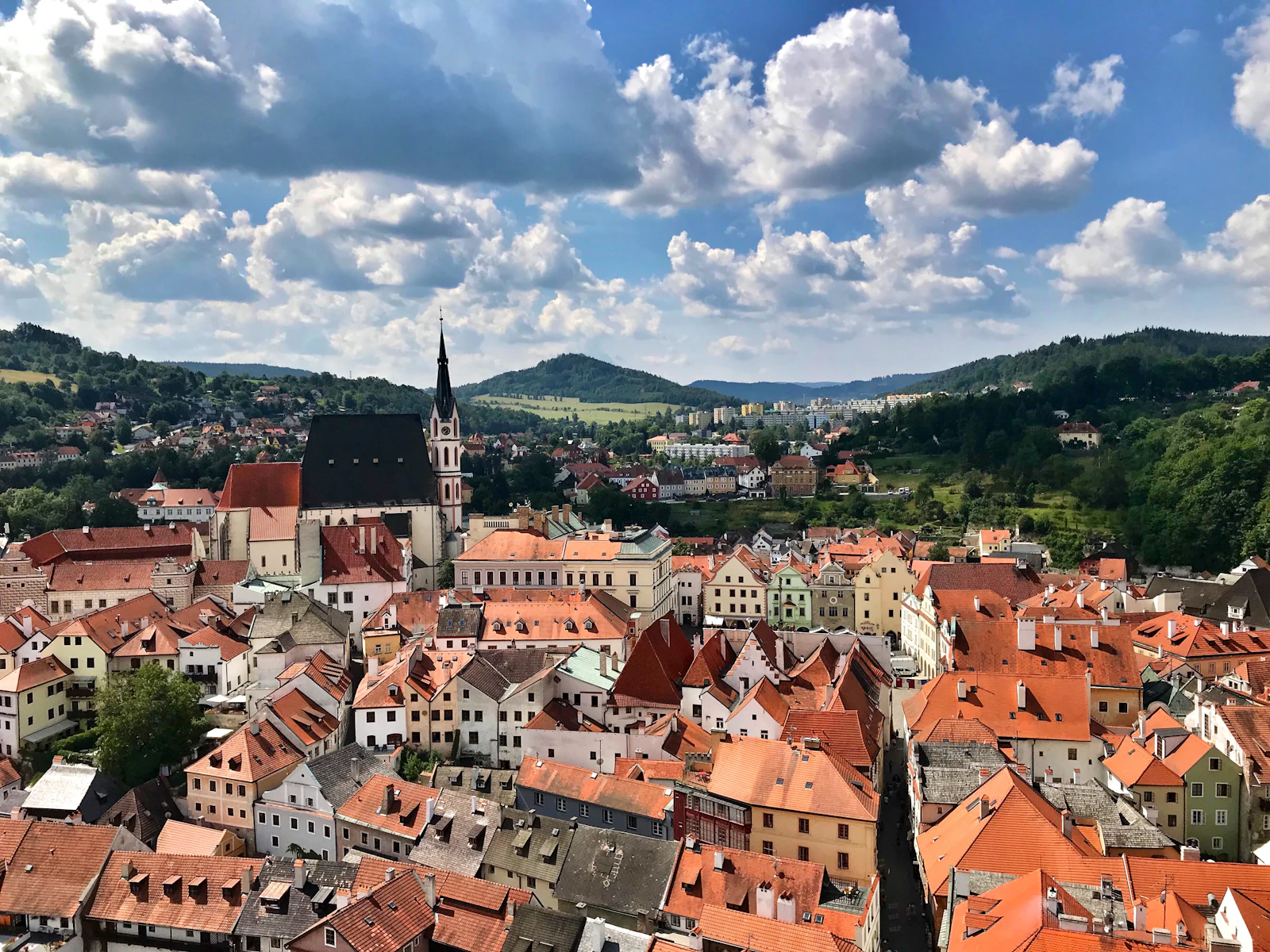 Český Krumlov's medieval Old Town wraps around a bend in the Vltava River.
Getting There
Catch the RegioJet or FlixBus from Prague's Florenc or Na Knížecí stations—departures start around 7:00am, and the journey takes roughly 3 hours. RegioJet buses are newer with free Wi-Fi and coffee; book online a few days ahead for seats around 200-300 Kč (roughly 8-12 EUR). Alternatively, Student Agency runs similar routes. If you are a small group, splitting a Bolt or private transfer (around 3,500-4,000 Kč one-way) saves time and gets you there by 9:30am. Consider an overnight stay at a guesthouse like Pension Sebastián (from 1,500 Kč/night) if you want a quieter evening after the day-trippers leave.
Fairy-Tale UNESCO Town
Český Krumlov is Bohemia's second-most visited destination—a perfectly preserved medieval town wrapped around the Vltava River with a castle second only to Prague's. Arrive before 10am to explore the Old Town before the bus tours descend.
Essential experiences:
- Český Krumlov Castle: Start with the castle complex. The five courtyards climb the hill, and the views from the Cloak Bridge are extraordinary. The Baroque theater (one of the world's few surviving revolving stages) requires advance booking for rare summer performances—check the castle website in spring
- Castle Tower: Climb the painted Renaissance tower (50 Kč) for the iconic postcard view over red rooftops and the river bend
- Old Town: Wander the medieval streets below the castle. Skip the souvenir shops on the main drag and duck into the side alleys instead
- River: Rent a kayak or rubber raft (from 700 Kč per person) and paddle the gentle Vltava through town—the perspective from the water is completely different
For lunch, avoid the tourist restaurants on the main square. Krčma v Šatlavské serves Czech roasted meats and dark beer in a medieval cellar. Na louži is a local favorite for traditional svíčková at honest prices (main courses 180-280 Kč).
Catch the 5:00pm or 6:00pm bus back to Prague. You will arrive tired but satisfied.
Day 6: Kutná Hora Day Trip
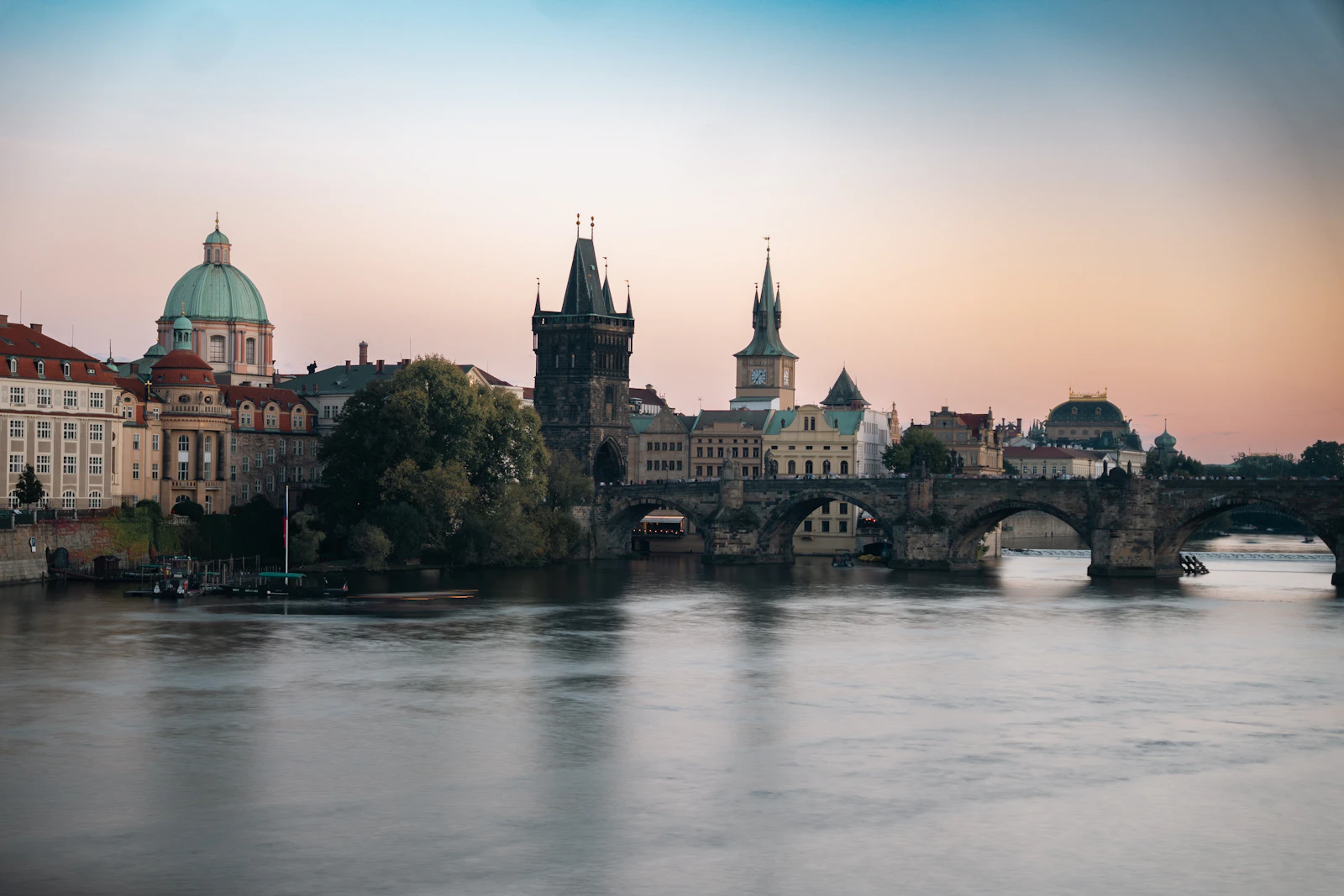 Prague's Charles Bridge is magical in the early morning light.
Getting There
Direct trains from Prague's Hlavní nádraží depart roughly every hour and take about 55 minutes. Buy tickets at the station or through the České dráhy app for 110-150 Kč each way. The Kutná Hora hlavní nádraží station is a short local train ride or 20-minute walk from the Sedlec Ossuary, and the town center is walkable from there—follow the signs.
Silver Mining History
Kutná Hora rivaled Prague in medieval importance—silver mining funded Czech kings and made this town one of the wealthiest in Europe. Today, two UNESCO World Heritage sites anchor visits:
Sedlec Ossuary (Bone Church) Arrive early—this small chapel gets crowded fast. The chandelier, coat of arms, and decorations are made entirely from human bones—remains of 40,000-70,000 people arranged with unsettling artistry. Entry is 160 Kč, and 30 minutes is enough unless you want to study every detail. Photography is allowed but feels strange. The experience is macabre and unforgettable.
St. Barbara's Cathedral A 15-minute walk from the ossuary through the historic center brings you to this Gothic masterpiece rivaling St. Vitus. The flying buttresses and frescoed interior took 500 years to complete. Entry is 160 Kč. The approach along Barborská street—lined with Baroque statues and overlooking the valley—is one of the most atmospheric walks in Bohemia.
Other sites worth your time:
- Italian Court (Vlašský dvůr): Former royal mint where silver coins were struck. Tours explain the medieval minting process (120 Kč)
- Medieval silver mines: Underground tours descend into the actual mine shafts (250 Kč, book ahead). You will wear a white robe and hard hat—genuinely memorable
- Historic center: The UNESCO-protected streets between the two main sites are pleasant for wandering. Stop at Restaurace Dačický on the main square for vepřo-knedlo-zelo and local beer
Catch an afternoon train back (the 3:30pm or 4:30pm departure works well). The round trip fits comfortably in a day.
Day 7: Neighborhoods and Local Life
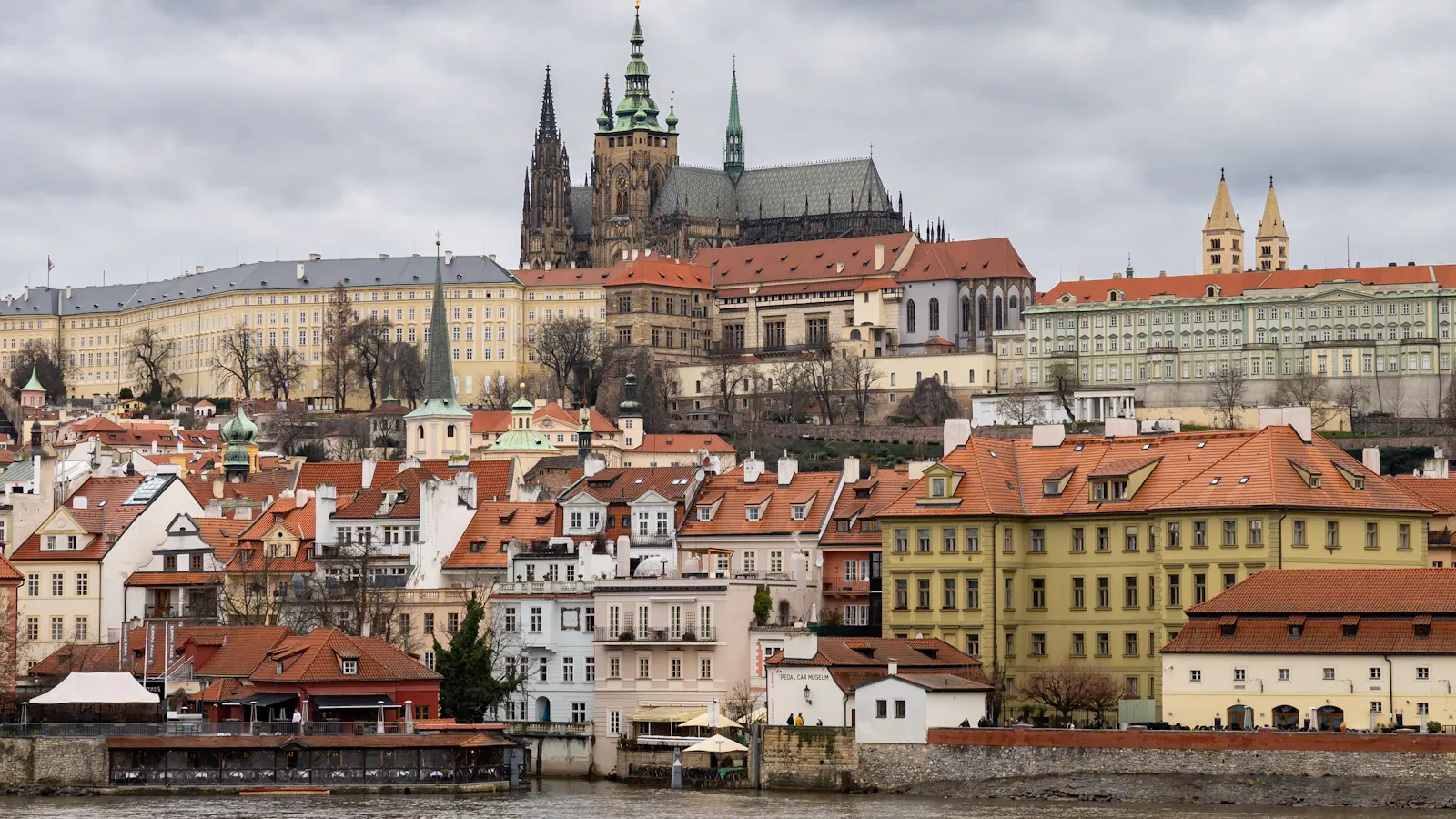
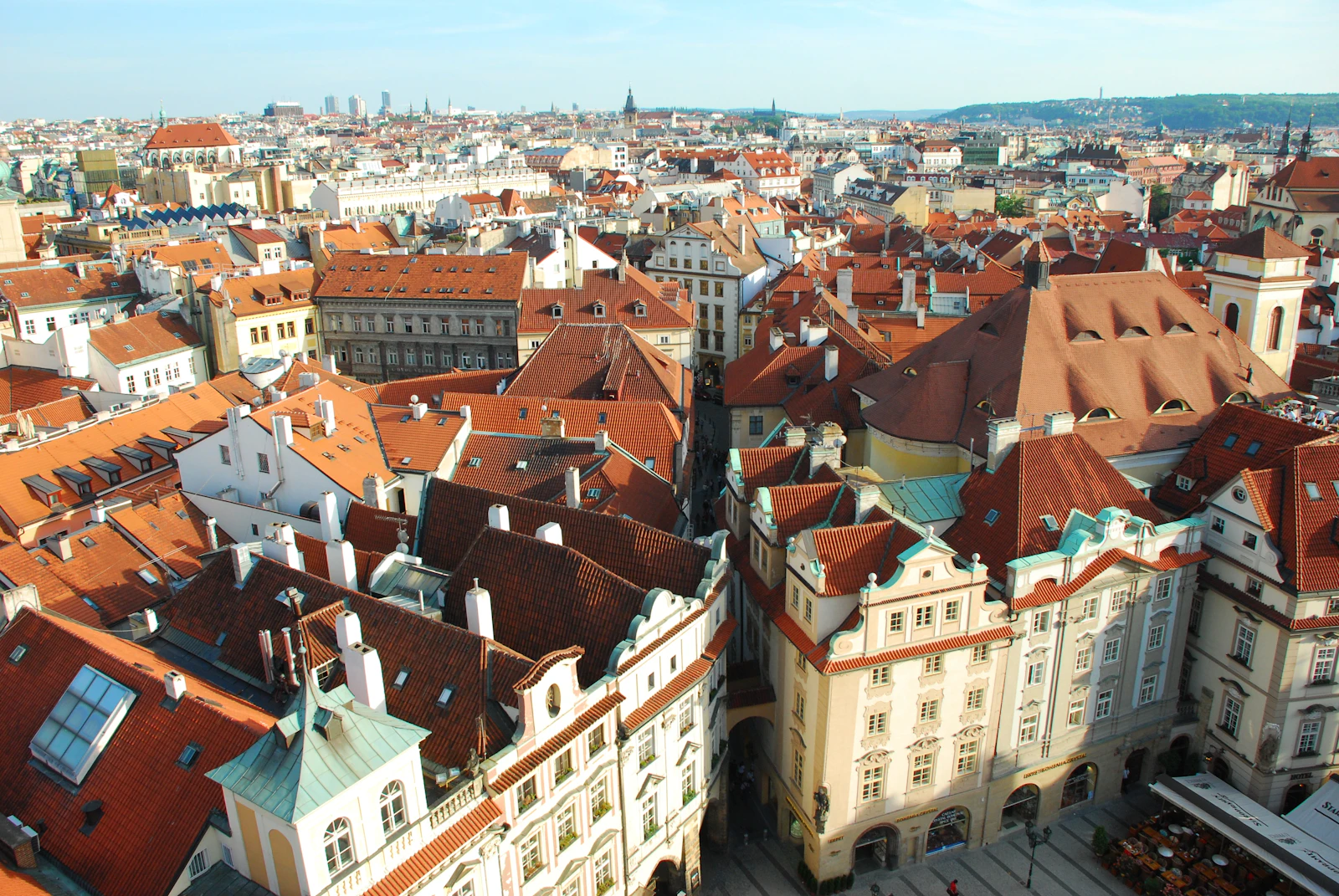 Prague's red rooftops and gothic spires create a timeless skyline.
Morning: Letná and Holešovice
Start at Letná Park around 9am. Walk past the giant metronome—it marks the spot where the world's largest Stalin statue stood until 1962—and continue along the park's ridge for panoramic views of the Old Town's spires and the river below. The Letná Beer Garden opens around 11am, but the morning views alone are worth the climb.
Cross into Holešovice, Prague's emerging arts district. The DOX Centre for Contemporary Art (200 Kč, closed Mondays) occupies a converted factory and consistently shows provocative exhibitions. If you prefer traditional art, the Veletržní palác branch of the National Gallery houses Czech modern art and French Impressionists in a stunning Functionalist building. Afterward, wander into Stromovka Park—Prague's largest park, originally a royal hunting ground—for a quiet reset.
Cross the Charles Bridge at dawn to see it without crowds—by 10am it becomes a wall of tourists.
Afternoon: Karlín
Once working-class and devastated by the 2002 floods, Karlín is now Prague's culinary hot spot. The tree-lined Sokolovská and Křižíkova streets are lined with renovated warehouses turned into restaurants and cafes that locals actually frequent. For lunch, try Eska (seasonal Czech tasting menus, mains 350-500 Kč), Můj šálek kávy for specialty coffee and light bites, or Proti Proudu for craft beer and burgers. Walk through Karlínské náměstí park afterward—the neighborhood has a relaxed, residential feel that is worlds away from Old Town.
Evening: Local Pivnice Culture
Skip tourist beer halls for neighborhood favorites where Czechs actually drink:
- Lokál Hamburk (Karlín): Excellent tank Pilsner Urquell, served in 0.5L glasses for around 65 Kč. The traditional Czech food is reliably good—try the tatarák (beef tartare, served DIY style)
- U Slovanské Lípy (Žižkov): Authentic neighborhood pivnice with cheap Staropramen and zero tourist presence. Cash only
- Letná Beer Garden: The setting is the draw—cold Gambrinus with panoramic city views as the sun sets over Hradčany
- Zlý Časy (Nusle): Prague's best craft beer bar with 40+ taps and a rotating selection of Czech microbreweries. The knowledgeable staff will guide you if you are overwhelmed
Days 8-9: Flexible Extensions
Option A: More Day Trips
Karlštejn Castle (40 minutes by train from Praha-Smíchov, trains every hour) Gothic castle built by Charles IV to protect the crown jewels and holy relics. The approach from the village is uphill but scenic, passing tourist shops and small restaurants. The basic tour (330 Kč) covers the Imperial Palace and Great Tower. The premium tour includes the Chapel of the Holy Cross with its medieval panel paintings and semi-precious stone walls—book this one at least a week ahead on the castle website as spots are limited.
Terezín (1 hour by bus from Florenc, around 100 Kč) Former concentration camp and Jewish ghetto. The Small Fortress served as a Gestapo prison, and the walking tour through cells and execution grounds is deeply moving. The town itself functioned as a propaganda showcase—the Nazis filmed a fake documentary here. Allow 4-5 hours for the full experience. This is essential for understanding Czech WWII history and pairs meaningfully with the Jewish Quarter visit from Day 1.
Konopiště Castle (1 hour by train to Benešov, then a 2km walk) Archduke Franz Ferdinand's hunting lodge—his assassination in Sarajevo triggered WWI. The collection of hunting trophies is staggering (over 300,000 animals), and the ornate interiors reflect the Archduke's obsessive collecting habits. The rose garden is beautiful in season.
Option B: Deeper Prague
- Žižkov: Prague's grittiest neighborhood, famous for having more pubs per capita than anywhere in the city. Climb the bizarre Žižkov Television Tower (300 Kč)—adorned with David Černý's giant crawling baby sculptures—for 360-degree views from the observation deck and a cocktail at the tower bar
- Vyšehrad: The "other" castle on a cliff above the Vltava. The cemetery contains the graves of Dvořák, Smetana, Mucha, and other Czech luminaries. The casemates (underground tunnels) hold original Baroque statues from Charles Bridge. Far fewer tourists than Prague Castle
- Vítkov Monument: Enormous communist-era equestrian statue and memorial atop Vítkov Hill. The panoramic views over Prague are exceptional, and the building houses a permanent exhibition on Czech 20th-century history (free admission). The surrounding park is popular with joggers and dog-walkers
- Troja: Take a bus north to the Prague Zoo (rated among Europe's best, 350 Kč), the Troja Château with its painted ceilings, and the Botanical Garden. Easily fills a relaxed half-day
Option C: Cultural Immersion
- Czech cooking class: Learn to make svíčková, knedlíky, and trdelník from scratch. Chefparade in Karlín runs hands-on classes (around 2,500 Kč) with English-speaking instructors and you eat everything you cook
- Classical concerts: Prague hosts multiple daily classical performances in historic venues. Rudolfinum is the premier concert hall (home of the Czech Philharmonic), while churches like St. Nicholas in Malá Strana and the Klementinum Mirror Chapel offer intimate candlelit recitals for 500-900 Kč. Skip the costumed Mozart hawkers on the street—check programs on the venue websites instead
- Beer spa: Czech beer spas let you soak in a tub of warm beer ingredients while drinking unlimited beer from a tap at your side. Beer Spa Bernard and Pivní Lázně in Prague both offer the experience for around 2,000-2,800 Kč per person. It is more novelty than spa treatment, but undeniably Czech
- Jazz clubs: Prague's jazz scene is internationally respected. Jazz Dock on the riverbank has live acts nightly in a sleek modern space. AghaRTA Jazz Centrum in the Old Town basement has been going since 1991. Cover charges run 200-400 Kč and most shows start around 9pm
Cultural Experiences Not to Miss
Beer Hall Culture
Prague Castle is the largest ancient castle complex in the world, covering over 70,000 square meters.
Czech pivnice culture is not about craft cocktails or Instagram—it is about sitting at a shared table, having a waiter wordlessly replace your empty glass with a full one (they mark tallies on a paper slip), and eating heavy food with strangers. At a proper pivnice like U Zlatého Tygra (Husova 17, Old Town), Václav Havel's local, you sit where there is space and drink Pilsner Urquell that has never been better. At U Fleků (Křemencova 11), they have brewed the same dark lager since 1499—skip the tourist groups and go at opening time. Lokál Dlouhááá in Old Town serves tank beer so fresh it tastes different from the bottled version. The key is to order velké pivo (large, 0.5L, typically 55-75 Kč), eat something starchy—utopenec (pickled sausage) or nakládaný hermelín (marinated cheese)—and stay longer than you planned. Czechs do not rush beer.
Classical Music Performances
Prague has more classical concerts per night than almost any European city, but quality varies wildly. Avoid the street touts selling "Mozart concert" tickets near Old Town Square—these are overpriced tourist traps with mediocre musicians in period costumes. Instead, check the program at the Rudolfinum (home of the Czech Philharmonic, tickets from 300 Kč for standing), the Estates Theatre (where Mozart premiered Don Giovanni in 1787—still an active opera house), or the Smetana Hall in the Obecní dům (Municipal House), an Art Nouveau masterpiece where the acoustics alone justify the visit. For intimate settings, the Klementinum Mirror Chapel and St. Martin in the Wall host chamber ensembles in stunning Baroque interiors. Book through the venue websites, not third-party resellers.
Old Town and Malá Strana Walks
The best Prague walking happens early morning or after dinner, when the tour groups have retreated to their hotels. From Old Town, take Celetná street toward the Powder Tower, duck into Ungelt (Týn Courtyard) for a quiet medieval courtyard, then wander south toward the river through Betlémské náměstí where Jan Hus preached. Cross into Malá Strana via a quieter bridge—Mánesův most has a fraction of Charles Bridge's crowds—and climb into the terraced gardens below the castle (Vrtbovská zahrada is a hidden Baroque gem, 100 Kč). These walks are free, require no tickets, and show you a Prague that the guidebooks skim past.
Travel Costs and Budgeting
Prague remains one of Europe's best-value capitals, though prices have risen steadily. The Czech koruna (CZK/Kč) keeps things cheaper than eurozone neighbors.
| Category | Daily Range |
|---|---|
| Accommodation | 1,250-3,750 Kč (€50-150) |
| Food | 625-1,250 Kč (€25-50) |
| Activities | 375-1,000 Kč (€15-40) |
| Transport | 250-625 Kč (€10-25) |
| Daily total | 2,500-6,625 Kč (€100-265) |
| 7-day total | 17,500-46,375 Kč (€700-1,855) |
Day trips add 750-1,500 Kč (€30-60) including transport and admissions.
To maximize your days off without extra PTO, use the free Holiday Optimizer to find bridge days around public holidays for your Prague trip.
Cost-Saving Tips
- Buy a 72-hour transit pass (330 Kč) or a 30-day pass (670 Kč) instead of single tickets. Tram, metro, and bus are all included
- Eat where Czechs eat: Lunch menus (denní menu) at local restaurants offer a soup-and-main combo for 150-200 Kč—look for chalkboards outside neighborhood spots away from tourist streets
- Drink beer, not cocktails: A half-liter of excellent Czech lager costs 55-75 Kč at a pivnice. The same money buys you a quarter of a cocktail in Old Town
- Free attractions: Vyšehrad fortress and grounds, Letná Park, Stromovka Park, most church exteriors, Vítkov Monument, and John Lennon Wall cost nothing
- Book day-trip transport early: RegioJet and FlixBus tickets purchased a week ahead can be 40-50% cheaper than day-of prices
- Use Revolut or Wise: Avoid airport and tourist-area exchange offices, which charge 5-10% commissions. ATMs (look for bankomat) give the best rate. Czech banks' own ATMs are safest—avoid Euronet machines, which push unfavorable "dynamic currency conversion"
- Skip trdelník: The chimney cakes sold everywhere as "traditional Czech" are a modern tourist invention. Your 100 Kč is better spent on a koláč (filled pastry) from a proper bakery
Czech Beer Deep Dive
Beyond Pilsner
While Pilsner Urquell originated in the Bohemian city of Plzeň, Czech beer culture extends much further:
- Světlý ležák: Pale lager (what most tourists drink)—crisp, balanced, with a soft bitterness. Pilsner Urquell, Budvar, and Staropramen are the big names
- Tmavé pivo: Dark lager, malty and rich, with notes of caramel and bread crust. Order one at U Fleků
- Polotmavé: Amber lager, balanced between light and dark. Underrated and worth seeking out
- Tankové pivo: Tank beer, unfiltered and unpasteurized, delivered fresh from the brewery. The difference from bottled is noticeable—look for the tank sign outside pubs
- Craft scene: Growing rapidly, especially in Karlín and Holešovice. Zlý Časy, Pivovarský Klub, and BeerGeek Bar lead the way with rotating taps featuring small Czech breweries
Historic Breweries
- U Fleků: Brewing since 1499, serving only their own dark lager. Touristy but historically genuine—go at opening (10am) for the quietest experience
- Strahov Monastery Brewery (Klášterní pivovar Strahov): Craft beer with views of Petřín Hill. The sv. Norbert IPA is surprisingly good for a monastery
- Pivovarský Dům: House-brewed variety including experimental flavors—coffee, cherry, nettle. The beer museum downstairs adds context
- Únětický Pivovar: Village brewery 20 minutes northwest of Prague by bus. The unfiltered 12-degree lager is worth the trip, and the beer garden fills with locals on weekends
Practical Tips for Travelers
Language
Czech is a Slavic language that looks intimidating on paper but Czechs appreciate any effort. Key phrases: Dobrý den (hello, formal), Ahoj (hi, casual), Děkuji (thank you), Prosím (please/you're welcome), Pivo, prosím (beer, please—arguably the most useful phrase). English is widely spoken in central Prague, but drops off sharply in neighborhoods and on day trips. Restaurant menus increasingly have English translations, but a translation app helps with daily specials chalked on boards. Pointing and smiling works at pivnice.
Etiquette
Czechs are reserved—not unfriendly, but not effusive either. Do not expect American-style service enthusiasm. Tipping 10% in restaurants is standard; round up at pivnice. When entering a pub, you may be seated at a shared table—this is normal, not an imposition. The waiter brings beer without asking if your glass is empty; say Já už ne, děkuji (no more, thanks) or put a coaster on top of your glass to stop. In shops and transit, Czechs value quiet and personal space. Greet shopkeepers with Dobrý den when entering and Na shledanou when leaving.
Safety
Prague is very safe by European standards. The main concerns are petty theft in tourist areas—watch your pockets on the tram 22 (the Castle route, notorious for pickpockets), on Charles Bridge, and in Old Town Square. Use ATMs attached to banks, not standalone Euronet machines. Taxi scams have decreased with Bolt and Uber, but if you hail a street cab, insist on the meter. Avoid the money changers on Wenceslas Square and surrounding streets—their "0% commission" signs hide terrible rates. Late-night Žižkov pubs are rough around the edges but not dangerous. The biggest tourist trap risk is overcharging at Old Town restaurants—always check the menu before sitting down.
Avoid Euronet ATMs and tourist-area exchange offices. Use bank ATMs and always decline "dynamic currency conversion" to get the best exchange rate on your card.
If you have extra days, consider combining your Prague trip with Berlin, Vienna, and Budapest — all easy to reach and covered in our PTO-optimized travel guides.
Quick Takeaways
- Days 1-4 cover Prague's core; Days 5-7 add day trips and neighborhoods that make the difference between visiting and understanding the city
- Book Český Krumlov bus tickets and Kutná Hora mine tours at least a few days in advance
- Karlín and Holešovice are where Prague's food and art scenes actually live—do not skip them for another loop around Old Town
- Czech beer from a tank (tankové pivo) at a proper pivnice costs 55-75 Kč and tastes nothing like the bottled export version
- A 72-hour transit pass (330 Kč) pays for itself in two days of tram and metro rides
- Classical concerts at the Rudolfinum or Estates Theatre are world-class; costumed street-tout concerts are not
- Prague is one of Europe's safest capitals, but watch for pickpockets on tram 22 and avoid Euronet ATMs
- Lunch menus (denní menu) at neighborhood restaurants offer soup and a main course for 150-200 Kč—the best budget hack in Prague
- Use the Holiday Optimizer PTO calendar to plan which days to take off for your Prague trip.
Conclusion
A week in Bohemia reveals the Czech Republic beyond Prague's fairy-tale facades. Český Krumlov's castle reflected in the Vltava, Kutná Hora's bone chandelier, tank beer in a Karlín pivnice, sunrise on Charles Bridge with no one else around—these are not experiences you can rush through in a long weekend. The extended itinerary gives you permission to slow down, to spend an extra hour in a beer garden watching the light change over Hradčany, to get genuinely lost in Žižkov's back streets, and to come back to a favorite restaurant on your last night because you have the time.
Prague rewards the patient visitor. The city survived the Habsburgs, the Nazis, and four decades of communism with its medieval heart intact—and it did so with a dry wit and a deep appreciation for good beer. A week here does not just show you the sights. It lets you feel the rhythm of a city that has been through everything and still manages to be beautiful, affordable, and quietly defiant. You will leave with strong opinions about beer, a few Czech words you will never forget, and an understanding of why Kafka could only have come from here.
Ready to maximize your time off?
Find the best Prague travel windows
Frequently Asked Questions
-
Is 7-9 days enough in Prague and Bohemia? Absolutely. Seven days covers Prague's core, two day trips (Český Krumlov and Kutná Hora), and deeper neighborhood exploration in Karlín, Holešovice, and Žižkov. Days 8-9 let you add Karlštejn Castle, Terezín, a cooking class, or simply revisit favorites at a slower pace.
-
What is the best time to visit Prague? April through June and September through October offer the best combination of mild weather (15-25 C), manageable crowds, and long daylight. July-August is peak season with higher prices and packed Charles Bridge. December brings Christmas markets but cold temperatures (often below freezing). January-February is cheapest and quietest but grey.
-
Do I need to book attractions in advance? Book Prague Castle tickets, Kutná Hora silver mine tours, and Český Krumlov Castle Baroque theater visits ahead of time. Classical concert tickets at the Rudolfinum and Estates Theatre sell out for popular performances. Most other attractions accept walk-ins, though summer weekends are busier.
-
How much should I budget per day? A comfortable mid-range day in Prague runs 2,500-4,000 Kč (€100-160) covering accommodation in a 3-star hotel, lunch menus at local restaurants, one paid attraction, transit, and evening beer at a pivnice. Budget travelers staying in hostels and eating denní menu lunches can manage on 1,500-2,000 Kč (€60-80). Day trips add 750-1,500 Kč depending on transport and admissions.
-
Is Prague walkable? The historic center—Old Town, Jewish Quarter, Charles Bridge, Malá Strana, and Prague Castle—is compact and best explored on foot. For neighborhoods like Karlín, Holešovice, Žižkov, and Vyšehrad, use the efficient tram and metro system. A 72-hour pass costs 330 Kč and covers everything. Bolt and Uber work well for late-night returns.
Share Your Thoughts
Did this guide help you plan your Prague extended trip? Share it with friends and tell us which part of Prague you are most excited to explore—whether it is a Karlín dinner, a Žižkov pub crawl, or the bone church at Kutná Hora.