Prague in 4 Days: Long Weekend Itinerary & PTO Planner for 2026
Plan a Prague getaway with a detailed 4-day itinerary, castle guide, Old Town exploration, beer culture, and practical tips for 2026.
Introduction
Planning a long weekend in Prague and want the perfect blend of Gothic architecture, legendary beer, fairy-tale charm, and vibrant nightlife? This guide walks you through an immersive four-day itinerary that captures the Czech capital's extraordinary beauty—from the world's largest castle complex to the astronomical clock, from medieval bridges to modern art museums. Prague is the rare European capital where you can drink world-class beer for the price of a bottle of water, eat a hearty meal for under 300 CZK (~€12), and walk through six centuries of architecture in a single afternoon.
Prague is Europe's best-kept semi-secret—stunning, affordable, and filled with history. The city that Kafka called home reveals itself in winding lanes and unexpected courtyards. Unlike its more polished neighbors Vienna and Munich, Prague has an edge to it—a bohemian undercurrent that runs through its ruin bars, underground jazz clubs, and graffiti-lined passages. Four days is the sweet spot: enough to see the icons, burrow into the neighborhoods, and still leave time for an unplanned evening at a pivnice where the waiter keeps bringing beer until you put a coaster over your glass.
 Prague's Old Town Square is fairy-tale Europe incarnate.
Planning a longer trip? Check out our extended Prague itinerary covering 7-9 days of in-depth exploration. Use our PTO optimizer to find the best days to take off around your trip dates.
Why Prague Is a Must-Visit Destination in 2026
Gothic Perfection Preserved in Amber
Prague emerged from WWII and communist rule with its medieval core intact—a miracle of geography and luck. Allied bombing barely touched it, and the Soviets preserved the old buildings (if not the soul) of the city. The result is Europe's finest Gothic cityscape—spires, bridges, and cobblestones virtually unchanged for centuries. Stand on Charles Bridge at dawn and you see the same silhouette that Mozart saw in 1787. The cathedral towers still pierce low clouds the way they did when Charles IV commissioned them in 1344. No other European capital offers this density of medieval and Baroque architecture in such a compact, walkable footprint.
What Makes Prague Unique vs Other Central European Capitals
The Czech Republic uses the koruna (not the euro), and that currency difference translates to genuine value. A half-liter of excellent Pilsner Urquell costs 55-70 CZK (€2.20-2.80) at a local pub. A full Czech lunch with beer runs 250-350 CZK (€10-14). World-class concerts at Rudolfinum or Municipal House sell tickets from 300 CZK (~€12). Compare that to Vienna or Zurich and you'll understand why Prague has become the long-weekend capital of Europe. But the value isn't just financial—Prague's culture runs deeper than its price tag. This is the city of Kafka, Dvorak, Mucha, and Havel. The absurdist humor and quiet defiance that defines Czech identity seeps into everything, from pub conversations to contemporary theater.
 Old Town Square is the heart of Prague's historic center.
Planning Your Trip Essentials
Use the Holiday Optimizer to find the best days to book off around public holidays for your Prague trip.
Best Time to Visit
April through June and September through October offer ideal weather and manageable crowds. May is particularly gorgeous—the castle gardens are in full bloom and temperatures hover around 15-20°C. Summer (July-August) is crowded but lively, with outdoor festivals and beer gardens in full swing. Winter is cold but magical with Christmas markets (late November through December), when Old Town Square transforms into a twinkling wonderland of mulled wine stalls and roasted trdelnik.
Transportation Basics
Prague's center is compact and walkable—most of your sightseeing fits within a 3 km radius. The metro, trams, and buses are efficient and cheap. A 24-hour pass costs 120 CZK (€5), a 72-hour pass 330 CZK (€13). Buy passes at metro stations or via the PID Litacka app. Tram 22 is a scenic route that runs from the center up to the Castle District—it's a sightseeing ride disguised as public transit. Bolt and Uber work well; a ride across the center costs 100-200 CZK (~€4-8). Avoid the overpriced taxis parked outside tourist spots.
Accommodation Choices
- Old Town (Stare Mesto): Central, tourist-heavy, walking distance to everything. Expect to pay more, but the convenience is unmatched.
- Lesser Town (Mala Strana): Below the castle, charming, quieter evenings. Perfect if you want to escape the stag-party energy of Old Town.
- Vinohrady/Zizkov: Local neighborhoods with excellent restaurants, craft beer bars, and a short tram ride to the center. This is where Prague residents actually go out.
Travel Costs and Budgeting
To maximize your days off without extra PTO, use the free Holiday Optimizer to find bridge days around public holidays for your Prague trip.
Daily Budget Breakdown
Prague remains one of Europe's best-value capitals. Budget travelers can manage 1,500-2,000 CZK (€60-80) per day excluding accommodation, mid-range travelers should plan 2,500-3,500 CZK (€100-140), and splurging on fine dining and premium experiences pushes toward 5,000+ CZK (~€200+).
- Museum/attraction entry: 150-350 CZK (~€6-14) per site
- Prague Castle circuit ticket: 250 CZK (~€10) for the short circuit
- Lunch at local restaurant: 180-300 CZK (~€7-12)
- Dinner at mid-range restaurant: 400-700 CZK (~€16-28)
- Half-liter beer at pub: 55-80 CZK (~€2.20-3.20)
- Coffee at cafe: 60-90 CZK (~€2.40-3.60)
- Tram/metro 24-hour pass: 120 CZK (~€5)
Cost-Saving Tips
Eat lunch as your main meal—many restaurants offer poledni menu (daily lunch specials) for 140-200 CZK (~€5.50-8) including soup and a main course. These disappear by 2pm. Drink beer at neighborhood pubs, not at Old Town Square terraces where prices double. Most churches are free to enter. The castle grounds are free to walk—you only pay to enter the interiors. Download the PID Litacka app for cheaper transit passes than the machines.
Food and Dining Typical Costs
- Street trdelnik: 80-120 CZK (~€3.20-4.80)
- Czech lunch special (poledni menu): 140-200 CZK (~€5.50-8)
- Goulash with bread dumplings: 220-300 CZK (~€9-12)
- Svickova (beef in cream sauce): 250-350 CZK (~€10-14)
- Half-liter draft Pilsner: 55-80 CZK (~€2.20-3.20)
- Craft beer (0.4L): 80-130 CZK (~€3.20-5.20)
- Glass of Moravian wine: 80-120 CZK (~€3.20-4.80)
Day 1: Old Town Exploration
Morning: Old Town Square
Start at Old Town Square (Staromestske namesti)—the heart of Gothic Prague. Arrive by 9am to watch the Astronomical Clock perform its hourly show of apostle figures parading past the clock face (every hour, 9am-11pm). The clock dates to 1410 and still works on its original medieval mechanism. The Church of Our Lady before Tyn's twin spires dominate the east side of the square—the interior is free and unexpectedly rich with Baroque altars and a Rococo organ.
Walk the surrounding medieval streets—getting lost is encouraged. Duck into Ungelt, the courtyard behind Tyn Church that served as a merchants' customs house in the 11th century. Today it holds cafes and galleries in a peaceful enclave away from the square's bustle.
Midday: Jewish Quarter
Explore Josefov (Jewish Quarter)—one of Europe's oldest and best-preserved Jewish communities. The Old Jewish Cemetery is hauntingly beautiful, with 12,000 tombstones layered on top of each other over centuries. The combined ticket covering six synagogues and the cemetery costs 500 CZK (~€20) and is worth every crown. The Pinkas Synagogue walls are inscribed with the names of 77,297 Czech Holocaust victims—it is one of the most powerful memorials in Europe. Book tickets online at jewishmuseum.cz to avoid the queue; allow 2-3 hours for the full circuit.
Afternoon: Charles Bridge
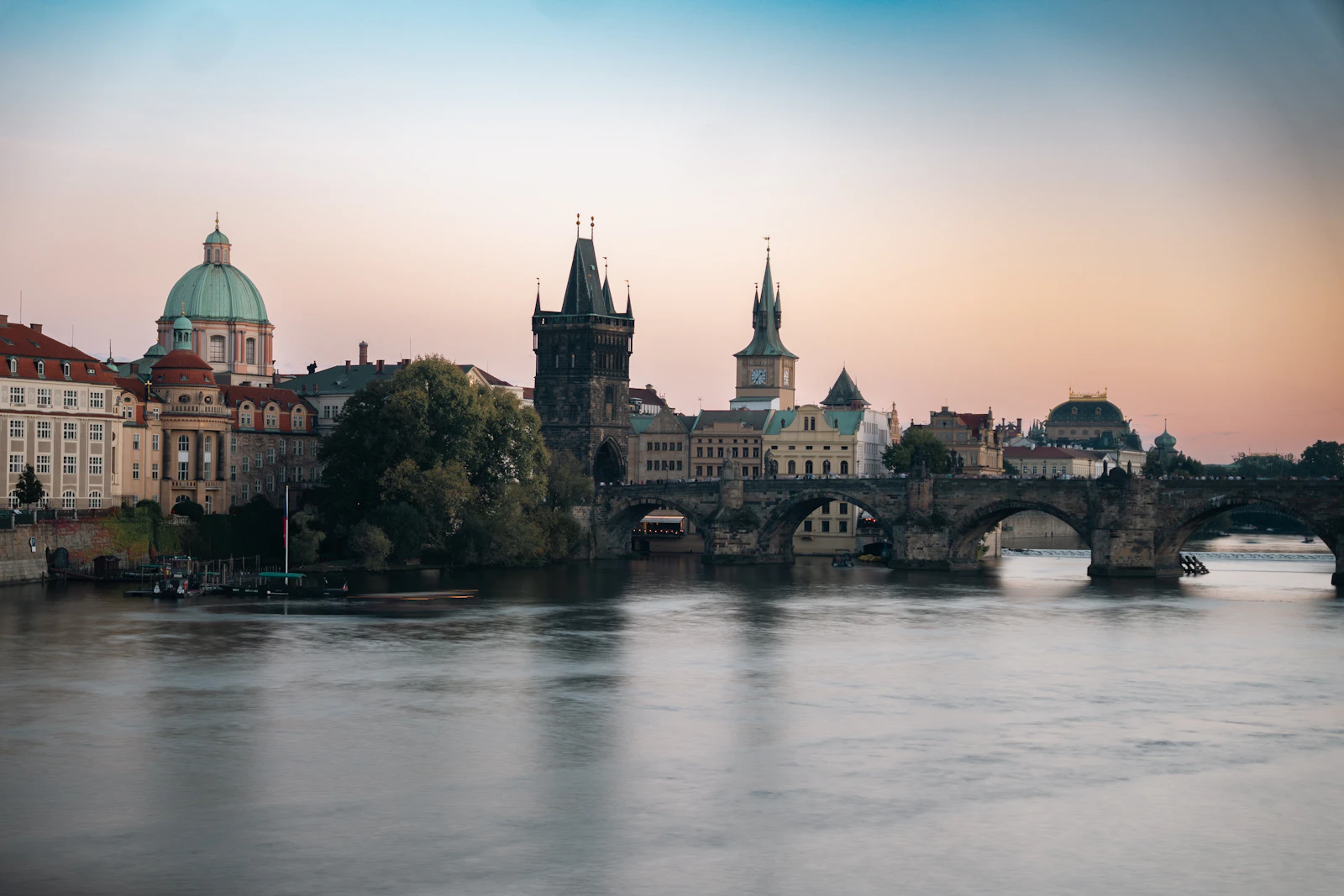
Cross Charles Bridge (Karluv most)—the iconic 14th-century span lined with 30 Baroque statues. Touch the bronze relief of St. John of Nepomuk for good luck (you'll spot it by the worn golden shine). The bridge is crowded midday with artists, musicians, and tourists—embrace the energy now, but plan to return at dawn on another morning for magic and solitude.
Evening: First Czech Beer
Experience Czech beer culture at a traditional pivnice (beer hall). U Zlateho Tygra (The Golden Tiger) on Husova Street was Vaclav Havel's favorite pub—he famously brought Bill Clinton here in 1994. The beer is Pilsner Urquell served tank-fresh, and the atmosphere is boisterous and unapologetically local. Arrive by 5pm for a seat; it fills fast and doesn't take reservations. Order pivo (beer) and pair it with utopence (pickled sausages) or nakladany hermelin (marinated Camembert). For dinner, walk to Lokal Dlouhááa on Dlouha Street—excellent tank Pilsner and traditional Czech plates like svickova and roast duck at fair prices (mains 200-350 CZK).
Charles Bridge at sunrise (6-7am) is magical and nearly empty. Serious photographers arrive before dawn.
Day 2: Castle District
Morning: Prague Castle
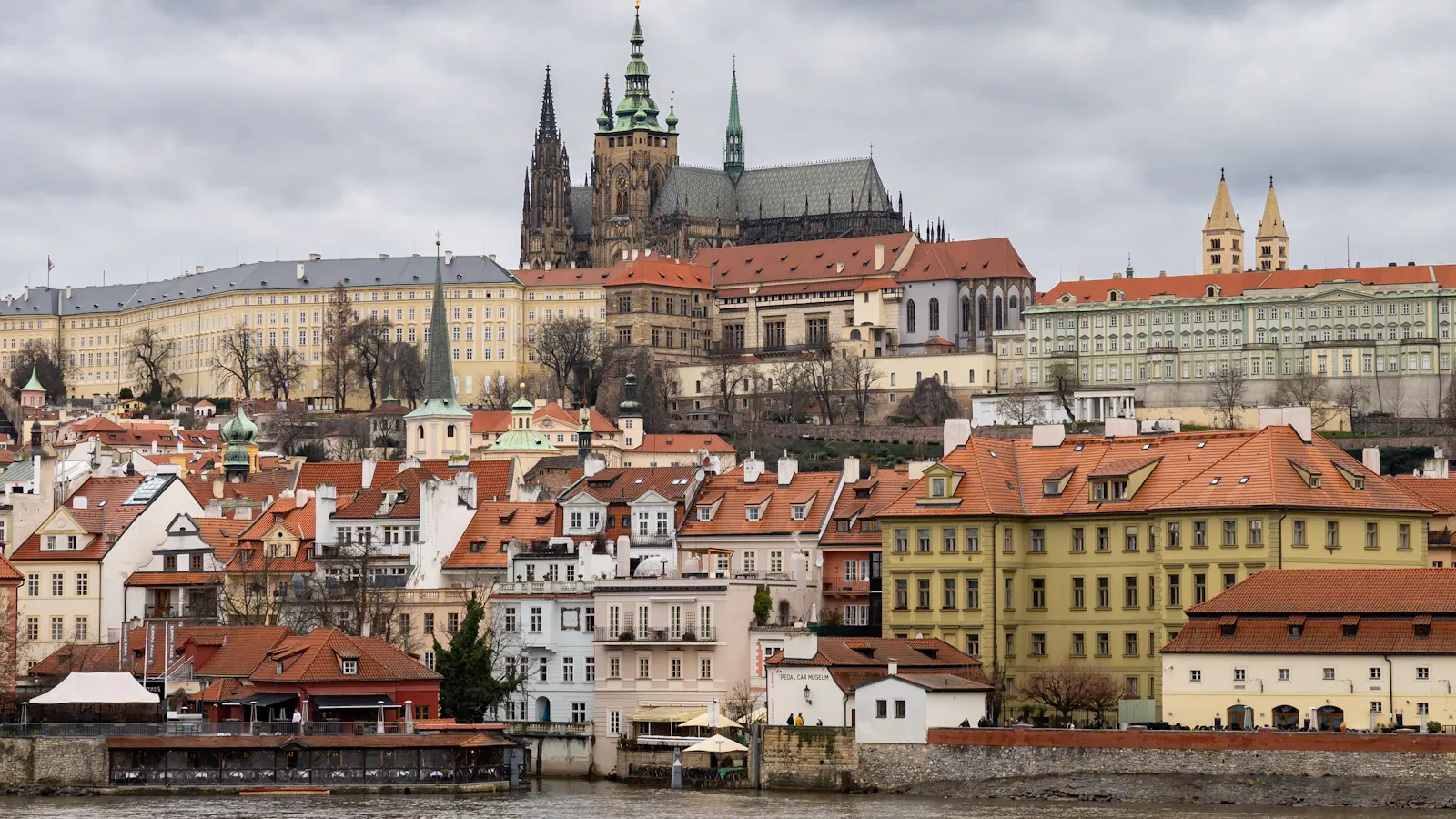
Arrive at Prague Castle (Prazsky hrad) when it opens at 9am—the world's largest ancient castle complex stretching 570 meters along the ridge. Buy the Circuit B ticket (250 CZK/~€10) which covers the essential sites:
- St. Vitus Cathedral: Gothic masterpiece that took 600 years to complete. The Mucha stained-glass window in the north nave is extraordinary—Art Nouveau meets medieval architecture. Climb the 287 steps of the Great South Tower for the best panorama in Prague (additional 150 CZK).
- Old Royal Palace: See Vladislav Hall with its remarkable rib vaulting and the window from which the 1618 Defenestration sparked the Thirty Years' War.
- Golden Lane: Tiny colorful houses built into the castle walls. Kafka lived and wrote at #22 in 1916-1917. The lane is included in your castle ticket.
- Castle gardens: Free to enter, with views over the red-roofed city stretching to the horizon.
Allow 3-4 hours for the full visit. The changing of the guard happens every hour at the main gate, with a more elaborate ceremony at noon.
Midday: Lesser Town
Descend to Mala Strana (Lesser Town) via the Old Castle Steps—a steep cobblestone path that drops you into a baroque dreamscape of palaces and embassy buildings. Wallenstein Garden (free, open April-October) offers peacocks strutting past Renaissance architecture and a bizarre drip-stone wall. For lunch, try U Maleho Glena on Karmelitska Street—a cozy basement joint with solid Czech food and live jazz in the evenings. Or head to Cafe Savoy on Vitezna Street for an upscale Czech brunch under ornate Neo-Renaissance ceilings (expect 350-500 CZK per person).
Afternoon: Petrin Hill
Climb Petrin Hill by funicular (runs every 10-15 minutes, covered by your transit pass) or on foot through wooded paths. The Petrin Observation Tower—a 63-meter miniature Eiffel Tower built in 1891—offers 360-degree panoramic views for 150 CZK. On clear days you can see 150 km to the Snezka summit. The rose gardens and quiet orchard paths provide escape from the tourist crowds below. The Mirror Maze next to the tower is a charming oddity worth the 5-minute detour (75 CZK).
Evening: Traditional Czech Dinner
Czech cuisine is hearty winter-survival food elevated to comfort art. Head to U Parlamentu on Valentinska Street near Old Town for a refined take on classics, or Kantyna on Politickych veznu for a meat-focused experience where you pick your cut at the butcher counter. Must-try dishes:
- Svickova na smetane: Beef sirloin braised in a creamy root-vegetable sauce with bread dumplings and cranberry—the national dish
- Vepro-knedlo-zelo: Roast pork with dumplings and braised sauerkraut
- Smaženy syr: Deep-fried Edam cheese with tartar sauce—Czech street food at its most gloriously unhealthy
Pair everything with tank beer or a glass of Moravian wine.
Day 3: Art and Neighborhoods
Morning: National Gallery or DOX
Choose your art preference:
- National Gallery (Veletrzni palac): Czech modern and contemporary art in a striking Functionalist building. The collection of Czech Cubism is world-unique—Prague is the only city where Cubist architecture exists. Entry 220 CZK (~€9). Open 10am-6pm, closed Mondays.
- DOX Centre for Contemporary Art: Thought-provoking exhibitions in a converted factory in Holesovice. Entry 250 CZK (~€10). The rooftop airship installation—a wooden zeppelin perched atop the building—is worth the visit alone. Open 10am-6pm, closed Tuesdays.
Midday: Vysehrad
Visit Vysehrad—the "other" castle, perched on a cliff above the Vltava. It's less touristed and equally historic, predating Prague Castle. The fortress grounds are free to enter. The Vysehrad Cemetery contains Dvorak, Smetana, Mucha, and other Czech luminaries—their graves are marked with ornate Art Nouveau monuments. The casemates (underground tunnels) are open for guided tours (60 CZK). The views over the Vltava River from the ramparts—with Prague Castle visible in the distance—are spectacular and crowd-free.
Afternoon: Vinohrady or Zizkov
Explore local neighborhoods that tourists miss:
- Vinohrady: Elegant, tree-lined boulevards with Art Nouveau apartment buildings, excellent wine bars, and some of Prague's best restaurants. Walk along Namesti Miru and peek into the Neo-Gothic Church of St. Ludmila. Stop at Vinograf for Czech wine flights (Moravian Gruner Veltliner and Frankovka are excellent) or grab coffee at Cafe Sladkovsky.
- Zizkov: Prague's grittiest, most bohemian neighborhood—once home to more pubs per capita than anywhere in Europe. The brutalist Zizkov Television Tower with David Cerny's crawling baby sculptures is a love-it-or-hate-it landmark. You can ride the elevator to the observation deck for 290 CZK (~€12).
Evening: Beer Culture Deep Dive
Prague takes beer seriously—the Czech Republic has the world's highest per-capita beer consumption at roughly 140 liters per person per year. This evening is dedicated to exploring why. Start at Zly Casy (Bad Times) in Nusle—40+ taps of Czech and international craft beer, knowledgeable staff, and a no-nonsense atmosphere. Move to Pivovarsky Klub near Florenc—a beer nerd's paradise with 240+ bottled beers and 6 rotating taps. For a historical finale, visit U Fleku on Kremencova Street—brewing the same dark lager continuously since 1499. Yes, it's touristy. Yes, the oompah band is cheesy. But a beer brewed in the same spot for over 500 years deserves your attention. Expect to pay 120 CZK per 0.4L here (tourist markup), but the courtyard setting is unique.
In Czech pubs, the waiter tracks your beers with tally marks on a slip of paper. They will keep bringing refills unless you place your coaster on top of your glass—that's the universal signal for "I'm done."
Day 4: Hidden Prague and Departure
Morning: Kafka and Literary Prague
Follow Kafka's footsteps through the city that shaped his surreal vision. Start at his birthplace on the corner of Maiselova and Kaprova streets (marked by a bronze plaque and a striking bust). Walk past the family apartment on Old Town Square and down to the narrow Golden Lane at the castle where he wrote in his sister's tiny house at #22. The Franz Kafka Museum on Cihelna Street in Mala Strana (200 CZK, open 10am-6pm) explores his life through letters, manuscripts, and an atmospheric installation that captures Prague's Kafkaesque spirit. The courtyard fountain by David Cerny—two figures urinating on a map of the Czech Republic—is peak Prague absurdism.
Midday: Lesser-Known Sites
Discover Prague's hidden gems that most visitors never find:
- Strahov Monastery: Two Baroque library halls—the Theological Hall (1679) and the Philosophical Hall (1794)—with exquisite ceiling frescoes and walls of ancient texts. You view them from the doorways and they are breathtaking. Entry 150 CZK. The monastery brewery serves excellent unfiltered lager on a terrace with castle views.
- John Lennon Wall: Constantly evolving street art in a quiet Mala Strana square. It began as a post-assassination memorial in 1980 and became a symbol of Czech resistance against communism. Bring a marker and add your own message.
- Naplavka Riverbank: The stretch of Vltava embankment south of the National Theater comes alive on weekends with farmers' markets, food stalls, and locals lounging on the stone banks. Even on weekdays it's a lovely walk.
Afternoon: Final Wandering
Return to favorites or explore new corners. Prague rewards aimless walking—every street reveals something unexpected. If time allows, cross the river to Kampa Island, a tranquil green space tucked beneath Charles Bridge with the David Cerny giant baby sculptures and views of the old mill wheel.
Before the Airport
Vaclav Havel Airport is 30-40 minutes from the center. The Airport Express bus (AE) runs every 30 minutes from the main train station (Hlavni nadrazi) for 100 CZK (€4). Uber/Bolt to the airport costs 400-600 CZK (€16-24). Allow extra time during morning rush hour. There's no direct metro to the airport—the bus or a ride-hail is your best bet.
Eat, Drink, and Savor
Essential Czech Dishes
- Svickova na smetane: Beef sirloin in creamy root-vegetable sauce with bread dumplings and lingonberry—the undisputed national dish. Every grandmother has her recipe; every restaurant is judged by theirs.
- Vepro-knedlo-zelo: Roast pork with dumplings and braised sauerkraut. The holy trinity of Czech comfort food.
- Gulasova polevka v chlebu: Goulash soup served in a hollowed-out bread bowl. Hearty, cheap (usually 120-160 CZK), and perfect on cold days.
- Smaženy syr: Deep-fried breaded Edam with tartar sauce and fries. Sounds simple—is addictive. The Czech answer to the late-night kebab.
- Knedliky: Czech dumplings in many forms—bread dumplings (houskove) with meals, fruit dumplings (ovocne) stuffed with plums or strawberries as dessert.
- Trdelnik: Chimney cake grilled over coals. The ice-cream-stuffed version at tourist stalls is a modern invention, not traditional Czech. Tasty regardless.
Czech Beer: A Field Guide
Czech beer is not a beverage—it's a cultural institution. Pilsner was literally invented here, in the city of Plzen in 1842. The essential styles and where to drink them:
- Pilsner Urquell: The original pale lager. Best served tankove (tank-fresh, unpasteurized). Try it at Lokal Dlouhááa or U Zlateho Tygra.
- Kozel: Smooth, slightly sweet. The dark (cerny) version is excellent and sessionable.
- Staropramen: Prague's local brewery. The unfiltered variant at the Staropramen Brewery visitor center in Smichov is worth the trip (tours 299 CZK).
- Bernard: A family brewery with organic options. Widely available and consistently excellent.
- Craft scene: Prague's craft beer explosion includes Matuska, Zichovec, and Clock. Find them all at Zly Casy or BeerGeek Bar in Vinohrady.
Moravian Wine and Czech Spirits
Don't overlook Czech wine—the Moravian wine region produces excellent whites (Gruner Veltliner, Riesling, Palava) and light reds (Frankovka, Svatovavrinecke). Vinograf in Vinohrady and Bokovka in Zizkov pour excellent Czech wines by the glass (80-150 CZK). For spirits, try becherovka—a herbal bitter liqueur from Karlovy Vary that Czechs drink as a digestif—or slivovice (plum brandy), which locals consume with alarming enthusiasm.
Cultural Experiences Not to Miss
Beer Hall Culture
A proper Czech pivnice is not a bar—it's a social institution with its own unwritten rules. You sit at long communal tables. The waiter brings beer without being asked and marks your tab on a paper slip. Conversation with strangers is expected, especially after the third round. U Zlateho Tygra is the classic—Pilsner Urquell only, no cocktails, no nonsense. U Medvidku on Na Perstyne Street has been pouring since 1466 and brews the strongest Czech beer (X-Beer 33 at 12.6% ABV). U Cerneho vola (The Black Ox) near the castle serves Kozel from the tank in a no-frills room where locals outnumber tourists ten to one. Arrive between 5-6pm, settle in, and plan to stay—rushing a pivnice misses the point entirely.
Classical Music and Opera
Prague's musical heritage runs from Dvorak and Smetana to Mozart, who premiered Don Giovanni here in 1787 and declared that Prague understood him. Rudolfinum (home of the Czech Philharmonic) and Municipal House's Smetana Hall host world-class performances with tickets starting from 300 CZK (~€12)—a fraction of what you'd pay in Vienna or London. The Estates Theatre on Ovocny trh is where Mozart conducted that Don Giovanni premiere; it still stages opera in the original 18th-century interior. Buy tickets at the venue box offices or via narodni-divadlo.cz. Avoid the costumed touts on the street selling overpriced "Mozart concerts" in churches—the quality is inconsistent.
Old Town and Mala Strana After Hours
Prague's historic core transforms after the tour groups leave. Walk the Old Town streets after 9pm when the crowds thin and the gas-style lanterns cast warm light on Gothic facades. Cross Charles Bridge in the quiet—the statues seem more imposing and the castle looms gold against the dark sky. In Mala Strana, wander the back streets behind Nerudova—tiny wine bars and jazz clubs hide behind unmarked doors. U Maleho Glena hosts live jazz nightly in its basement (cover charge 250 CZK). Jazz Dock on the riverbank in Smichov is a sleek modern venue floating on the Vltava with excellent acoustics and performances most nights (tickets 200-400 CZK). Even a simple walk along the Vltava embankment at night—with Prague Castle illuminated above—is unforgettable and free.
Avoid currency exchange booths in the tourist center—many advertise "0% commission" but use terrible rates. Use ATMs from major banks (Ceska Sporitelna, CSOB, Komercni banka) instead, and always decline the "conversion" option to get the real exchange rate.
Practical Tips for Travelers
Language
Czech is the official language and notoriously difficult for English speakers—the consonant clusters (zmrzlina for ice cream, ctvrt for quarter) look impossible on paper. English is widely spoken in the tourist center, restaurants, and hotels, but less common in neighborhood pubs and outer districts. A few basics are appreciated: dobry den (good day), dekuji (thank you), prosim (please), pivo (beer), and na zdravi (cheers). Menus in central areas almost always have English translations; outside the center, Google Translate or pointing works fine.
Etiquette
Czechs are reserved but warm once engaged. A firm handshake and direct eye contact are standard greetings. Tipping is expected—round up the bill or add 10-15% in restaurants. Tell the waiter the total you want to pay when they bring the bill (zaplatim, or "I'll pay"), rather than leaving cash on the table. In pubs, don't move chairs from other tables without asking. When toasting, look people in the eye, say na zdravi, and clink glasses. Czechs consider it rude to cross your arms while others are toasting.
Safety
Prague is very safe for tourists—violent crime is rare in the center. Watch for pickpockets on Charles Bridge, in Old Town Square, and on crowded trams (especially tram 22). Taxi scams still exist: always use Bolt, Uber, or Liftago rather than hailing cabs off the street. The biggest tourist trap is the currency exchange—use ATMs from reputable banks and always refuse the "dynamic currency conversion" option. Late at night, avoid the area around Wenceslas Square's lower end, which can attract aggressive touts for clubs.
If you have extra days, consider combining your Prague trip with Berlin, Vienna, and Budapest — all easy to reach and covered in our PTO-optimized travel guides.
Quick Takeaways
- Prague Castle requires 3-4 hours—arrive at 9am opening to beat the crowds.
- Charles Bridge at sunrise is magical and crowd-free.
- Czech beer is world-class and remarkably cheap (55-80 CZK / ~€2.20-3.20 per half-liter).
- Old Town is tourist-heavy; venture to Vinohrady and Zizkov for local life and better prices.
- April-June and September-October offer ideal conditions.
- Budget 2,000-3,500 CZK (~€80-140) per day for comfortable mid-range travel.
- Use lunch specials (poledni menu) for 140-200 CZK—the best value eating in the city.
- Download PID Litacka for transit passes and Bolt/Uber for rides to the airport.
- Use the Holiday Optimizer PTO calendar to plan which days to take off for your Prague trip.
Conclusion
Four days in Prague captures the fairy-tale essence—Gothic spires cutting through morning mist, the clatter of tram 22 climbing to the castle, the satisfying hiss of a fresh tank Pilsner being poured, and layers of history from Kafka's claustrophobic garrets to Havel's Velvet Revolution. This is a city that wears its centuries like a well-fitting coat, where you can walk from a 14th-century bridge to a communist-era brutalist tower to a cutting-edge contemporary gallery without breaking stride. The prices let you live well on a reasonable budget, and the compact center means you'll never waste time on long commutes.
Prague rewards the curious traveler who looks beyond the Astronomical Clock and the souvenir shops full of marionettes. The best moments here arrive unplanned—a courtyard concert drifting through an open window, a conversation with a local who insists you try their grandmother's slivovice, a quiet bench in Vysehrad where the Vltava bends below and the city stretches out like a medieval painting. Plan your mornings, leave your evenings open, and let Prague do what it has done for six hundred years: surprise you.
Ready to maximize your time off?
Find the best Prague travel windows
Frequently Asked Questions
-
Is 4 days enough in Prague? Yes. Four days covers the castle, Old Town, Jewish Quarter, key neighborhoods, and plenty of beer halls at a comfortable pace. You'll have time for day-by-day exploration without rushing, and still leave a few hours for aimless wandering—which is when Prague is at its best.
-
What is the best time to visit Prague? May and September are the sweet spots—mild weather (15-22°C), longer days, and fewer tour groups than peak summer. December is magical for Christmas markets but cold (averaging 0-3°C). July and August are warm but the most crowded months.
-
Do I need to book attractions in advance? Book Prague Castle tickets and Jewish Museum tickets online to skip queues—especially on weekends and in summer. Concert tickets at Rudolfinum and the Estates Theatre sell out for popular performances. Most other sites are fine to visit on the day.
-
How much should I budget per day? Excluding accommodation, plan 2,000-3,500 CZK (
€80-140) per day for mid-range travel. That covers two meals at sit-down restaurants, museum entries, transit, and plenty of beer. Budget travelers eating lunch specials and sticking to pubs can manage on 1,500 CZK (€60). -
Is Prague walkable? Extremely. The historic core—Old Town, Jewish Quarter, Charles Bridge, Mala Strana, and the castle—fits within a comfortable walking circuit. The only time you'll need transit is for Vysehrad, Vinohrady/Zizkov neighborhoods, or Petrin Hill (funicular). Wear comfortable shoes—the cobblestones are beautiful but unforgiving.
Share Your Thoughts
Did this guide help you plan your Prague long weekend? Share it with friends and tell us which neighborhood surprised you most—the medieval lanes of Old Town, the bohemian pubs of Zizkov, or the quiet gardens of Mala Strana. We'd love to hear your favorite Prague pivnice discovery.