Rome in 4 Days: Long Weekend Itinerary & PTO Planner for 2026
Plan a Rome getaway with a detailed 4-day itinerary, neighborhood guide, Vatican and Tivoli tips, traditional food recommendations, and a realistic budget breakdown for 2026.
Introduction
Planning a long weekend in Rome and want the perfect blend of ancient history, world-class art, incredible food, and la dolce vita? This guide walks you through an immersive four-day itinerary that covers the Eternal City's iconic landmarks, hidden neighborhood gems, and a day trip to the stunning villas of Tivoli. From standing where gladiators once fought to tossing coins in the Trevi Fountain, from Michelangelo's Sistine Chapel to perfect plates of carbonara in centuries-old trattorias, this guide is designed for curious travelers seeking an authentic Roman adventure in 2026.
Whether it's your first time in Italy or you're returning for deeper exploration, you'll discover practical tips on navigating the ancient ruins, the best times to visit crowded sites, and local food experiences that go far beyond tourist menus. After reading this guide, you'll have a clear day-by-day plan and the confidence to experience Rome like the Romans do.
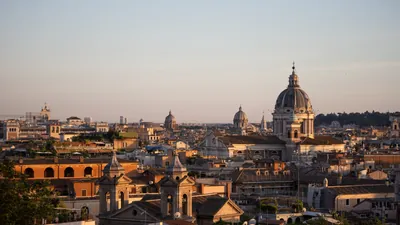
 Rome's skyline blends ancient ruins with Renaissance domes.
Planning a longer trip? Check out our extended Rome itinerary covering 7-9 days of in-depth exploration. Use our PTO optimizer to find the best days to take off around your trip dates.
Why Rome Is a Must-Visit Destination in 2026
History Like Nowhere Else
Rome isn't just historic—it's the foundation of Western civilization. Walk the same streets as emperors and gladiators, stand in the Forum where Caesar was assassinated, and marvel at engineering feats that have stood for two millennia. With over 2,500 years of continuous history layered upon itself, every cobblestone tells a story. The Colosseum, the Pantheon, the Vatican—these aren't just monuments, they're living connections to humanity's past.
What Makes Rome Unique vs Other Italian Cities
While Florence dazzles with Renaissance art and Venice enchants with canals, Rome delivers something no other city can: the weight of history combined with vibrant modern life. Ancient temples share streets with buzzing scooters. Papal processions wind past sidewalk cafés. The city that once ruled the known world now serves as a living museum where you can touch history—literally—at nearly every turn. And unlike museum cities, Rome pulses with energy, nightlife, and one of the world's great food scenes.
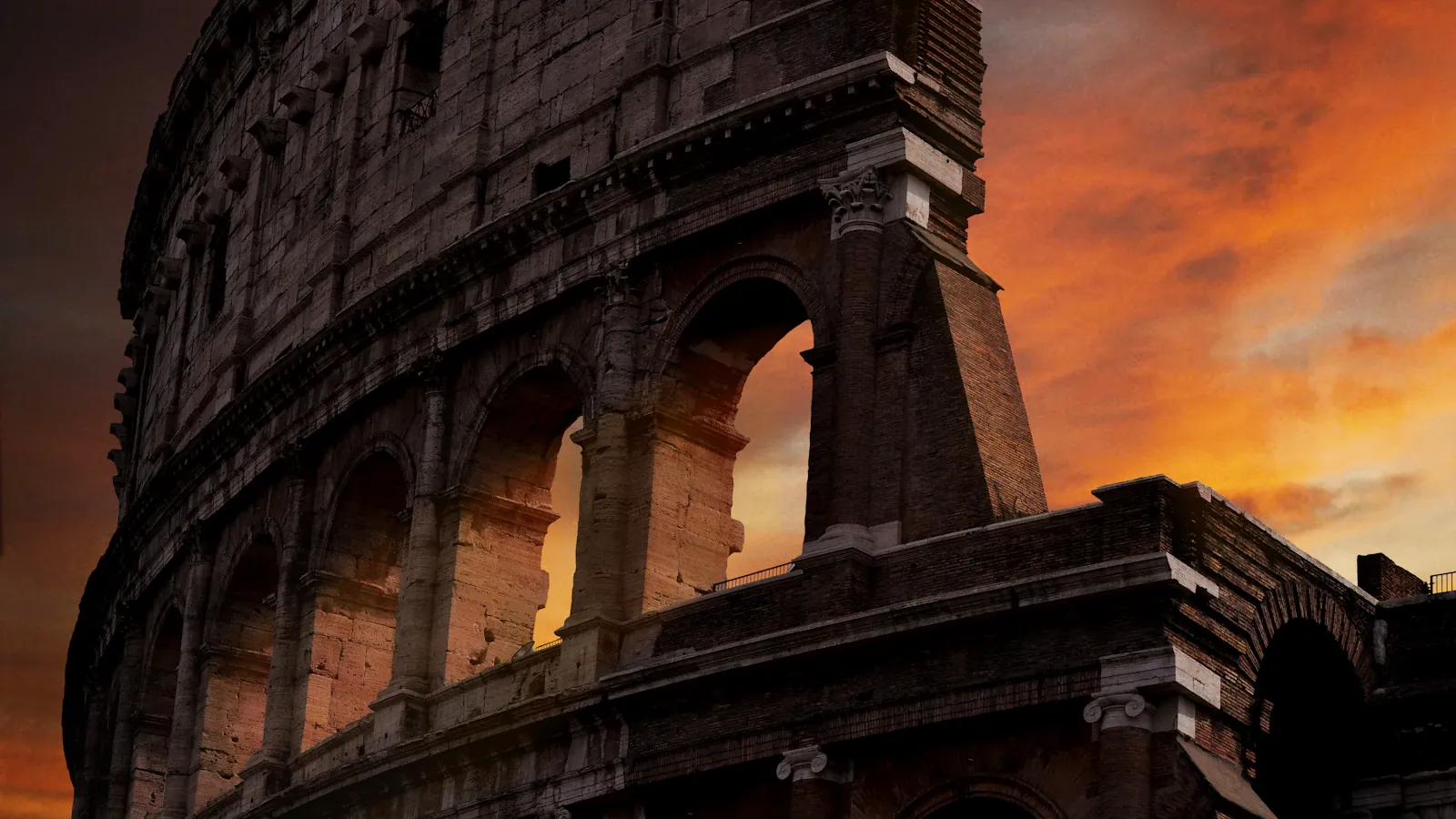
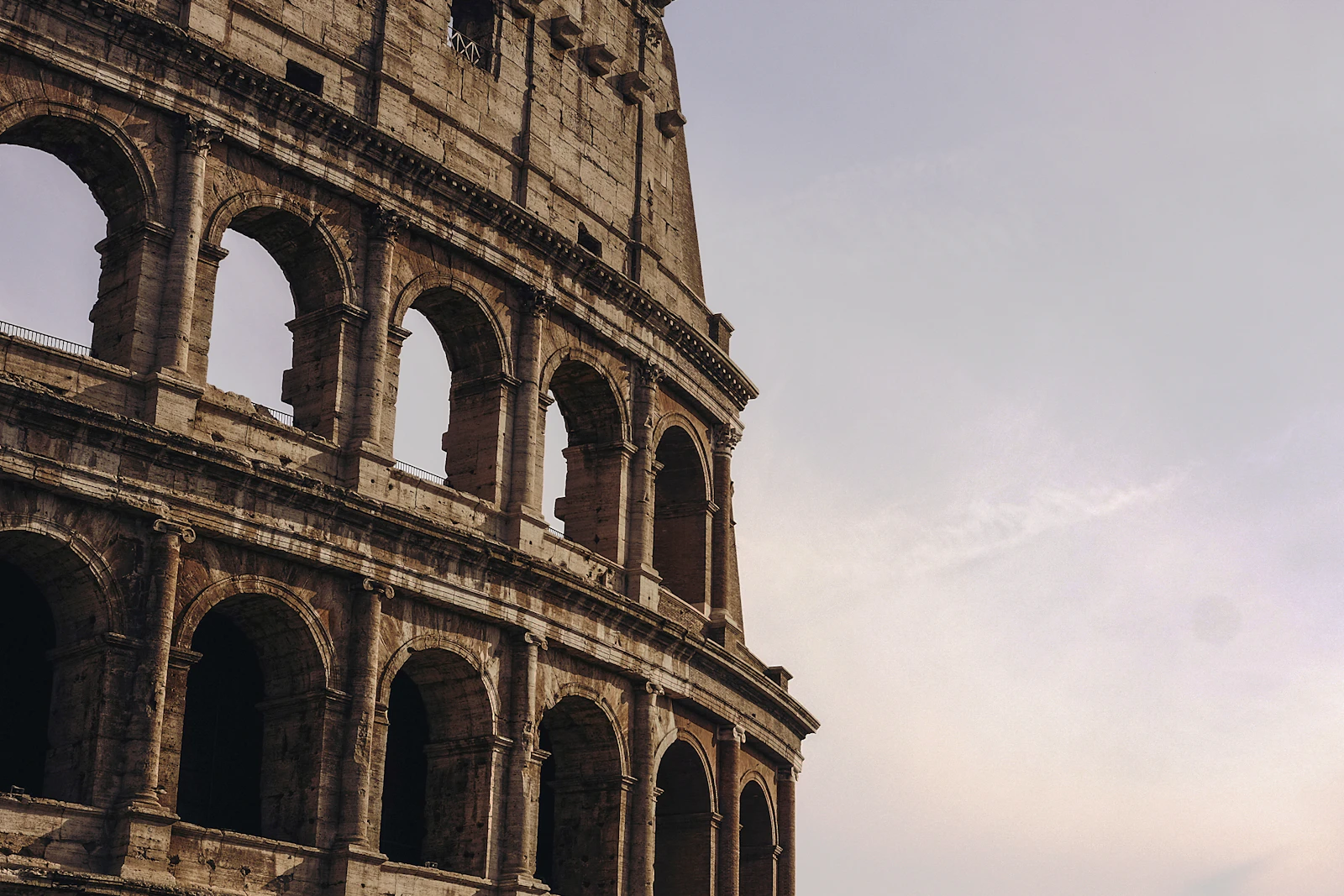 The Colosseum remains Rome's most iconic landmark after nearly 2,000 years.
Planning Your Trip Essentials
Use the Holiday Optimizer to find the best days to book off around public holidays for your Rome trip.
Best Time to Visit
Rome is a year-round destination, but the sweet spots are April through June and September through October—shoulder seasons with comfortable temperatures (65-75°F/18-24°C), manageable crowds, and pleasant weather for walking. Summer (July-August) brings intense heat (90°F+) and peak tourist crowds. Winter (November-February) offers mild temperatures, fewer visitors, and lower prices, though some days can be rainy.
2025-2026 Jubilee Year: The Catholic Church's Jubilee runs from December 24, 2024 through January 6, 2026. Rome expects up to 35 million additional pilgrims, potentially doubling normal visitor numbers. Book accommodations and major attractions 6-12 months in advance, and expect higher prices near the Vatican.
Transportation Basics
Rome's historic center is compact and best explored on foot. The metro has three lines but doesn't cover the centro storico well—it was built to avoid ancient ruins. Buses are comprehensive but can be confusing for first-timers. Taxis are regulated with fixed rates to airports (€50 from Fiumicino, €30 from Ciampino). Uber exists but isn't as common as in other cities.
Accommodation Choices
- Centro Storico: Walking distance to Pantheon, Trevi, Piazza Navona. Most expensive, most touristy, but unbeatable convenience.
- Monti: Hip, bohemian neighborhood near the Colosseum. Great restaurants, vintage shops, less crowded than the center.
- Trastevere: Charming medieval streets across the river. Best food scene, romantic atmosphere, 20-30 minute walk to main sights.
- Testaccio: Working-class neighborhood with the city's best traditional trattorias. Fewer tourists, authentic Roman life.
Travel Costs and Budgeting
To maximize your days off without extra PTO, use the free Holiday Optimizer to find bridge days around public holidays for your Rome trip.
Daily Budget Breakdown
Rome is moderately expensive by European standards, but careful planning stretches your euros. Budget travelers can manage on €55-80 per day (excluding accommodation), mid-range travelers should plan €100-150, and premium experiences push €200+.
Cost-Saving Tips
Have your coffee standing at the bar—sitting at a table can double the price. Embrace aperitivo culture: for €10-15, enjoy a drink with access to food buffets that can replace dinner. Buy the Roma Pass for unlimited transport and free entry to two museums. Eat in neighborhoods like Testaccio and Trastevere where locals dine.
Food and Dining Typical Costs
- Coffee (espresso, standing): €1.00-1.50
- Coffee (sitting at table): €2.50-4.00
- Gelato: €2.50-5.00
- Pizza al taglio (by the slice): €2-4
- Pasta at quality restaurant: €10-15
- Full dinner with wine: €25-45
- Fine dining: €80-150+
- Aperitivo with buffet: €10-15
Day 1: Ancient Rome
Begin your journey in the heart of the ancient empire—the ruins that made Rome the center of the Western world.
Morning: Colosseum, Forum, and Palatine Hill
Start early at the Colosseum (open 9am), the massive amphitheater commissioned by Emperor Vespasian in 72 CE. Book skip-the-line tickets online—the queues are legendary. A guided tour is worth the investment here; without context, the ruins can feel like piles of old stones. Allow 1.5-2 hours for the Colosseum alone.
Your ticket includes access to the Roman Forum and Palatine Hill. The Forum—once the political, religious, and commercial heart of the empire—is mostly ruins today, making a guide invaluable. Climb Palatine Hill for stunning views over the Forum and the city beyond.
The biggest tip for Rome is to limit yourself to ONE major sight per day (Colosseum, Vatican, or Borghese Gallery). Each takes significant energy, and trying to rush between them ruins the experience.
Afternoon: Jewish Ghetto and Capitoline Museums
Walk to the Jewish Ghetto (Ghetto Ebraico), one of Rome's most atmospheric neighborhoods and home to excellent restaurants serving Roman-Jewish cuisine. Try carciofi alla giudia (fried artichokes) or fiori di zucca (fried zucchini flowers).
After lunch, climb to the Capitoline Museums on Capitoline Hill—the world's oldest public museum, founded in 1471. The collection includes the iconic Capitoline Wolf sculpture and Bernini's Medusa head. The terrace café offers spectacular Forum views.
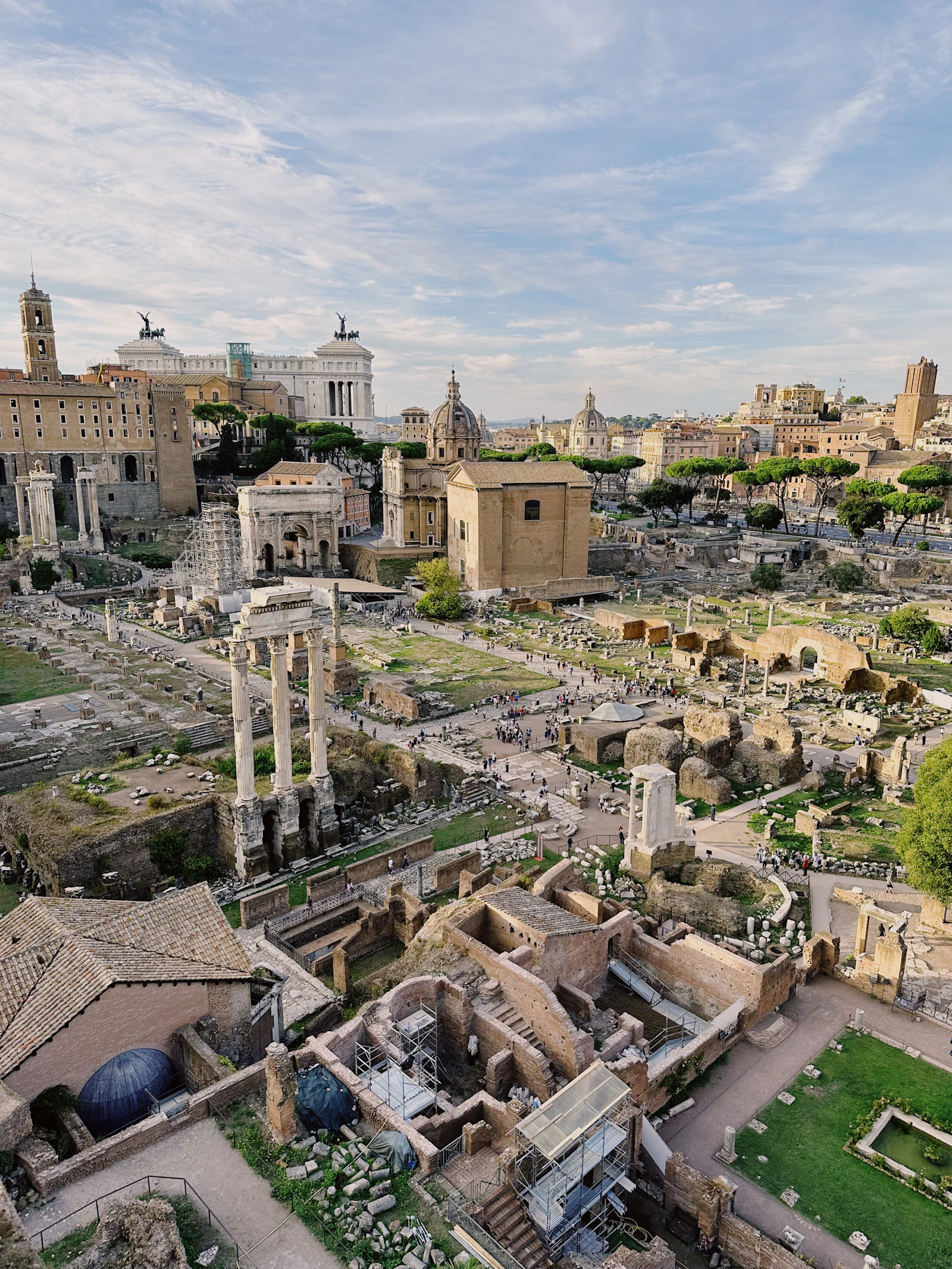 The Roman Forum reveals layers of ancient civilization.
Evening: Monti Neighborhood
Head to Monti, Rome's oldest rione (district), now transformed into a trendy hub of vintage boutiques, wine bars, and excellent restaurants. Start with aperitivo at Blackmarket Hall, then dinner at a neighborhood trattoria. The narrow streets come alive after dark.
Day 2: Historic Center and Renaissance Rome
Today explores the centro storico—the historic heart where Renaissance Rome meets everyday Italian life.
Morning: Trevi Fountain and Spanish Steps
Start at the Trevi Fountain at 7am—seriously. This baroque masterpiece draws enormous crowds, and early morning is the only time you'll experience it without fighting for position. Toss a coin (right hand over left shoulder) to ensure your return to Rome.
Walk to the Spanish Steps (no sitting allowed after the recent restoration) and climb to the Trinità dei Monti church for views across the city. The surrounding streets are Rome's luxury shopping district—window shopping is free.
Midday: Pantheon and Piazzas
The Pantheon is Rome's best-preserved ancient monument and perhaps its most impressive. Originally built in 27 BCE and rebuilt in the 2nd century, the massive unreinforced concrete dome remains the largest of its kind nearly 2,000 years later. The oculus (open hole in the ceiling) creates a mystical beam of light. Entry is now ticketed (€5) to manage crowds.
Wander to Piazza Navona—built on the ruins of a stadium—for its famous fountains and street artists. Then to Campo de' Fiori for the morning market (produce, flowers, spices) and people-watching at the surrounding cafés.
Afternoon: Churches and Caravaggio
Rome's churches contain world-class art—for free. Visit San Luigi dei Francesi for three stunning Caravaggio paintings depicting the life of St. Matthew. Then Santa Maria del Popolo for more Caravaggio plus Raphael and Bernini. These experiences rival any museum.
Evening: Trastevere
Cross the Tiber to Trastevere for dinner in Rome's most charming neighborhood. Book ahead at Da Enzo al 29 for legendary carbonara, or explore the winding streets and follow your nose. The piazzas fill with locals, students, and tourists mixing over wine and aperitivi.
Day 3: Vatican City
The world's smallest independent state holds one of its largest concentrations of artistic treasures. This day requires planning and patience.
Morning: Vatican Museums and Sistine Chapel
Book skip-the-line tickets online for the Vatican Museums weeks in advance—this cannot be stressed enough. Arrive when they open (8am) or book an early-access tour to have galleries nearly to yourself.
The museums contain 7 kilometers of galleries, so plan your route. Highlights include the Raphael Rooms, the Gallery of Maps, and the Belvedere Courtyard. Everything builds to the Sistine Chapel and Michelangelo's transcendent ceiling. No photos are allowed, and talking is discouraged—sit on the benches and absorb it.
Photography rules vary by gallery—flash is always prohibited. Dress modestly: shoulders and knees must be covered for both the museums and St. Peter's Basilica. Guards turn visitors away.
Midday: St. Peter's Basilica
Exit the Sistine Chapel directly into St. Peter's Basilica (or queue outside if you skip the museums). The world's largest church contains Michelangelo's Pietà, Bernini's baldachin, and papal tombs. Climb the dome (551 steps, or elevator + 320 steps) for the best view in Rome.
Afternoon: Castel Sant'Angelo
Walk along the Tiber to Castel Sant'Angelo, the cylindrical fortress that began as Emperor Hadrian's mausoleum and later served as a papal fortress connected to the Vatican by secret passage. The rooftop terrace offers spectacular views and a café for recovery.
Evening: Relaxation
After the Vatican's intensity, take it easy. Aperitivo in Prati (the neighborhood around the Vatican) or return to Trastevere for a leisurely dinner. You've earned it.
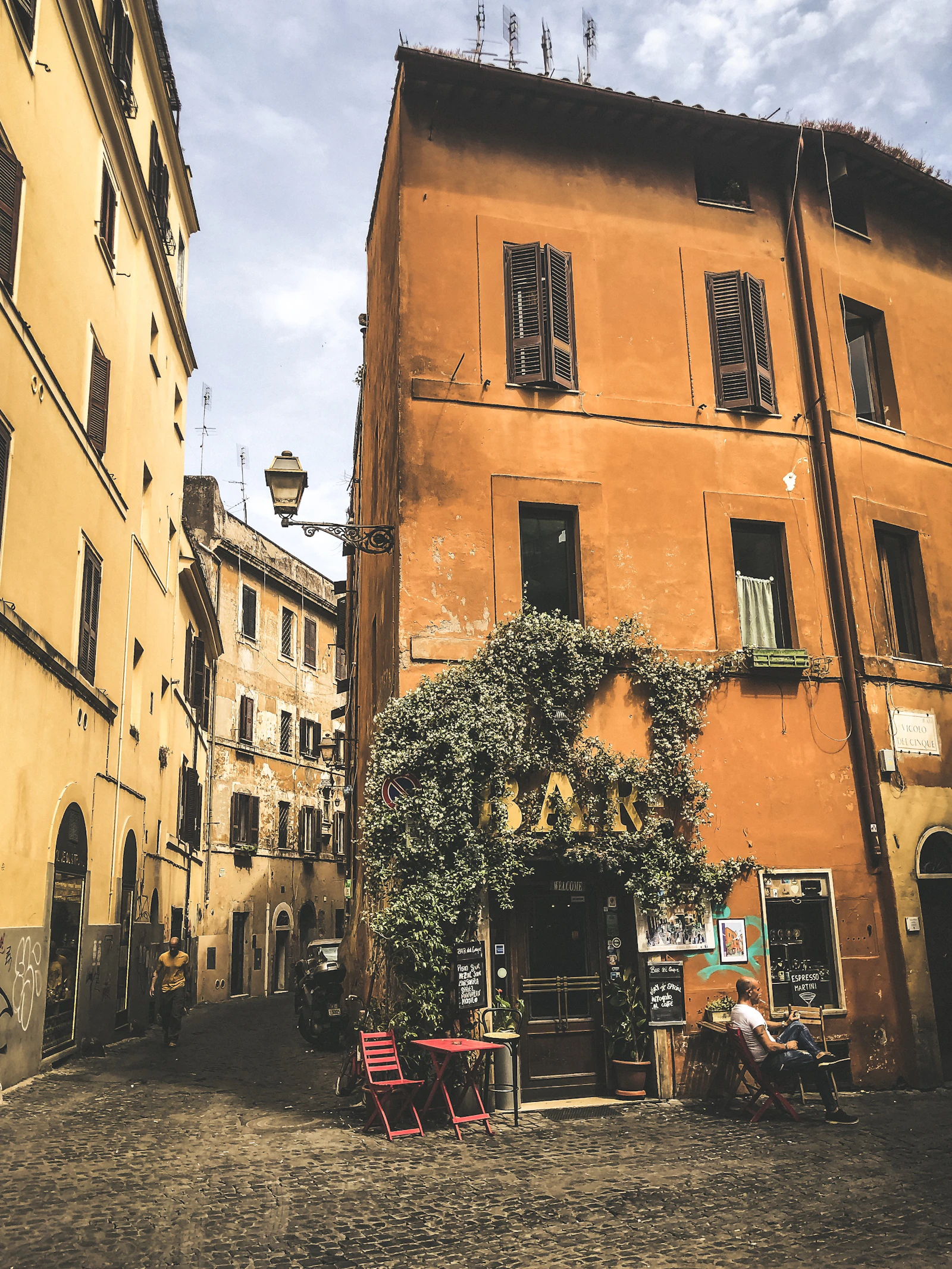 St. Peter's Square welcomes millions of visitors each year.
Day 4: Villas, Gardens, and Departure
Use your final day for neighborhoods you haven't explored, world-class art, or a day trip to Tivoli.
Option A: Tivoli Day Trip
Just 30 kilometers from Rome, Tivoli contains two UNESCO World Heritage Sites accessible by train (45 minutes from Termini) or bus (50 minutes from Ponte Mammolo metro station).
Villa d'Este: A Renaissance cardinal's palace famous for its extraordinary garden of 51 fountains, 398 spouts, and 64 waterfalls. The "water organ" fountain actually plays music. Allow 2-3 hours.
Hadrian's Villa: The sprawling retreat of Emperor Hadrian, featuring preserved mosaics, frescoes, and pools. One of Italy's most impressive archaeological sites. Allow 2-3 hours.
Combined tickets are available and recommended. Book skip-the-line access in peak season.
Option B: Borghese Gallery and Villa
The Galleria Borghese houses an unrivaled collection of Bernini sculptures and Caravaggio paintings in a beautiful villa setting. Tickets are strictly limited to 2-hour time slots—book weeks in advance (this is not optional; walk-ups are rarely possible).
After the gallery, stroll through Villa Borghese, Rome's central park. Rent a rowboat on the lake, visit the viewpoint at Pincio terrace, or simply wander the paths.
Option C: Testaccio Food Tour
Explore Rome's working-class food neighborhood. Visit the Testaccio Market for local products, then lunch at Flavio al Velavevodetto (built into an ancient mountain of broken amphorae) for award-winning carbonara. This is where Romans eat.
Before the Airport
Rome has two airports: Fiumicino (main international, 45-60 minutes by train/taxi) and Ciampino (budget airlines, 30-40 minutes by bus/taxi). The Leonardo Express train runs from Termini to Fiumicino every 15 minutes (€14). Fixed taxi rates apply: €50 from Fiumicino, €30 from Ciampino.
Eat, Drink, and Savor
The Four Classic Roman Pastas
Rome's pasta tradition centers on four iconic dishes, all based on indigenous pecorino romano cheese:
- Cacio e Pepe: Pasta, pecorino, and black pepper. Deceptively simple, devastatingly good when done right.
- Carbonara: Guanciale (cured pork jowl), egg, pecorino, pepper. Never cream—if there's cream, walk out.
- Amatriciana: Guanciale, tomato, pecorino, chili. Named after the town of Amatrice.
- Gricia: Guanciale, pecorino, pepper. Carbonara without the egg, amatriciana without the tomato.
Where to Eat
Testaccio (Traditional Roman):
- Flavio al Velavevodetto: Award-winning carbonara in a cave setting
- Felice a Testaccio: Famous for tableside cacio e pepe
- Checchino dal 1887: Classic since 1887, all four pastas
Trastevere (Charming + Excellent):
- Da Enzo al 29: Intimate trattoria, book ahead
- Trattoria Da Teo: Local favorite, traditional menu
- Supplì Roma: Perfect fried rice balls
Centro Storico (Convenient + Quality):
- Armando al Pantheon: Six decades of family cooking, near the Pantheon
- Roscioli Salumeria: Famous for cacio e pepe, book weeks ahead
Street Food and Quick Bites
- Supplì: Fried rice balls with mozzarella center
- Pizza al taglio: Roman-style pizza sold by weight
- Trapizzino: Triangular pizza pocket stuffed with Roman dishes
- Fiori di zucca: Fried zucchini flowers, often stuffed with mozzarella and anchovy
Aperitivo Culture
The Italian tradition of pre-dinner drinks with food is alive in Rome. For €10-15, you get a drink (Aperol Spritz, Negroni, wine) and access to food that ranges from chips to full buffets. Popular spots include the bars around Monti, Campo de' Fiori, and Trastevere.
Cultural Experiences Not to Miss
Churches as Art Museums
Rome's 900+ churches contain priceless art—often free. Beyond San Luigi dei Francesi and Santa Maria del Popolo, don't miss:
- Santa Maria della Vittoria: Bernini's Ecstasy of St. Teresa
- Sant'Ignazio: Mind-bending ceiling illusion
- Santa Maria Maggiore: 5th-century mosaics
Viewpoints
Rome's seven hills provide natural viewpoints:
- Pincio Terrace: Best sunset views over Piazza del Popolo
- Giardino degli Aranci (Orange Garden): Aventine Hill, overlooking the city
- Palatine Hill: Views over the Roman Forum
- St. Peter's Dome: 551 steps to the best view in Rome
Roman Traditions
- Passeggiata: The evening stroll where Romans parade through the streets before dinner
- Aperitivo: Pre-dinner drinks with food, typically 6-8pm
- Pranzo: Lunch is still the main meal for many Romans, with shops closing 1-4pm
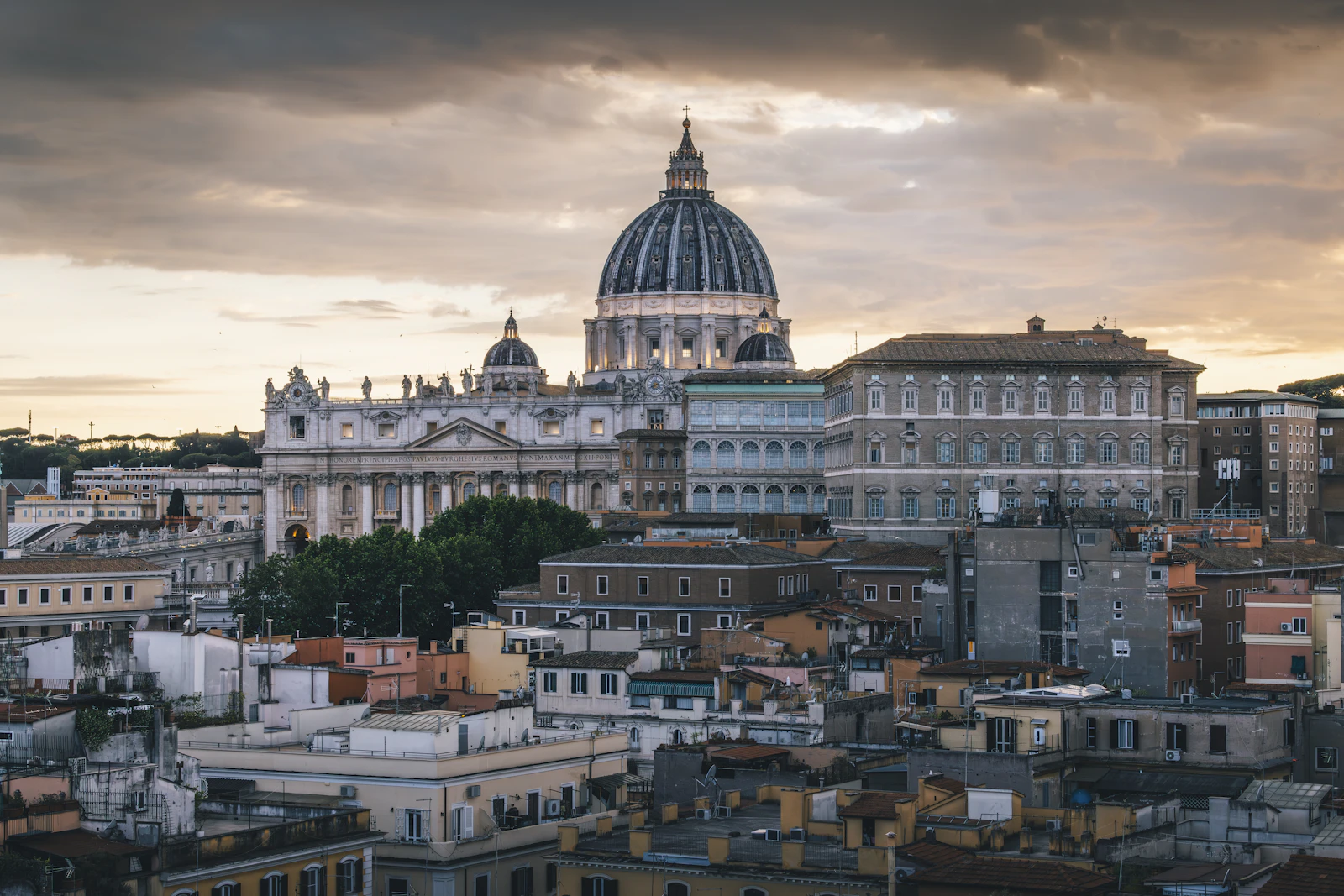 Sunset from the Pincio terrace is a Roman tradition.
Practical Tips for Travelers
Navigating the Sites
Book skip-the-line tickets for Colosseum, Vatican Museums, and Borghese Gallery—these are non-negotiable. Arrive at popular sites when they open. Download offline maps; cell service can be spotty in ancient ruins.
Money and Tipping
Italy uses the Euro. Credit cards are widely accepted, but carry cash for small purchases and traditional trattorias. Tipping isn't expected (service is usually included as coperto or servizio), but rounding up or leaving a few euros for excellent service is appreciated.
Safety
Rome is generally safe, but watch for pickpockets around the Colosseum, on crowded buses, and at Termini station. Keep valuables secure and stay aware in tourist-heavy areas. Avoid "gladiators" offering photos—they demand payment.
Language
Italian is the language, but English is widely spoken in tourist areas and restaurants. Learn basics: grazie (thank you), prego (you're welcome/please), il conto (the bill).
Long-Tail Keywords
- rome long weekend itinerary 2026
- rome 4 day itinerary with tivoli day trip
- best time to visit rome 2026
- rome travel budget and costs
- rome neighborhoods and food guide
If you have extra days, consider combining your Rome trip with Milan, Vienna, and Athens — all easy to reach and covered in our PTO-optimized travel guides.
Quick Takeaways
- Rome blends 2,500 years of history with vibrant modern life.
- Limit yourself to ONE major site per day—Colosseum, Vatican, or Borghese.
- Book skip-the-line tickets for major attractions weeks in advance.
- The four classic pastas (cacio e pepe, carbonara, amatriciana, gricia) are essential eating.
- Trastevere and Testaccio offer the best food scenes.
- Shoulder seasons (April-June, September-October) offer ideal conditions.
- Budget €100-150/day for comfortable mid-range travel.
- Use the Holiday Optimizer PTO calendar to plan which days to take off for your Rome trip.
Conclusion
Spending four days in Rome—with time for ancient ruins, Vatican treasures, neighborhood wandering, and exceptional food—captures the essence of the Eternal City: layers of history, world-class art, and a lifestyle that prioritizes pleasure and beauty. This guide outlines how to structure your time, balance iconic landmarks with authentic local experiences, and savor the food and culture that make Rome one of the world's great destinations.
Rome has a way of overwhelming first-time visitors—there's simply too much to see. But that's the beauty: you'll never see it all, and you'll always have a reason to return. Toss a coin in the Trevi Fountain and start planning your next visit before this one ends.
Ready to maximize your time off?
Find the best Rome travel windows
Frequently Asked Questions
-
Is four days enough in Rome? Yes, four days allows you to cover the essential ancient sites, Vatican, and several neighborhoods while leaving time for great meals and wandering. You won't see everything—no one does—but you'll experience Rome's essence.
-
What is the best season to visit Rome? April-June and September-October offer ideal weather (65-75°F), manageable crowds, and pleasant walking conditions. Avoid July-August if possible due to heat and peak crowds.
-
Do I need to speak Italian? No, English is widely spoken in tourist areas, hotels, and most restaurants. Learning basics like grazie and buongiorno is appreciated and goes a long way.
-
Should I book skip-the-line tickets? Absolutely yes for the Colosseum, Vatican Museums, and Borghese Gallery. These are non-negotiable—queues can exceed 2-3 hours without pre-booked tickets.
-
What should I know about dress codes? Shoulders and knees must be covered to enter the Vatican and most churches. Guards turn away visitors in shorts, tank tops, or short skirts. Carry a scarf or light cover-up.
Share Your Thoughts
Did this guide help you plan your long weekend? Share your favorite Roman memory or ask a question you still have. Please share this guide with fellow travelers and let us know where you're headed next!