Marrakech in 4 Days: Long Weekend Itinerary & PTO Planner for 2026
Plan a Marrakech getaway with a detailed 4-day itinerary, medina navigation tips, riad recommendations, and a realistic budget breakdown for 2026.
Introduction
Marrakech assaults the senses and rewards surrender. Morocco's Red City offers labyrinthine souks where you'll get gloriously lost, riads hiding courtyard paradises behind anonymous doors, the nightly theater of Jemaa el-Fnaa square, and a visual culture—zellige tiles, carved plaster, intricate woodwork—that has captivated travelers for centuries. This guide walks you through an immersive four-day itinerary that balances the essential landmarks with the unexpected discoveries that make Marrakech unforgettable.
Whether you're drawn to Marrakech for its North African exoticism, its artisan traditions, or the simple pleasure of mint tea on a rooftop terrace, you'll discover a city that demands engagement. After reading this guide, you'll have a clear day-by-day plan to experience both the Marrakech of famous monuments and the Marrakech that reveals itself only to those who wander.
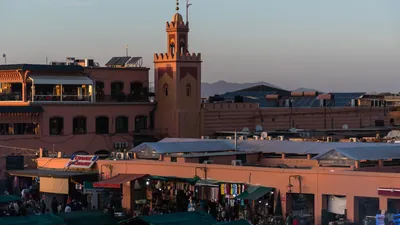
 Jemaa el-Fnaa transforms nightly into the world's greatest open-air spectacle.
Planning a longer trip? Check out our extended Marrakech itinerary covering 7-9 days of in-depth exploration. Use our PTO optimizer to find the best days to take off around your trip dates.
Why Marrakech Is a Must-Visit Destination in 2026
A Gateway to Another World
Marrakech is close to Europe—under three hours from London or Paris—yet feels utterly different. The call to prayer echoes from minarets. Donkeys carry goods through medieval streets. Artisans work as their ancestors did centuries ago. For European travelers especially, Marrakech offers accessible immersion in a completely different cultural world.
What Makes Marrakech Unique
The medina (old city) is a UNESCO World Heritage site and a living, working community. Behind the tourism, real commerce continues: metalworkers hammering in the souks, leather tanners using traditional methods, families living in centuries-old riads. The modern Ville Nouvelle adds contrast, but the medina remains Marrakech's soul—chaotic, beautiful, and impossible to fully know.
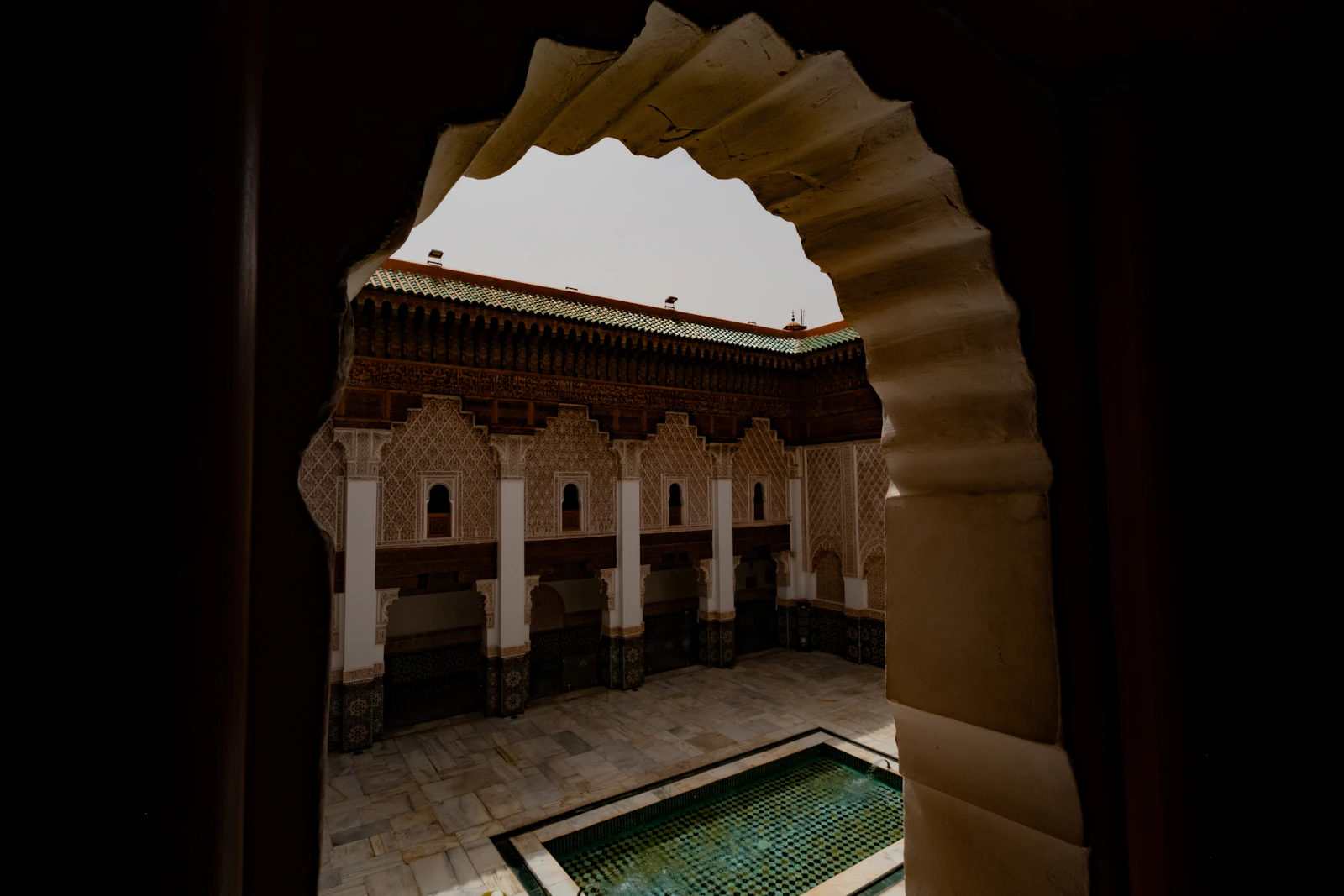 Riads hide serene courtyards behind the medina's anonymous walls.
Planning Your Trip Essentials
Use the Holiday Optimizer to find the best days to book off around public holidays for your Marrakech trip.
Best Time to Visit
Marrakech is best in spring (March-May) and autumn (September-November) when temperatures are pleasant (20-28°C/68-82°F). Summer (June-August) is extremely hot (40°C+/104°F+)—endurable but exhausting. Winter (December-February) is mild and sunny but cold at night and in riads (most lack central heating).
Transportation Basics
Within the medina, walk—there's no alternative. The souks are too narrow for vehicles, and getting lost is part of the experience. For the Ville Nouvelle or outlying areas, use petit taxis (negotiate price first or insist on meter). Horse-drawn carriages (calèches) are touristy but pleasant for longer distances. Airport transfers are best arranged through your riad.
Accommodation Choices
- Riad in the medina: Traditional courtyard houses converted to guesthouses. The Marrakech experience—intimate, atmospheric, often stunning. Navigation can be challenging; riads often send guides.
- Hotel in Ville Nouvelle/Hivernage: Modern conveniences, pools, easier access. Less atmospheric but comfortable.
- Luxury hotel outside medina: La Mamounia, Royal Mansour, and others offer palatial experiences with medina proximity.
Travel Costs and Budgeting
To maximize your days off without extra PTO, use the free Holiday Optimizer to find bridge days around public holidays for your Marrakech trip.
Daily Budget Breakdown
Marrakech offers excellent value by European standards, though tourism has raised prices. Budget travelers can manage €40-60 per day (excluding accommodation), mid-range travelers should plan €70-100, and premium experiences push €150+.
Cost-Saving Tips
Many sights are inexpensive; riad stays often include breakfast. The souks offer bargains if you negotiate well (expect to pay 50-70% of initial asking price). Street food is cheap and often excellent. Avoid guides who approach you unsolicited—they'll steer you to commission-paying shops.
Food and Dining Typical Costs
- Mint tea: €0.50-1
- Tagine at local restaurant: €5-10
- Dinner at nice restaurant: €15-30
- Fine dining: €50-100+
- Fresh orange juice: €0.50-1
- Pastilla (savory pie): €8-15
- Street food: €1-3
Day 1: Medina Essentials
Begin your journey in Marrakech's historic heart.
Morning: Jemaa el-Fnaa by Day
Start at Jemaa el-Fnaa, the medina's central square. Morning is calm—orange juice vendors, spice sellers, a few snake charmers setting up. Walk the perimeter to orient yourself, have fresh-squeezed orange juice (€0.50), and observe the square's geography. The Koutoubia Mosque minaret rises to the west; the souks begin to the north.
Memorize the Koutoubia minaret's position—visible from many places, it's your compass for medina navigation. When lost, head toward it to find Jemaa el-Fnaa.
Midday: Enter the Souks
Plunge into the souks, the market alleys radiating north from Jemaa el-Fnaa. Each area specializes: leather here, metalwork there, carpets elsewhere. Don't buy on day one—observe prices, learn quality, enjoy the visual overload. Getting lost is inevitable and valuable; finding your way out is easier than expected (locals will help).
Afternoon: Ben Youssef Medersa and Museum
Navigate to Ben Youssef Medersa, a 14th-century Islamic college and Marrakech's finest example of traditional architecture. The zellige tilework, carved cedar, and stucco decoration are extraordinary. Adjacent, the Marrakech Museum (in Dar Menebhi palace) and Almoravid Koubba (the city's oldest monument) complete the cultural cluster.
Evening: Jemaa el-Fnaa Transforms
Return to Jemaa el-Fnaa at sunset for the legendary transformation. Food stalls rise from the pavement. Storytellers, musicians, Gnawa performers, and herbalists attract crowds. The square becomes the world's largest open-air theater. Dine at the food stalls (choose busy ones with high turnover) or watch from a terrace café before dinner elsewhere.
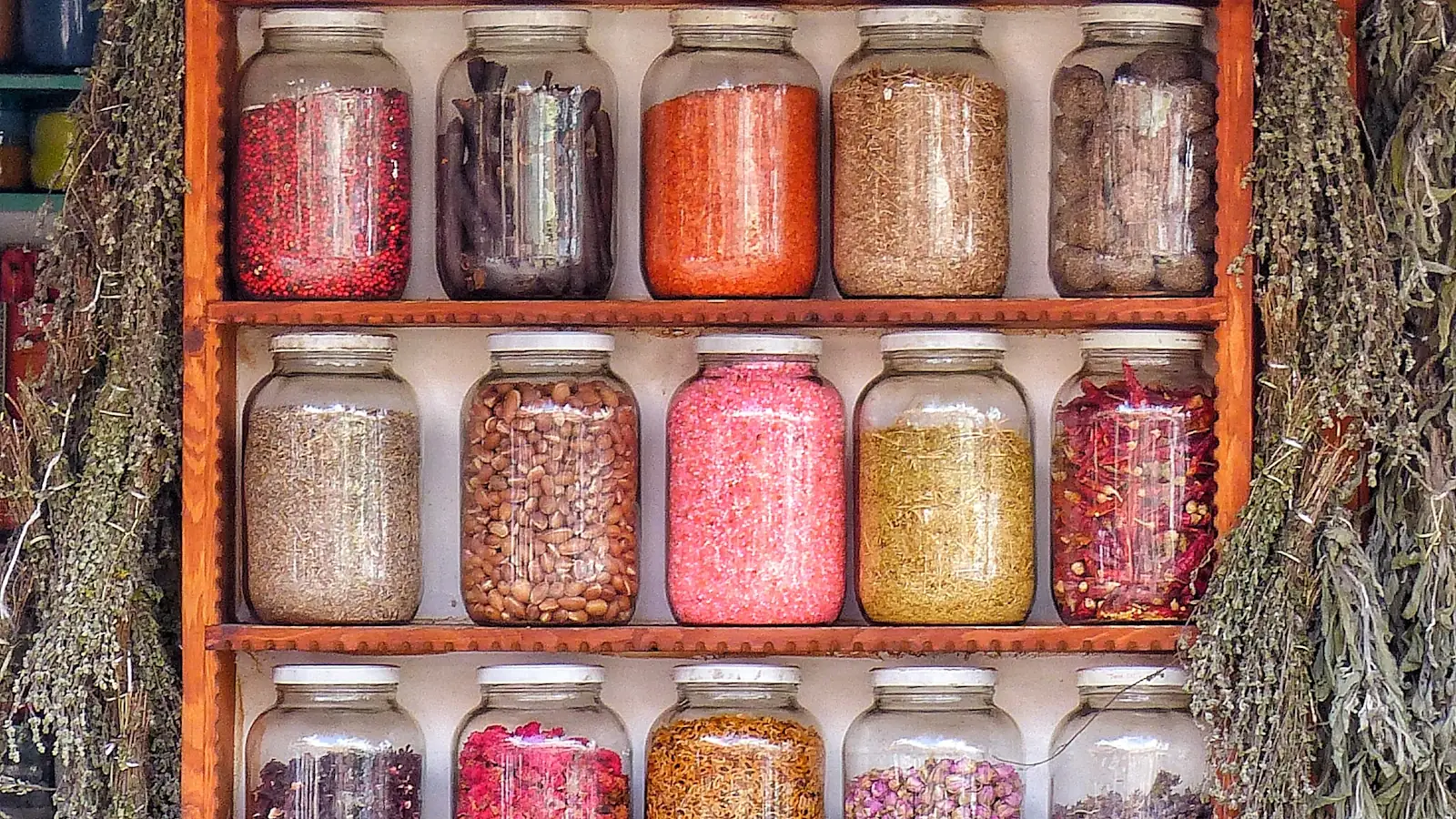
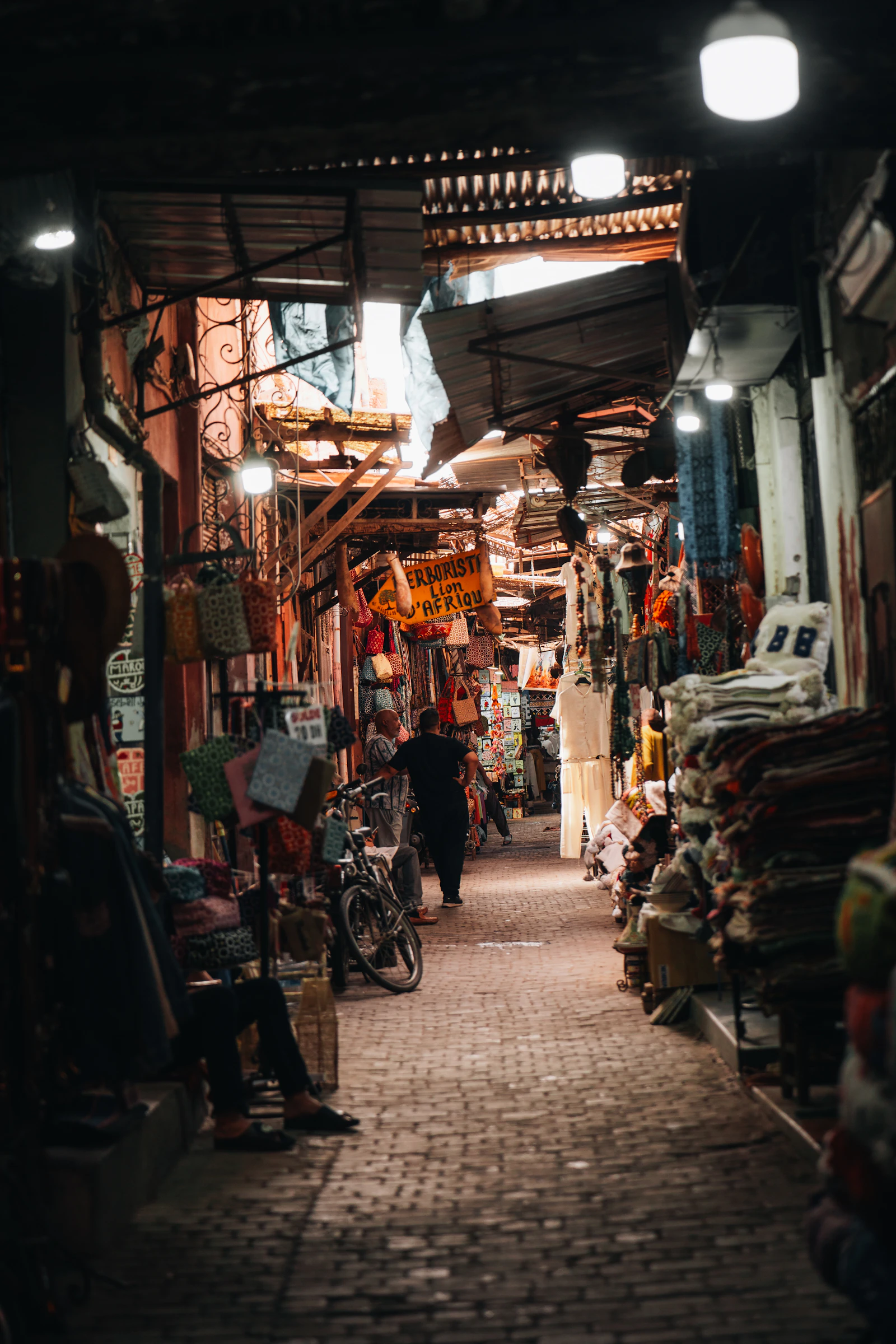 The souks offer endless corridors of color, craft, and commerce.
Day 2: Palaces and Gardens
Today explores Marrakech's architectural treasures beyond the souks.
Morning: Bahia Palace
Start at Bahia Palace, a 19th-century vizier's residence designed to be "the most beautiful palace ever built." The succession of courtyards, gardens, and lavishly decorated chambers reveals the artistic summit of Moroccan craftsmanship. Arrive early to beat tour groups.
Walk through the Mellah (Jewish quarter) to the Saadian Tombs, the royal necropolis hidden for centuries behind walls. The mausoleum's decoration rivals the finest medina monuments.
The Saadian Tombs are small and get very crowded. Arrive early or late in the day for breathing room. The gardens surrounding the tombs are pleasant for resting.
Midday: El Badi Palace
El Badi Palace is a dramatic ruin—once covered in gold and onyx, now a vast courtyard of weathered walls and storks nesting on towers. The scale impresses; the imagination fills in former glory. The underground passages are explorable.
Afternoon: Jardin Majorelle and YSL Museum
Take a taxi to Jardin Majorelle, the cobalt-blue garden created by French painter Jacques Majorelle and later restored by Yves Saint Laurent. The gardens, cacti collection, and Berber museum are beautiful; the crowds can be challenging. The adjacent Musée Yves Saint Laurent Marrakech displays the designer's work in stunning architecture.
Evening: Ville Nouvelle or Riad Dining
For contrast, dine in the Ville Nouvelle—Café des Épices and Le Jardin offer medina settings; Grand Café de la Poste and La Trattoria provide international options. Alternatively, many riads offer dinner—book in advance for intimate Moroccan cuisine in atmospheric settings.
Day 3: Deeper Medina and Hammam
Today goes deeper into medina life and experiences traditional bathing.
Morning: Northern Medina and Tanneries
Explore the northern medina beyond the tourist core:
- Mouassine Fountain and neighborhood: Historic quarters with restored foundouks (merchant inns)
- Marrakech tanneries: Smaller than Fes but still striking—leather dyeing as it's been done for centuries
- Local mosques and shrines: Non-Muslims can't enter but the exteriors and surrounding streets are atmospheric
Walk without destination. The medina rewards wandering—you'll find craftsmen's workshops, neighborhood squares, and daily life invisible from main routes.
Midday: Lunch at a Local Spot
Skip the tourist restaurants and find a local lunch spot. Mechui Alley near Jemaa el-Fnaa serves slow-roasted lamb. Small hole-in-the-wall tagine restaurants offer authentic meals for €3-5. Ask your riad for recommendations—they know the best hidden spots.
Afternoon: Hammam Experience
A hammam (traditional bathhouse) is essential Marrakech experience. Options range from local neighborhood hammams (authentic but challenging for first-timers) to tourist-oriented establishments:
- Heritage Spa and Hammam de la Rose: Upscale, comfortable, good for first-timers
- Hammam Mouassine and Hammam Bab Doukkala: More traditional public experiences
- Les Bains de Marrakech: Full spa treatment, high-end
The experience includes steam rooms, scrubbing with black soap (savon beldi), exfoliation with kessa gloves, and optional massage. Plan 2 hours minimum.
Evening: Rooftop Dinner
Dine on a rooftop terrace with medina views—Nomad, Le Salama, or Dar Yacout (the latter requires advance booking) offer spectacular settings. Watch the sunset call to prayer from above as minarets across the medina light up.
Day 4: Artisan Exploration and Departure
Use your final day for shopping, crafts, and last medina experiences.
Morning: Serious Shopping
Now that you understand the souks, shop seriously:
- Carpets: Berber rugs, city carpets, kilims—learn to distinguish quality
- Leather: Bags, shoes, jackets from the tanneries' output
- Metalwork: Lanterns, trays, teapots hammered by hand
- Ceramics: Fes pottery, Safi pieces, traditional and modern designs
- Textiles: Embroidered fabrics, caftans, handwoven goods
Negotiating tips: Start at 50% of asking price; aim for 50-70% final. Walk away if not satisfied—if they follow, you have leverage. Be friendly throughout; bargaining is social, not combative.
Midday: Photography and Coffee
Return to spots that captivated you earlier. Morning light in the souks, a favorite courtyard, the view from your riad terrace. Have mint tea at a traditional café—Café des Épices or one of the terrace cafés around Jemaa el-Fnaa.
Afternoon: Maison de la Photographie or Secret Garden
Choose your final experience:
Maison de la Photographie: Historic photographs of Morocco, beautifully displayed with rooftop café.
Le Jardin Secret: Recently restored historic gardens in the medina—peaceful counterpoint to souk chaos.
Simply wander: Sometimes the best final hours are unstructured—a last loop through favorite streets, an unexpected discovery, a lingering goodbye.
Before the Airport
Marrakech Menara Airport is 15-20 minutes from the medina by taxi (negotiate €8-12 or arrange through your riad). The airport is small but can be slow at peak times—allow adequate buffer.
Eat, Drink, and Savor
Essential Moroccan Dishes
- Tagine: Slow-cooked stew in conical clay pot—lamb with prunes, chicken with preserved lemon, vegetable variations
- Couscous: Traditionally served on Fridays; steamed semolina with vegetables and meat
- Pastilla: Sweet-savory pie with pigeon or chicken, almonds, and cinnamon
- Harira: Hearty soup with chickpeas, lentils, and tomatoes—traditional for Ramadan breaking fast
- Mechoui: Slow-roasted lamb, fall-off-the-bone tender
- Msemmen: Flaky, pan-fried flatbread, often for breakfast
Street Food and Snacks
- Fresh orange juice: Squeezed while you watch, absurdly cheap
- Khobz: Round flatbread, served with everything
- Brochettes: Grilled meat skewers
- Snail soup: Local specialty, not for everyone
- Sfenj: Moroccan doughnuts, best fresh
Mint Tea Ritual
Moroccan mint tea (atay) is poured from height to create foam, sweetened heavily, and served ceremonially. Accepting tea is accepting hospitality—even in shops where purchase is expected. The ritual matters as much as the taste.
Cultural Experiences Not to Miss
Getting Lost Properly
The medina is designed to confuse—and that's the point. Don't fight it. Getting lost leads to discoveries: a craftsman's workshop, a quiet shrine, a residential courtyard glimpsed through an open door. You won't stay lost long; locals will help, and the medina's logic eventually reveals itself.
Mosque Awareness
Morocco's mosques are closed to non-Muslims, but their presence defines the city's rhythm. The call to prayer five times daily creates the soundtrack of Marrakech. Be respectful around mosques, especially during prayer times and Friday noon prayer.
Evening Spectacle
Jemaa el-Fnaa's nightly transformation is genuinely extraordinary—UNESCO recognized it as a "Masterpiece of the Oral and Intangible Heritage of Humanity." The performance is participatory; engagement is expected. Tip performers you watch; buy from vendors you photograph.
Practical Tips for Travelers
Language
Arabic and Berber are local languages; French is widely spoken from colonial history. In tourist areas, English is common. Learning Arabic greetings (salam alaikum, shukran, la shukran for "no thank you") helps navigate persistent sellers.
Etiquette
Dress modestly—shoulders and knees covered, especially for women visiting traditional areas. Photographing people requires permission; payment is often expected. Remove shoes when entering homes and some shops. Ramadan (dates vary) affects food availability during daylight hours.
Safety and Hassle
Marrakech is safe but persistent. Unofficial guides, shop touts, and scammers target tourists. A firm "la shukran" (no thank you) and walking on usually works. Genuine offers of help exist—learn to distinguish. Keep valuables secure in crowded souks.
If you have extra days, consider combining your Marrakech trip with Cairo and Lisbon — all easy to reach and covered in our PTO-optimized travel guides.
Quick Takeaways
- Stay in a riad in the medina for the authentic Marrakech experience.
- Ben Youssef Medersa and Bahia Palace are essential architectural visits.
- Jemaa el-Fnaa transforms at sunset—experience both day and night.
- A hammam visit is cultural immersion, not just spa treatment.
- Getting lost in the souks is part of the experience—embrace it.
- March-May and September-November offer ideal weather.
- Budget €70-100/day for comfortable mid-range travel.
- Use the Holiday Optimizer PTO calendar to plan which days to take off for your Marrakech trip.
Conclusion
Four days in Marrakech offers a meaningful introduction to one of the world's most sensory cities—a place where medieval commerce continues in labyrinthine souks, where riads hide paradise courtyards, and where the nightly spectacle of Jemaa el-Fnaa has no equivalent on Earth. This guide outlines how to balance essential landmarks with wandering, cultural sites with human encounters.
Marrakech challenges Western travelers. The intensity of attention, the persistence of commerce, the sheer overwhelming-ness can exhaust. But surrender to it—bargain with a smile, accept tea from strangers, get lost repeatedly—and Marrakech reveals itself as welcoming, beautiful, and utterly unlike anywhere else you've been.
Ready to maximize your time off?
Find the best Marrakech travel windows
Frequently Asked Questions
-
Is four days enough in Marrakech? Yes, four days covers the essential landmarks, souk exploration, and cultural experiences. Marrakech is intense—four days is often the right amount.
-
What is the best season to visit Marrakech? March-May and September-November offer pleasant temperatures. Avoid summer (extreme heat) unless you're prepared for 40°C+ days.
-
Should I stay in a riad or hotel? Riad for atmosphere and authentic experience; hotel for modern conveniences. First-time visitors benefit from riad stays despite navigation challenges.
-
How do I handle the constant selling and hassle? A firm but polite "la shukran" (no thank you) works. Don't engage with unsolicited guides. Walk with purpose. It decreases as you move from tourist routes.
-
Is it safe to eat street food? Yes, if you choose wisely. Pick stalls with high turnover and visible cooking. Jemaa el-Fnaa's busy food stalls are generally safe.
Share Your Thoughts
Did this guide help you plan your long weekend? Share your favorite Marrakech discovery or ask a question you still have. Please share this guide with fellow travelers and let us know where you're headed next!