Toronto in 4 Days: Long Weekend Itinerary & PTO Planner for 2026
Plan a Toronto getaway with a 4-day itinerary covering the CN Tower, diverse neighborhoods, world-class museums, and Canada's most multicultural city for 2026.
Introduction
Toronto is a city that defies a single identity. It is the financial capital of Canada, the most multicultural city in the world by some measures, and a sprawling metropolis where you can eat Somali suqaar for breakfast, Cantonese dim sum for lunch, and Jamaican jerk chicken for dinner without leaving the same stretch of subway line. Four days here gives you enough time to climb the CN Tower, wander through neighborhoods that feel like different countries, and understand why Toronto quietly became one of North America's most exciting cities.
This is not a city of one postcard moment. Toronto rewards curiosity and a willingness to venture beyond the downtown core. The waterfront, the museums, and the food scene are world-class, but the real magic is in the neighborhoods---Kensington Market's ramshackle energy, the Distillery District's Victorian charm, Little Italy's sidewalk patios stretching into the evening. This guide keeps your days structured and your evenings flexible, so you leave feeling like you actually know the city.
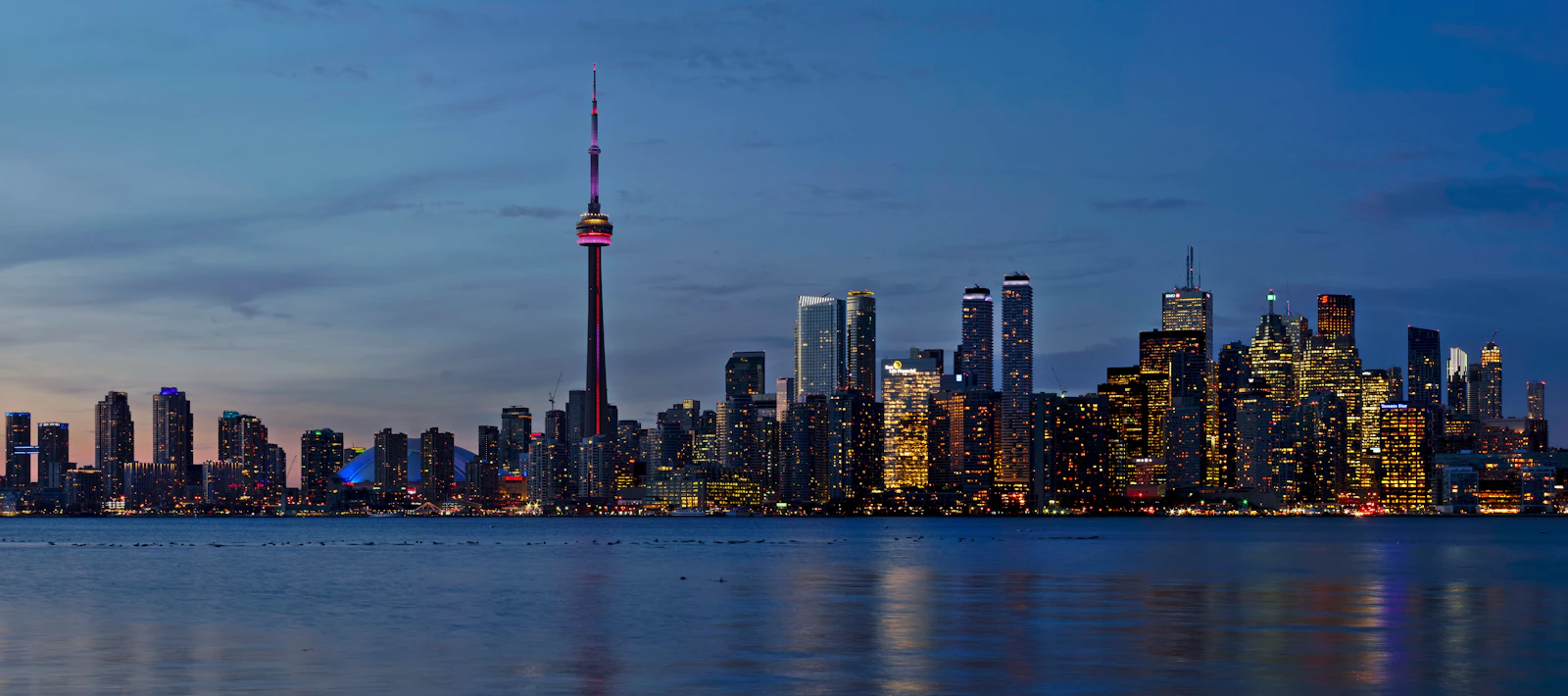
 Canada's largest city stretches along the shores of Lake Ontario.
Planning a longer trip? Check out our extended Toronto itinerary covering 7-9 days of in-depth exploration. Use our PTO optimizer to find the best days to take off around your trip dates.
Why Toronto Is a Must-Visit Destination in 2026
The Multicultural Food Capital of North America
Toronto's diversity is not a tourism slogan---it is the city's defining fact. Over half of the population was born outside Canada, representing more than 200 ethnic origins and 140 languages spoken across the Greater Toronto Area. That translates directly to the food scene: Scarborough has strip malls serving Tamil hoppers, Afghan bolani, and Trinidadian doubles within walking distance of each other. Chinatown and Kensington Market sit side by side in the city center, offering everything from hand-pulled noodles to Mexican street corn. The restaurant scene at the fine-dining level is equally strong---Toronto chefs draw on global flavors in ways that cities with less immigration simply cannot replicate. You could eat three meals a day from a different country for a month and never repeat a cuisine.
What Makes Toronto Unique vs Other North American Cities
Toronto combines big-city energy with Canadian politeness and a lower-key vibe than New York or Chicago. The transit works, the streets are clean, and the waterfront is accessible without a car. What sets it apart is the sheer density of distinct neighborhoods packed into a relatively compact downtown. You can walk from Chinatown through Kensington Market into Little Italy in under thirty minutes, passing through three completely different worlds. The city's ravine system---a network of forested valleys winding through the urban landscape---provides green escapes that no other major North American city can match. Toronto also sits just ninety minutes from Niagara Falls, making a day trip to one of the planet's most dramatic natural wonders genuinely feasible. In 2026, the ongoing waterfront revitalization and expanded cycling infrastructure make Toronto more walkable and bikeable than ever.
Planning Your Trip Essentials
Use the Holiday Optimizer to find the best days to book off around public holidays for your Toronto trip.
Best Time to Visit
May through October is prime season. Summer (June-August) brings warm weather, outdoor festivals like Caribana (the largest Caribbean carnival in North America) and Pride Toronto, and long evenings on restaurant patios---but also humidity that can feel oppressive and hotel price spikes during TIFF in September. Spring (May-June) offers mild temperatures in the mid-60s to 70s and blooming parks without the summer crowds. Fall (September-October) is arguably the best time: crisp air, changing leaves in the ravine system, and the city's cultural season in full swing with gallery openings and theater premieres. Winter (November-March) is genuinely cold---temperatures regularly drop below 14F (-10C) and the wind off Lake Ontario is relentless---but the underground PATH system connects much of downtown across 30 km of tunnels, and the city has a cozy indoor energy with its cafes, galleries, and hockey games.
Transportation Basics
The TTC (Toronto Transit Commission) runs subways, streetcars, and buses across the city. A single fare is $3.35 CAD ($2.45 USD) using a PRESTO card, which you can load at any station. A day pass costs $13.50 CAD ($10 USD) and is essential for full days of exploring. The subway covers the downtown core well, and the iconic streetcars along King, Queen, and Dundas Streets are both practical and scenic. Walking works well between close neighborhoods---downtown Toronto is more compact than it appears on a map. For the waterfront, the 509/510 streetcar lines connect Union Station to the ferry terminal. Skip renting a car; parking is expensive and traffic on the Gardiner Expressway is brutal.
Accommodation Choices
- Entertainment District: Central, walkable to the CN Tower, Rogers Centre, and restaurants. Mid-range to upscale ($200-350 CAD/night).
- Yorkville: Toronto's upscale neighborhood, near the ROM and galleries. Expensive ($300-500 CAD/night) but polished.
- Queen West / West Queen West: Trendy, artsy, close to Trinity Bellwoods Park and great restaurants. Boutique hotels and Airbnbs ($150-300 CAD/night).
- The Distillery District: Walkable, charming Victorian architecture, quieter evenings. Limited options but atmospheric.
- Kensington Market area: Budget-friendly, lively, central. Hostels and small guesthouses ($80-150 CAD/night).
Travel Costs and Budgeting
To maximize your days off without extra PTO, use the free Holiday Optimizer to find bridge days around public holidays for your Toronto trip.
Daily Budget Breakdown
Toronto is cheaper than New York but not a bargain city. Budget travelers can manage $80-120 CAD ($60-90 USD) per day excluding accommodation by eating at food courts, using TTC day passes, and visiting free attractions. Mid-range travelers should plan $150-220 CAD ($110-160 USD) for sit-down lunches, museum admissions, and a patio dinner. Premium experiences---fine dining, CN Tower EdgeWalk, a Niagara Falls day trip---push past $300 CAD (~$220 USD).
Cost-Saving Tips
Many of Toronto's best experiences are free: walking the Distillery District, exploring Kensington Market, strolling the waterfront Boardwalk, and visiting the AGO on Wednesday evenings (free admission 6-9pm). The CityPASS Toronto ($92 CAD for 5 attractions) saves about 40% on the CN Tower, ROM, and aquarium---worth it if you plan to visit at least three of the included attractions.
Eating at food courts and markets---especially the food stalls in Kensington Market and St. Lawrence Market---keeps costs down without sacrificing quality. Lunch specials at sit-down restaurants typically run $15-20 CAD (~$11-15 USD) compared to $35-50 CAD at dinner. Tipping is expected everywhere, so factor an extra 15-20% into your dining budget.
Food and Dining Typical Costs
- Peameal bacon sandwich at St. Lawrence Market: $9-12 CAD (~$7-9 USD)
- Dim sum lunch: $20-30 CAD (~$15-22 USD) per person
- Poutine from a casual spot: $10-15 CAD (~$7-11 USD)
- Lunch special at a sit-down restaurant: $18-25 CAD (~$13-18 USD)
- Dinner at a mid-range restaurant: $40-65 CAD (~$30-48 USD) per person
- Craft beer at a brewery: $8-12 CAD (~$6-9 USD)
- Coffee at an independent cafe: $4-6 CAD (~$3-4.50 USD)
Day 1: Downtown and the Waterfront
Start with the iconic landmarks that anchor Toronto's skyline and waterfront---the sights you came for. This day keeps you in the central core, walking between attractions that are all within a few kilometers of each other.
Morning: CN Tower
Begin at the CN Tower---553 meters of concrete and steel that defined Toronto's skyline for decades and held the record as the world's tallest free-standing structure until 2007. General admission ($43 CAD / ~$31 USD) takes you to the main observation level at 346 meters, where the glass floor lets you look straight down to the ground. The views stretch across the city, the Toronto Islands, and Lake Ontario on clear days---on exceptionally clear mornings you can see the mist from Niagara Falls. Go early when it opens at 9am to avoid school groups and tour buses. If you want the adrenaline version, the EdgeWalk ($195 CAD / ~$143 USD) lets you walk hands-free around the outside ledge at 356 meters---it is the world's highest external walk on a building and genuinely terrifying. The revolving restaurant, 360, is overpriced for what it is; the observation deck delivers the same views for a fraction of the cost.
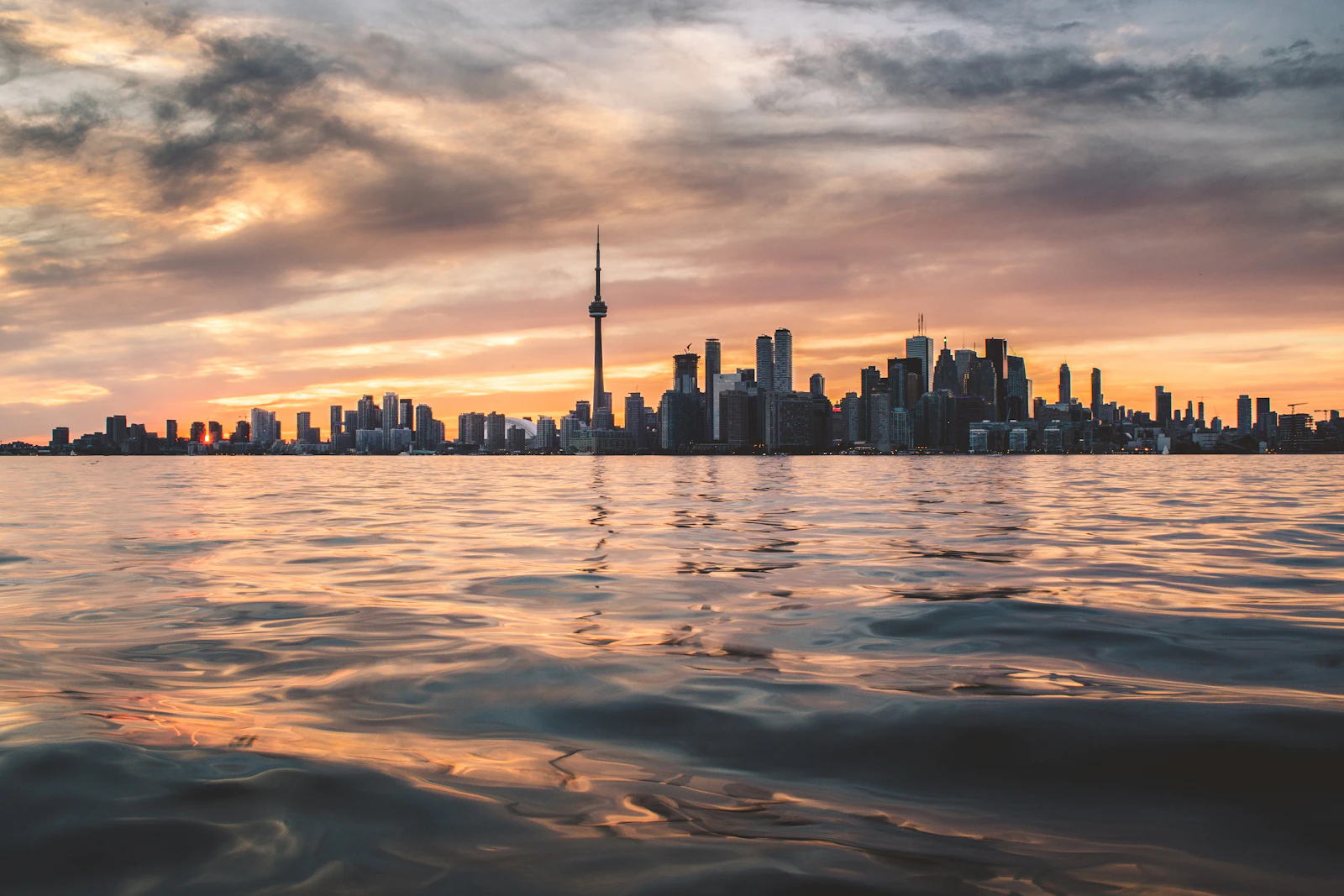 The CN Tower remains the defining landmark of Toronto's skyline.
Visit the CN Tower first thing in the morning for shorter lines and clearer skies. Haze builds through the afternoon, especially in summer, and the observation deck gets crowded by noon.
Midday: St. Lawrence Market
Walk east to St. Lawrence Market, consistently ranked among the world's best food markets. The lower level houses over 120 vendors selling everything from artisanal cheese to fresh pasta to smoked meats. The essential stop is Carousel Bakery for the peameal bacon sandwich---a Toronto original made with cornmeal-crusted back bacon on a kaiser roll. It is messy, satisfying, and costs under $10 CAD. Pair it with a coffee from one of the market's roasters and wander the stalls. Alex Chicken does excellent Korean-style fried chicken, and St. Urbain Bagels offers Montreal-style bagels if you want to start a Toronto-vs-Montreal debate with a local. Saturday mornings are the liveliest, with the farmers' market operating in the north building. The market closes on Sundays and Mondays, so plan accordingly.
Afternoon: Distillery District
Continue southeast to the Distillery District, a pedestrian-only neighborhood of restored Victorian-era industrial buildings that once housed the Gooderham and Worts whiskey distillery---the largest distillery in the world in the late 1800s. Today it is filled with galleries, artisan shops, craft breweries, chocolate makers, and some of the city's best patios. Mill Street Brewery has a taproom here serving their signature organic lager. The cobblestone streets and red-brick buildings photograph well and the area is small enough to explore in 90 minutes without rushing. In December, the Christmas Market transforms the district into one of the most atmospheric holiday markets in North America, but expect crowds.
Evening: Harbourfront
End the day along the Harbourfront Centre and Queens Quay. The waterfront promenade stretches west with views of the Toronto Islands and Lake Ontario. In summer, free concerts and outdoor art installations animate the area. The Power Plant Contemporary Art Gallery at Harbourfront is free and shows rotating exhibitions of contemporary Canadian and international art---worth a quick stop if the doors are open. For dinner, head to the Entertainment District nearby---Pai Northern Thai on Duncan Street serves some of the best Thai food in the city (expect a wait; they do not take reservations for small parties, but the khao soi is worth the line). Alternatively, Richmond Station offers elevated Canadian comfort food with a focus on local sourcing.
Day 2: Museums and Neighborhoods
Today explores Toronto's cultural institutions and the vibrant downtown neighborhoods that make the city feel alive. The plan moves from a morning museum visit to an afternoon of neighborhood wandering---let the energy of each area set your pace.
Morning: Royal Ontario Museum or Art Gallery of Ontario
Choose one major museum. The Royal Ontario Museum (ROM) ($23 CAD / ~$17 USD) is Canada's largest museum of world cultures and natural history---the Chinese temple art collection and the dinosaur galleries are standouts, and the Michael Lee-Chin Crystal extension is a polarizing but striking piece of architecture that looks like a giant crystal punching through a heritage building. Allow 2-3 hours and focus on two or three galleries rather than trying to see everything.
Alternatively, the Art Gallery of Ontario (AGO) ($25 CAD / ~$18 USD, free Wednesday evenings 6-9pm) holds over 120,000 works, including a stunning Frank Gehry-designed expansion with a soaring wood-and-glass galleria. The collection of Canadian art---from the Group of Seven's sweeping northern landscapes to Indigenous contemporary work---is the gallery's strongest suit and not something you will find elsewhere. Either museum deserves 2-3 hours of your time.
The AGO offers free admission every Wednesday evening from 6-9pm. If your schedule allows, save the gallery for a Wednesday and use your morning for the ROM instead---you can experience both without paying twice.
Midday: Kensington Market
Walk west to Kensington Market, Toronto's most eclectic neighborhood. This is not a single market building but a tangle of streets filled with vintage shops, record stores, fruit stands, cheese shops, and some of the city's best cheap eats. Seven Lives serves tacos with Baja-style fried fish that draw lines around the block ($6-8 CAD each). Wanda's Pie in the Sky does a butter tart that will ruin all other butter tarts for you. The neighborhood is loud, colorful, and a little chaotic---that is the point. On the last Sunday of each month (May-October), Pedestrian Sundays close the streets to cars and fill them with live music and street food.
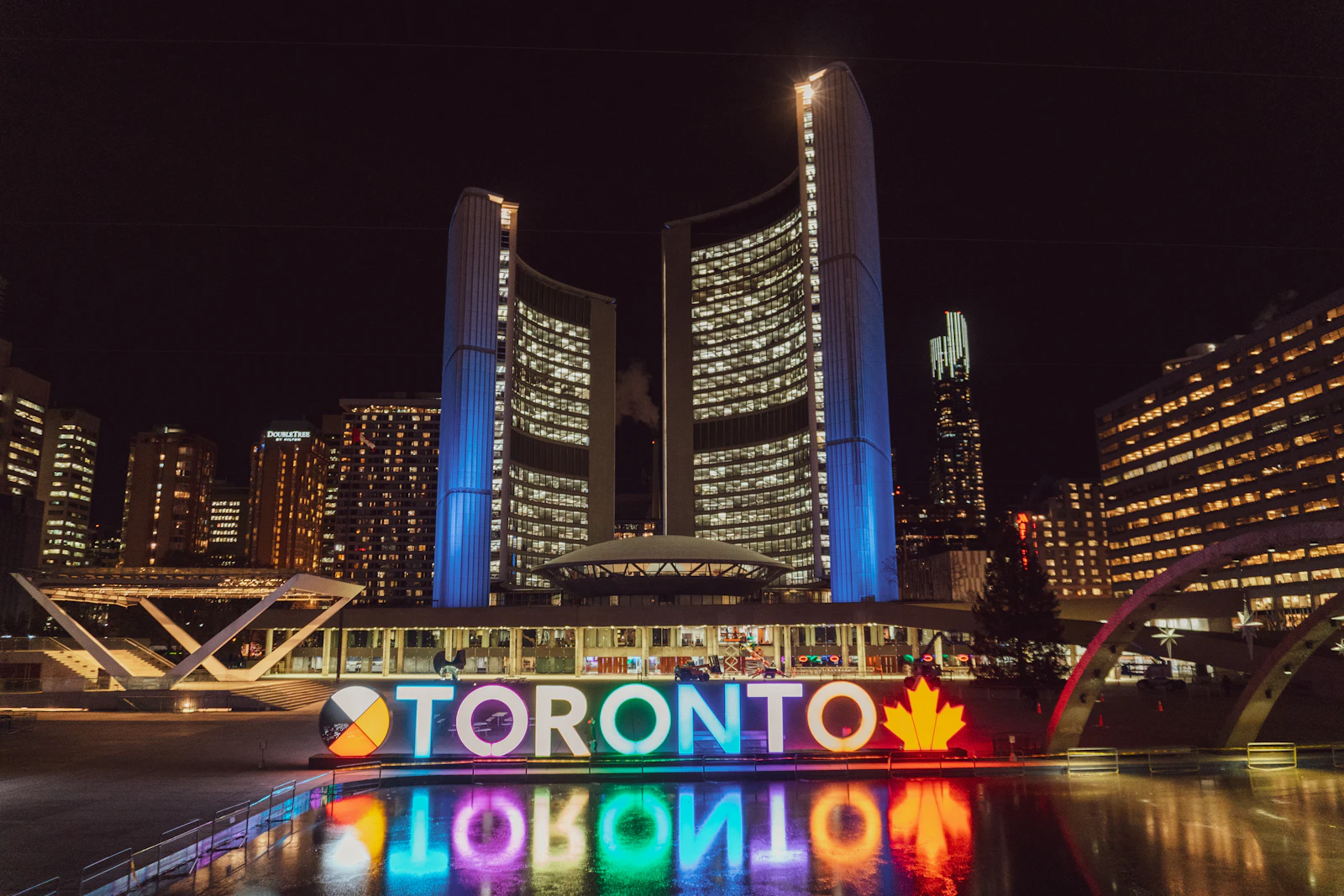 Kensington Market is Toronto's most eclectic and walkable neighborhood.
Afternoon: Chinatown and Queen Street West
Kensington Market bleeds directly into Chinatown along Spadina Avenue---one of the largest Chinatowns in North America. The produce stalls spill onto the sidewalks, and the restaurants serve everything from Cantonese barbecue to Sichuan hot pot. Rol San on Spadina is a reliable dim sum spot with classic carts rolling between tables on weekends. The bakeries along Dundas and Spadina sell egg tarts and steamed buns for a dollar or two---perfect for a cheap snack between neighborhoods.
From Chinatown, walk south to Queen Street West---Toronto's main artery for independent boutiques, galleries, street art, and cafes. The stretch between University and Bathurst is the most concentrated, and the energy shifts from corporate to creative as you move west. Gallery hopping here is free and rewarding, with a mix of established and emerging Canadian artists showing in small storefronts.
Evening: Queen West Dining and Drinks
Stay in the Queen West area for dinner. Byblos on Duncan Street serves Eastern Mediterranean cuisine that is both refined and generous---the lamb shank and mezze platters are excellent, and the cocktail program is strong. For a more casual option, Otto's Bierhalle on Queen West pours German and craft beers alongside sausages and pretzels in a loud, communal setting that works well for groups. After dinner, the bars along Ossington Avenue one block north offer some of Toronto's best cocktail lounges---Bar Raval is a standout, with a cave-like mahogany interior and creative drinks in a space inspired by Barcelona's Gothic Quarter. If you prefer something low-key, Trinity Bellwoods Park is a short walk west and draws crowds of locals on warm evenings---grab a drink from a nearby bar and join the scene.
Day 3: Diverse Neighborhoods
Leave the tourist core behind and explore the neighborhoods that give Toronto its character. This is the day where the city stops feeling like a destination and starts feeling like a place where people actually live---which is when Toronto is at its best.
Morning: Little Italy and College Street
Start the day on College Street in Little Italy, where espresso culture runs deep and the sidewalk patios open early. Cafe Diplomatico---known locally as "The Dip"---has been a neighborhood anchor since 1968 and serves solid espresso and people-watching from its sprawling patio. Walk west along College Street and the Italian heritage gives way to newer waves of restaurants and bars. The old-school gelato shops sit next to trendy natural wine bars, and the bookshops and vintage stores in this stretch reward slow browsing. If you are here on a weekend morning, the patio scene is Toronto at its most relaxed.
Midday: Koreatown
Continue west along Bloor Street to Koreatown, centered around Bloor and Christie. Korean Village Restaurant serves traditional bibimbap and BBQ in a space that has been operating since the 1970s. The area is less polished than some of Toronto's trendier neighborhoods, which is part of its appeal---authentic, affordable, and unconcerned with Instagram aesthetics. For a quick bite, the fried chicken joints along this stretch are excellent and cheap ($12-16 CAD for a combo). After lunch, walk through Christie Pits Park, a green space that fills with families and pickup soccer games in warm weather. In winter, the park has an outdoor ice rink that draws the neighborhood out.
Afternoon: Leslieville or Ossington
Head east to Leslieville on Queen Street East, a neighborhood that has transformed from working-class to one of the city's best stretches for independent coffee shops, brunch spots, and design stores. Te Aro serves some of Toronto's best specialty coffee in a bright, minimalist space, and the stretch around it is lined with vintage furniture shops and bakeries that reward browsing. Alternatively, spend the afternoon on Ossington Avenue between Queen and Dundas---this short strip punches above its weight with wine bars, casual restaurants, and the kind of neighborhood energy that makes you want to move to Toronto. Bellwoods Brewery on Ossington has a bottle shop and patio that fill up fast on weekends. Either choice gives you a glimpse of the residential Toronto that tourists rarely see.
Evening: The Annex and Bloor West
Finish the day in The Annex, the leafy residential neighborhood surrounding the University of Toronto campus. The tree-lined streets and Victorian houses make this one of the prettiest residential areas in the city. Bloor Street here has excellent restaurants, independent bookstores like BMV Books (three floors of used books), and the historic Royal Cinema for independent and classic film screenings.
For dinner, Grey Gardens on the Dundas-Ossington corridor offers one of Toronto's most exciting wine-forward tasting menus in a relaxed setting ($85-120 CAD / ~$62-88 USD). For something simpler, Sneaky Dee's on College and Bathurst has served late-night nachos to students and musicians for decades---the second-floor venue hosts live bands most nights.
Day 4: Toronto Islands or Niagara Falls Day Trip
Your final day offers a choice: a relaxed morning on the Toronto Islands or an ambitious day trip to Niagara Falls. Both are excellent, but they require different energy levels. Choose the islands if you want a calm ending to the trip, and Niagara if you want one more big experience before heading home.
Option A: Toronto Islands
The Toronto Islands are a 15-minute ferry ride from the Jack Layton Ferry Terminal at Queens Quay ($9 CAD / ~$6.50 USD round trip). Centre Island has beaches, gardens, and skyline views that put the city in perspective. Ward's Island is quieter, with a charming residential community and a boardwalk along the lakeshore. Rent a bike or kayak, or simply walk the car-free paths. In summer, Hanlan's Point Beach on the western tip is one of the few clothing-optional beaches in Canada---swim at your own comfort level. The view of the Toronto skyline from the island shore is one of the best in the city and looks nothing like the view from the CN Tower. Plan to spend 2-3 hours, and buy ferry tickets online in advance during peak summer weekends, as they do sell out.
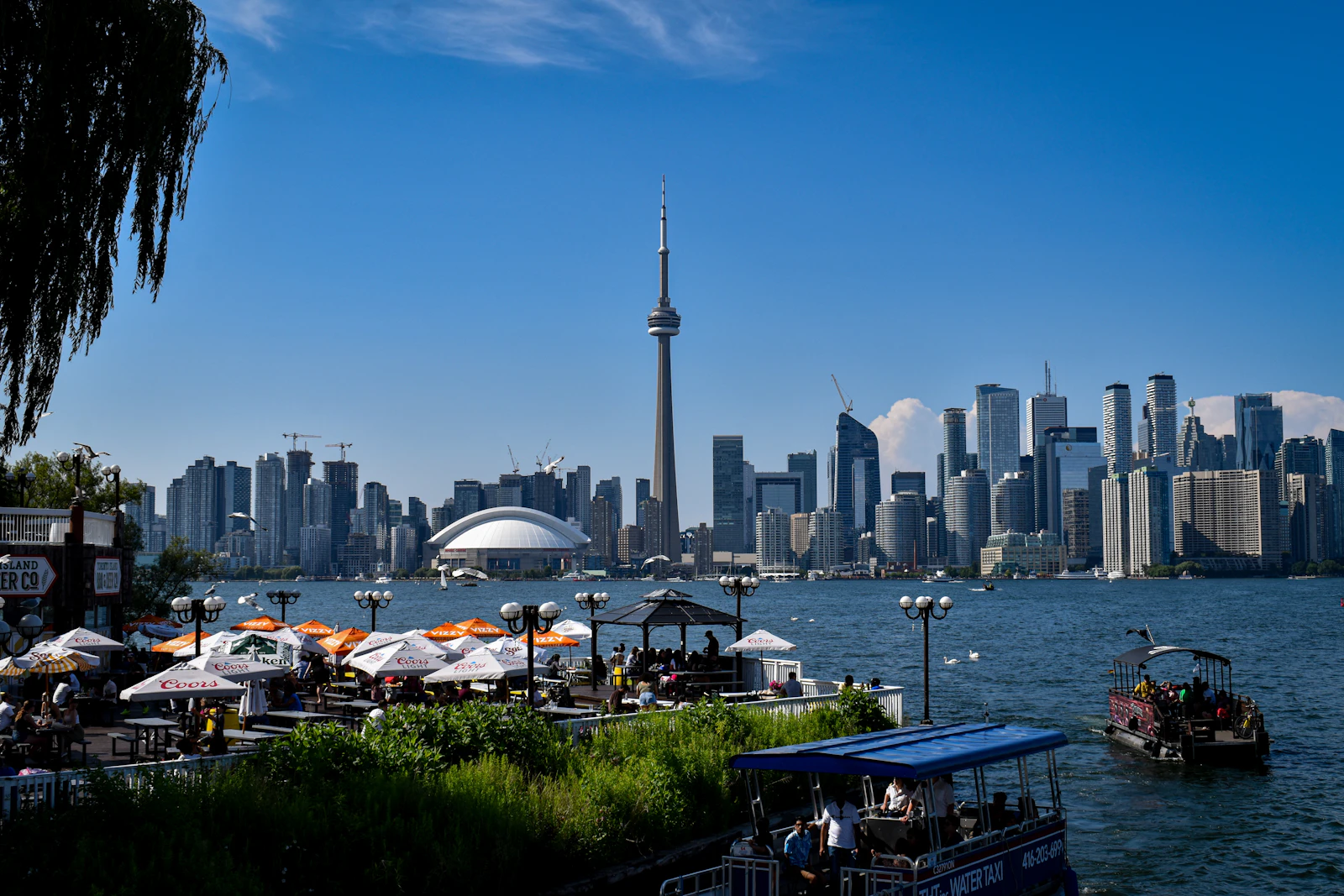 The Toronto skyline takes on a different character when seen from the water.
Option B: Niagara Falls Day Trip
Niagara Falls is roughly 130 km southwest of Toronto---about 90 minutes by car or 2 hours by GO Transit bus from Union Station ($15-20 CAD / ~$11-15 USD one way). The falls themselves are staggering in person regardless of how many photos you have seen. The Canadian side offers far superior views compared to the American side. The Journey Behind the Falls ($22 CAD / ~$16 USD) takes you through tunnels behind the curtain of water, and the Hornblower Cruise ($28 CAD / ~$20 USD, operating April-November) gets you close enough to feel the mist. The town around the falls is a tourist trap of wax museums and chain restaurants---eat before you go or pack a lunch. Budget the full day if you choose this option; you will not have time for much else.
Niagara Falls attracts aggressive souvenir vendors and overpriced restaurants. Eat in Niagara-on-the-Lake (a charming wine country town 20 minutes north) or bring food from Toronto. Skip the Clifton Hill attractions unless you enjoy carnival-style tourist traps.
Before the Airport
Toronto Pearson International Airport (YYZ) is 27 km northwest of downtown. The UP Express train from Union Station takes 25 minutes and costs $12.35 CAD ($9 USD)---it is the fastest and most reliable option, running every 15 minutes. Taxis and rideshares take 30-60 minutes depending on traffic on the 401 and 427, and can cost $50-70 CAD ($37-51 USD). Rush hour traffic to Pearson can stretch the drive to 90 minutes, so always take the UP Express if your timing is tight.
If flying from Billy Bishop Toronto City Airport (YTZ) on Porter Airlines, it is a 10-minute walk or free shuttle from Union Station---one of the most convenient airport connections in North America. Allow 2 hours before domestic flights and 3 hours before international at Pearson.
Eat, Drink, and Savor
Toronto's food scene is its strongest argument as a world-class city. The diversity of cuisines available---not just present but genuinely excellent---is unmatched in North America outside of New York, and in some categories Toronto wins outright.
Essential Toronto Dishes
- Peameal bacon sandwich: Toronto's signature food---cornmeal-crusted back bacon on a soft kaiser roll. Carousel Bakery at St. Lawrence Market is the definitive version ($9 CAD). Accept no substitutes.
- Butter tarts: A Canadian classic---flaky pastry filled with butter, sugar, and syrup, with optional raisins or pecans. Wanda's Pie in the Sky in Kensington Market and The Rolling Pin make excellent versions. The raisin debate is fierce; try both and pick a side.
- Poutine: Fries, cheese curds, and gravy. Toronto does it well but does not claim to do it better than Montreal. Smoke's Poutinerie is the late-night chain; Poutini's House of Poutine on Queen West uses better curds and real gravy.
- Jerk chicken: Toronto has the largest Jamaican diaspora outside of Jamaica, and the jerk chicken reflects it. The Real Jerk on Gerrard Street East has been the standard-bearer for decades, serving smoky, spicy, fall-off-the-bone chicken with rice and peas.
Neighborhood Food Highlights
- Scarborough: The city's most underrated food destination---Tamil, Afghan, Chinese, and Caribbean cuisines at strip-mall prices. Scarborough Town Centre area along Lawrence Avenue East is a goldmine. Worth a TTC ride if you care about eating well.
- Dundas West: Wine bars and modern bistros alongside old-school Portuguese bakeries. Churrasco of St Clair for Portuguese chicken. The stretch between Ossington and Dufferin rewards aimless wandering.
- Bloor-Yonge corridor: Quick lunches, sushi, and Korean food. Functional rather than destination-worthy, but reliable when you need a meal between museum visits.
- Gerrard Street East (Little India): Biryani, dosa, and sweets in a neighborhood that transports you. Less polished than the downtown food scene, which is exactly why it is worth the trip.
Drinks and the Craft Beer Scene
Toronto's craft beer scene has exploded in the past decade, and the city now rivals Portland and Brooklyn for brewery density. Bellwoods Brewery on Ossington is the city's most hyped, with rotating sours and IPAs that draw lines on release days. Henderson Brewing in the Junction neighborhood serves community-focused brews in a laid-back taproom. Bar Hop on King Street West offers 36 taps of Ontario and international craft beer alongside excellent fried chicken. Left Field Brewery in Leslieville has a baseball theme and a patio that fills up on summer weekends. For cocktails, Bar Raval and Civil Liberties (a tiny, reservations-only cocktail bar on Bloor West where the bartender makes drinks based on your mood) are the standouts. For wine, the natural wine bars along Dundas West---Midfield Wine Bar and Paris Paris---pour interesting bottles in relaxed settings. A pint of craft beer runs $8-12 CAD ($6-9 USD); cocktails are $16-20 CAD ($12-15 USD).
Cultural Experiences Not to Miss
Toronto punches above its weight culturally, though it does not always get the credit it deserves. The city produces world-class theater, supports a thriving film industry (it doubles for New York so often that locals call it "Hollywood North"), and has a music scene that has launched artists from Drake to The Weeknd to Arcade Fire.
Theater and Film (TIFF)
Toronto has the third-largest English-language theater scene in the world, after London and New York. The Royal Alexandra Theatre and Princess of Wales Theatre host major touring productions and pre-Broadway tryouts---shows often open here before moving to Broadway, so you may catch something before the rest of the world does. The Toronto International Film Festival (TIFF) in September transforms the city into a global film hub---stars walk the red carpet on King Street, and public screenings are accessible with advance-purchase tickets ($25-40 CAD). Visiting during TIFF is chaotic and expensive, but the energy is unmatched. Even outside TIFF season, the TIFF Bell Lightbox cinema programs excellent retrospectives and international films year-round.
Sports Culture
Torontonians are passionate about their teams, and attending a game is a genuine cultural experience. Scotiabank Arena hosts the Toronto Raptors (NBA) and Toronto Maple Leafs (NHL)---Leafs tickets are notoriously expensive ($150-500+ CAD) and hard to get, but the atmosphere on game nights downtown is infectious even if you just watch from a nearby bar. Real Sports Bar next to the arena is the city's best spot for watching a game you could not get tickets to. In summer, Toronto Blue Jays baseball at the Rogers Centre is a more affordable and relaxed option ($20-80 CAD), with the retractable roof open on warm evenings and the CN Tower looming directly overhead. Toronto FC soccer matches at BMO Field also draw passionate crowds and are easy to get into.
Music Scene
Toronto's music scene spans Drake's hometown hip-hop legacy to one of North America's strongest jazz and indie circuits. The Rex Hotel Jazz & Blues Bar on Queen West has live jazz every night with no cover charge---just walk in, grab a seat, and order a drink. Lee's Palace on Bloor Street is a legendary indie rock venue with hand-painted murals covering the facade. Massey Hall, recently renovated after a years-long restoration, is one of the finest concert halls in Canada and hosts everything from folk to classical to hip-hop. For a different energy, the Dundas West strip has vinyl shops and small venues where local bands play to crowds of fifty on a Tuesday night. The Horseshoe Tavern on Queen West has been launching Canadian acts since 1947.
Practical Tips for Travelers
Toronto is an easy city for visitors, but a few local quirks are worth knowing before you arrive.
Language
English and French are Canada's official languages, but Toronto operates almost entirely in English. Given the city's diversity, you will hear Mandarin, Cantonese, Tamil, Tagalog, Urdu, Portuguese, and dozens of other languages on any given subway ride. Signage and menus in ethnic neighborhoods sometimes lack English translations, but pointing and translation apps work fine. Torontonians are generally patient and helpful with visitors---the "polite Canadian" stereotype has a real basis here, even if the city moves faster than outsiders expect.
Etiquette
Canadians tip at American levels---15-20% at restaurants, $1-2 per drink at bars, and 15% for taxis. Many payment terminals now suggest 18-25%, which feels aggressive but 18% is standard for good service. Unlike the stereotype, Torontonians are not excessively polite---they are friendly but direct and move quickly on the sidewalks. Hold doors, stand right on escalators, and do not block the streetcar doors. Tapping your PRESTO card on exit is not required for subways but is required on GO Transit. The legal drinking age in Ontario is 19, and bars typically close at 2am.
Safety
Toronto is one of the safest major cities in North America. Violent crime is rare in tourist areas, and the city feels walkable and comfortable at most hours. Standard urban precautions apply: keep your phone secure on the TTC, avoid poorly lit areas in unfamiliar neighborhoods late at night, and be aware of your surroundings near busy intersections where cyclists, streetcars, and pedestrians all compete for space. Jaywalking is common but streetcars stop in the middle of the road---when their doors open, all traffic must stop, and stepping out without checking is dangerous. The most common tourist frustration is not crime but the unpredictable weather---even in summer, a cold front off Lake Ontario can drop temperatures 10 degrees in an hour. Pack layers.
If you have extra days, consider combining your Toronto trip with New York City — all easy to reach and covered in our PTO-optimized travel guides.
Quick Takeaways
- Toronto's neighborhoods are its greatest attraction---plan your days around districts, not individual sights.
- The CN Tower is worth the visit but go early to beat the crowds and haze.
- St. Lawrence Market and Kensington Market are essential food stops; budget time for both.
- The TTC day pass ($13.50 CAD) pays for itself quickly; streetcars are both practical and scenic.
- Niagara Falls is a feasible day trip but demands a full day---do not try to squeeze it in.
- The craft beer and cocktail scenes rival any city in North America; Ossington Avenue is the epicenter.
- Budget $150-220 CAD per day for a comfortable mid-range experience excluding accommodation.
- Bring layers regardless of season---Lake Ontario makes the weather unpredictable.
- Use the Holiday Optimizer PTO calendar to plan which days to take off for your Toronto trip.
Conclusion
Four days in Toronto reveals a city that earns its reputation through substance rather than spectacle. The CN Tower and Niagara Falls provide the postcard moments, but the lasting impressions come from the neighborhoods---a butter tart in Kensington Market, jerk chicken smoke drifting across a patio on Gerrard Street, a quiet morning on the Toronto Islands watching the skyline catch the light. Toronto does not shout for your attention the way New York or London does, and that restraint is part of its appeal. It is a city that rewards the curious over the checklist-driven.
You will leave with a sense that you found a city still defining itself, still absorbing new influences, still building something worth paying attention to. The food alone justifies the trip, and the neighborhoods give you reasons to come back. Plan your PTO around the best travel windows and give Toronto the time it deserves.
Ready to maximize your time off?
Find the best Toronto travel windows
Frequently Asked Questions
-
Is four days enough for Toronto? Yes. Four days covers the major landmarks, two or three neighborhoods in depth, at least one world-class museum, and enough food to understand why Toronto is one of North America's best eating cities. You will not see everything---Scarborough alone could fill a day---but you will leave with a real sense of the city.
-
Is a Niagara Falls day trip worth it from Toronto? If you have never seen the falls, absolutely. The Canadian side offers dramatically better views than the American side, and the sheer scale of the water is something no photo captures. Budget a full day and leave early. If you have already visited, spend Day 4 on the Toronto Islands and exploring neighborhoods you missed.
-
What is the best neighborhood to stay in? The Entertainment District or Queen West area offers the best balance of central location, walkability, and access to restaurants and nightlife. Yorkville is polished but quieter at night. Kensington Market area is the budget-friendly option with the most character. All three are well-connected by TTC.
-
How cold does Toronto get in winter? Very cold. January averages around -4C (25F), and wind chill can push it well below -15C (5F). The underground PATH network connects much of downtown, so you can walk between hotels, offices, and shopping without going outside. Winter travel is doable but requires serious layering and a willingness to embrace indoor activities.
-
Do I need a car in Toronto? No. The TTC, walking, and the occasional rideshare cover everything a tourist needs. A car is a liability downtown---parking costs $20-40 CAD per day, traffic is frustrating, and the streetcar-heavy streets are confusing for drivers unfamiliar with them. The only scenario where a car helps is the Niagara Falls day trip, and even that is manageable by GO Transit.
Share Your Thoughts
Did this guide help you plan your Toronto long weekend? Share it with friends who are considering a trip to Canada's largest city, and let us know which neighborhood you are most excited to explore---whether it is the food stalls of Kensington Market, the breweries on Ossington, or the quiet boardwalks of the Toronto Islands. Your tips and discoveries help us keep improving these guides for future travelers.