Mexico City in 7-9 Days: Extended Vacation Itinerary to Maximize PTO in 2026
Plan an extended Mexico City adventure with a 7-9 day itinerary covering pyramids, museums, street food, mezcal culture, day trips, and deep neighborhood exploration for 2026.
Introduction
A week in Mexico City transforms a visit into genuine immersion. While four days covers the landmarks, seven to nine days lets you develop a relationship with this extraordinary city—you find your favorite taqueria, learn which mezcaleria pours the good stuff without being asked, discover that the best chilaquiles in the city come from a nameless stall outside a Metro station, and start to understand why 22 million people choose to live in this chaotic, beautiful, maddening, magnificent place.
The extended stay is where Mexico City truly opens up. You eat mole in Oaxacan restaurants run by grandmothers, explore neighborhoods that guidebooks skip entirely, take day trips to archaeological sites that rival the pyramids of Egypt in ambition, and discover that CDMX's art scene extends far beyond the famous murals into galleries, street art, and performance spaces that pulse with creative energy. This guide provides framework while leaving room for the improvisation that the city rewards.
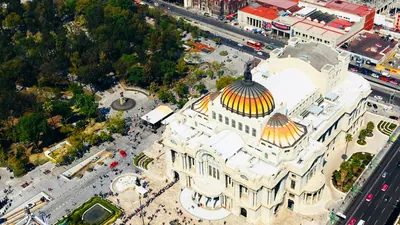
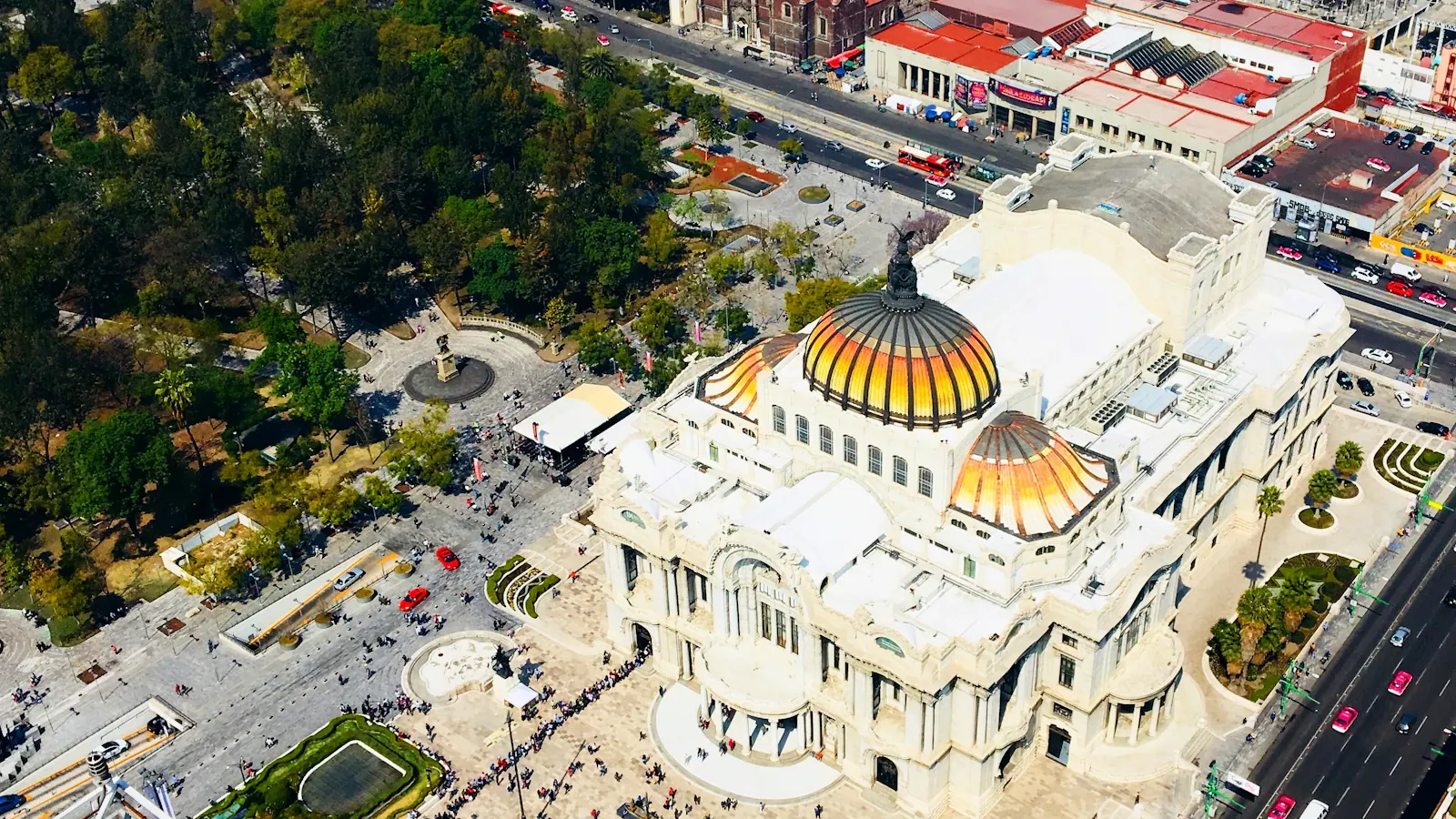
 The Palacio de Bellas Artes anchors Mexico City's historic center.
Short on time? See our Mexico City 4-day itinerary for a focused long-weekend plan. Use our PTO optimizer to find the best days to take off around your trip dates.
Why an Extended Mexico City Trip Is Worth It
Neighborhood Depth
Four days restricts you to the greatest hits: Centro, Roma, Condesa, Coyoacan. A week opens the city beyond the tourist corridor. San Angel's colonial streets host a famous Saturday art bazaar where painters, ceramicists, and weavers display work that spans folk art to gallery-quality pieces. Santa Maria la Ribera—a formerly overlooked neighborhood experiencing a renaissance—has the stunning Moorish-style Kiosco Morisco, excellent fonditas, and a genuinely local atmosphere. Tlalpan, in the far south, feels like a colonial village with its stone churches and cobblestone plazas. Each neighborhood is a different flavor of Mexico City, and extended stays let you taste them all.
Food Mastery
Mexican cuisine is the world's first food tradition designated as UNESCO Intangible Cultural Heritage, and Mexico City is its capital. A week lets you go beyond tacos and explore the full range: Oaxacan moles with 30+ ingredients, Yucatecan cochinita pibil, Michoacan carnitas, Pueblan chiles en nogada (seasonal, August-September), and the fine dining revolution that has earned CDMX multiple spots on the World's 50 Best list. You can do a market crawl one day, a mezcal deep dive the next, and a multi-course tasting menu the following evening. The range is staggering.
Cultural Layers
Extended stays let you appreciate the historical depth that makes CDMX unique. Visit the Templo Mayor and then the Museo Nacional de Antropologia on separate days—the contrast between seeing actual ruins and understanding the civilizations that built them creates a richer understanding. Spend an afternoon at UNAM, the vast university campus that is a UNESCO World Heritage Site, where murals cover entire building facades and the student energy is infectious. Catch a Ballet Folklorico performance, attend a lucha libre match, and visit a pulqueria—each experience adds another layer to your understanding.
Days 1-4: Core Mexico City
Follow the 4-day itinerary covering Centro Historico, the Zocalo, Templo Mayor, Palacio de Bellas Artes, Chapultepec Park, the Museo Nacional de Antropologia, Polanco, Roma Norte, Coyoacan, the Frida Kahlo Museum, Xochimilco, and Teotihuacan. Those four days establish the foundation. Everything that follows builds depth.
Day 5: Markets, Murals, and San Angel
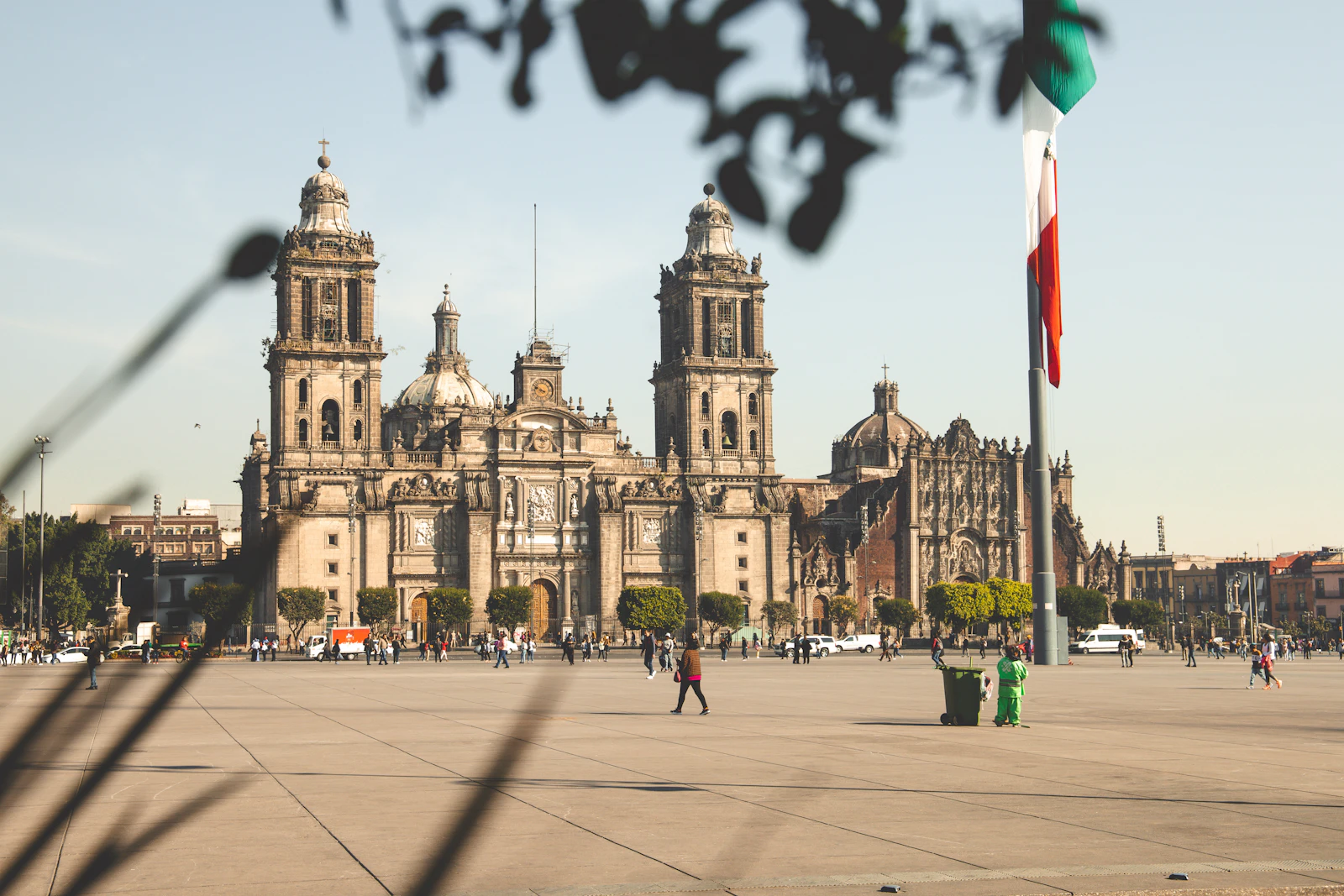 Xochimilco's trajineras are a quintessential Mexico City experience.
Morning: La Merced and Market Culture
Return to the markets with more confidence. La Merced is the largest market in the city—an overwhelming labyrinth of produce, chiles, mole paste, flowers, and prepared food stalls. Come hungry and eat your way through: pambazo (a bread roll dipped in guajillo sauce and filled with potato and chorizo), quesadillas de huitlacoche (corn fungus, a delicacy), and fresh-squeezed jugo verde. Then visit Mercado de Jamaica, the flower market, where aisles of marigolds, roses, and tropical flowers create an intoxicating sensory experience.
Afternoon: San Angel
Take an Uber south to San Angel, a colonial gem of cobblestoned streets and 17th-century architecture. If it is Saturday, the Bazar Sabado (Saturday Bazaar) fills the Plaza San Jacinto with artisan vendors selling handmade jewelry, textiles, pottery, and paintings. Visit the Museo Casa Estudio Diego Rivera y Frida Kahlo ($40 MXN)—the twin studio-houses connected by a bridge where Rivera and Kahlo lived and worked, designed by Juan O'Gorman in functionalist style. Lunch at San Angel Inn ($300-600 MXN per person)—set in a 17th-century hacienda with lush gardens, it is one of Mexico City's most beautiful restaurant settings.
Saturday is the ideal day for San Angel—the Bazar Sabado transforms Plaza San Jacinto into an open-air art market, and the surrounding streets fill with additional vendors, food stalls, and live music.
Evening: Mezcal Deep Dive
Tonight is dedicated to understanding mezcal properly. Head to Bósforo in Centro or La Clandestina in Roma, both of which have knowledgeable bartenders who will guide you through regional varieties—espadin from Oaxaca, tobala from the highlands, cuishe from Puebla. A proper tasting flight (3-4 pours) runs 200-400 MXN. Pair with botanas (snacks)—chapulines (crispy grasshoppers with lime and chili), sal de gusano (worm salt), and orange slices. Mezcal is not tequila's smoky cousin; it is a universe of flavors that rewards attention and curiosity.
Day 6: UNAM and Tlalpan
Morning: UNAM Campus
The Universidad Nacional Autonoma de Mexico (UNAM) campus is a UNESCO World Heritage Site and one of the most visually striking universities in the world. The Biblioteca Central (Central Library) is covered in a massive stone mosaic by Juan O'Gorman depicting Mexican history—it is visible from blocks away. The Espacio Escultorico is an outdoor sculpture garden set amid volcanic rock formations. And the MUAC (Museo Universitario de Arte Contemporaneo, $40 MXN) houses excellent contemporary exhibitions. The campus buzzes with student energy—cafeterias serve cheap, decent food, and bookshops sell volumes you will not find elsewhere.
Afternoon: Tlalpan
Continue south to Tlalpan, one of Mexico City's original colonial neighborhoods, now a quiet borough that feels worlds away from the urban frenzy. The central plaza is flanked by stone churches and filled with families on weekends. Eat at a fondita around the plaza—comida corrida (fixed menu of soup, rice, main, agua fresca, and dessert) for 90-130 MXN is the quintessential Mexican lunch experience. Browse the streets for antique shops and small galleries.
Evening: Condesa Art Deco Walk
Return to Condesa for an evening walk along its Art Deco architectural heritage. The neighborhood was developed in the 1920s-30s and features stunning Deco apartment buildings, curved balconies, and round corner windows. Walk Avenida Amsterdam (the oval boulevard), Avenida Mexico, and the streets between them. Dinner at Contramar (Roma, book well ahead) or Lardo (Condesa, Mediterranean-influenced Mexican) before drinks at Baltra Bar for creative cocktails.
Day 7: Puebla Day Trip
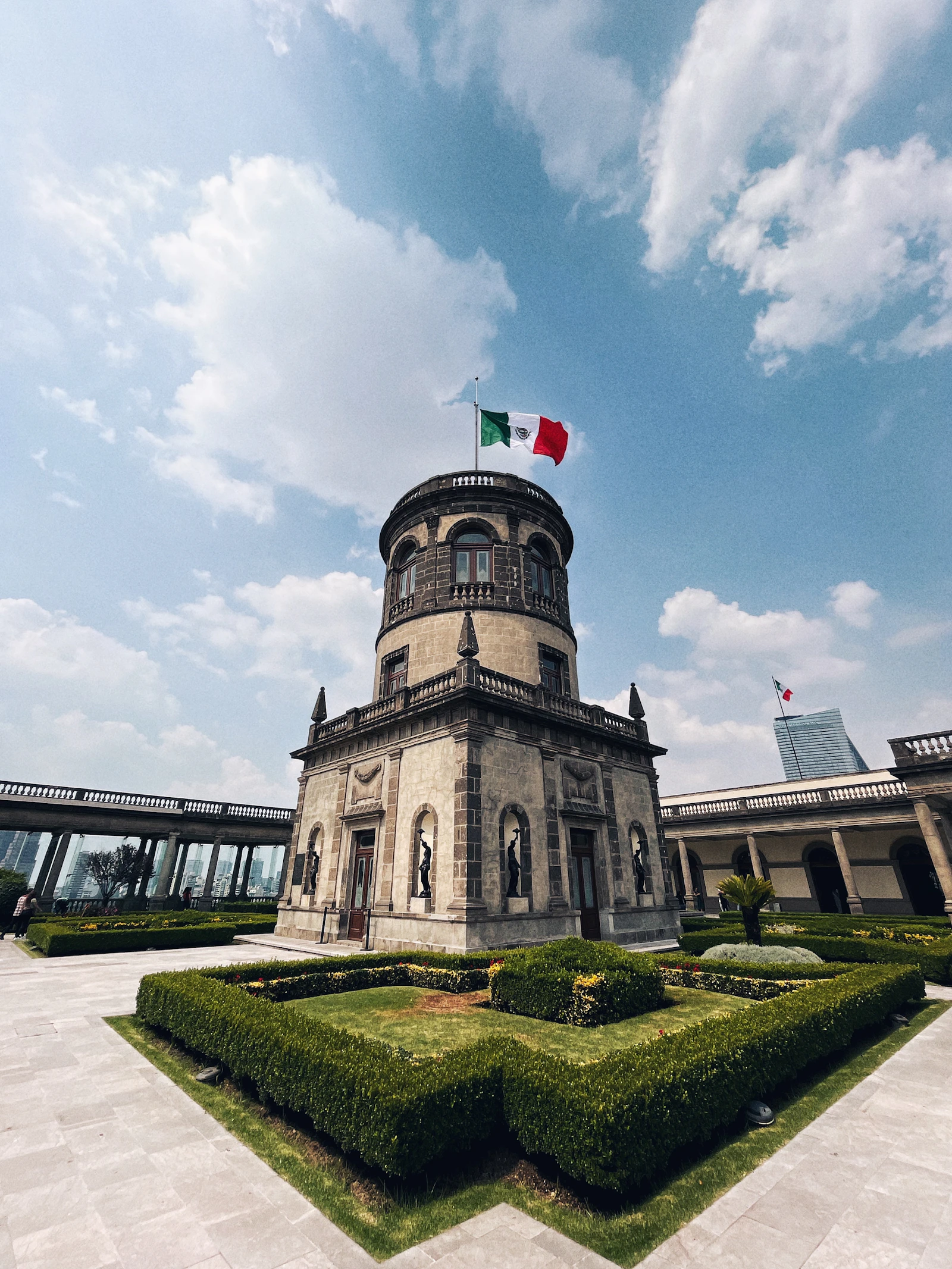 Chapultepec Castle is the only royal castle in the Americas.
Full Day: Puebla
Take an ADO bus from TAPO terminal (2 hours, $300-400 MXN round trip) to Puebla, a colonial city famous for its ornate Talavera tile architecture, baroque churches, and culinary traditions—including mole poblano, which was allegedly invented here. The Zocalo is magnificent, flanked by the enormous Catedral de Puebla and arcaded colonial buildings. Walk the Barrio de los Sapos (Frog Neighborhood) for antiques and crafts, visit the Biblioteca Palafoxiana ($50 MXN)—one of the oldest libraries in the Americas, with 45,000 volumes in stunning wooden shelves—and eat chiles en nogada (seasonal) or cemitas poblanas (the local sandwich, stuffed with breaded meat, avocado, chipotles, and Oaxacan cheese) at the Mercado El Alto.
Puebla is where mole poblano was born—a complex sauce of over 20 ingredients including chiles, chocolate, nuts, and spices. Every restaurant in the centro historico serves its own version, and debates about the best mole are taken very seriously.
Return to Mexico City by evening and have a light dinner in Roma—you will be full from Puebla's generous portions.
Days 8-9: Flexible Extensions
With 8-9 days, you have earned the luxury of slowing down or venturing further. Pick one or two options depending on your energy and interests.
Option A: Valle de Bravo Weekend
Valle de Bravo is a lakeside colonial town 2.5 hours west of CDMX, popular with wealthy Mexicans as a weekend escape. Colorful buildings, a picturesque lake, paragliding, and excellent restaurants make it a refreshing change of pace. Buses run from Terminal Poniente ($250-350 MXN round trip). Stay overnight to fully enjoy the tranquil atmosphere—lakeside restaurants serve fresh trout and mezcal cocktails with mountain views.
Option B: Museo Dolores Olmedo and Southern CDMX
The Museo Dolores Olmedo ($100 MXN) in Xochimilco is a stunning hacienda housing the largest private collection of Diego Rivera and Frida Kahlo works, plus pre-Hispanic art and Xoloitzcuintli dogs (the hairless breed sacred to the Aztecs) roaming the gardens. Combine with a return to Xochimilco's canals or exploration of the chinampas (floating gardens) that still produce food for the city's markets.
Option C: Deeper Neighborhood Exploration
- Santa Maria la Ribera: The hipster-friendly neighborhood north of Roma with the stunning Kiosco Morisco (a Moorish-style pavilion in the central park), excellent fonditas, craft coffee shops, and the wonderfully quirky Museo de Geologia ($30 MXN)—a Beaux-Arts building filled with minerals, fossils, and meteorites.
- Tepito: CDMX's most notorious market neighborhood is not for everyone, but a guided morning visit (go with a local or organized tour, never alone) reveals a fascinating world of underground commerce, street art, and the devotional shrine to Santa Muerte—the folk saint of death who draws millions of devotees. Culturally intense.
- Mixcoac / San Pedro de los Pinos: Quiet residential neighborhoods with excellent bakeries, local markets, and a pace of life that shows you how middle-class CDMX actually lives.
Option D: Cooking Class and Food Deep Dive
Take a hands-on Mexican cooking class (numerous options in Roma and Centro, $60-120 USD for half-day) where you visit a market, select ingredients, and learn to make mole, salsas, and tortillas from scratch. Combine with a dedicated evening food crawl—hit 4-5 taco stands across different neighborhoods, comparing regional styles: suadero (braised beef) in the south, carnitas in the west, al pastor everywhere, and barbacoa (slow-cooked lamb) at weekend-only stalls.
Travel Costs and Budgeting
| Category | Daily Range |
|---|---|
| Accommodation | $40-150 USD |
| Food | $15-60 USD |
| Activities | $10-40 USD |
| Transport | $5-20 USD |
| Daily total | $70-270 USD |
| 7-day total | $490-1,890 USD |
Mexico City is one of the world's best-value destinations for extended stays. Accommodation is the biggest variable—Airbnbs in Roma run $40-80/night while boutique hotels hit $100-180. For week-long stays, apartment rentals with kitchens reduce food costs significantly.
To maximize your days off without extra PTO, use the free Holiday Optimizer to find bridge days around public holidays for your Mexico City trip.
Cost-Saving Tips
- Sunday free museums: Most national museums, including the Museo Nacional de Antropologia, are free on Sundays
- Comida corrida: The traditional multi-course lunch at local fonditas costs 80-130 MXN ($4.50-7 USD) and is the best meal deal in the city
- Metro and Metrobus: At 5-7 MXN per ride, public transit is essentially free compared to Uber
- Market eating: An entire meal at La Merced or Coyoacan market costs 60-100 MXN ($3.50-6 USD)
- Free attractions: Chapultepec Park, walking Roma/Condesa/Coyoacan, many galleries, the Palacio Nacional murals, and church interiors cost nothing
- Mezcal by the shot: At mezcalerias, individual pours ($4-8 USD) let you explore without committing to expensive bottles
Cultural Experiences Not to Miss
Dia de los Muertos (November 1-2)
If your visit coincides with the Day of the Dead, you witness Mexico City at its most profound and festive. The Zocalo hosts massive altars (ofrendas) decorated with marigolds, candles, photos, and favorite foods of the departed. The Desfile de Dia de Muertos parade down Reforma—inspired by the James Bond film Spectre but now a genuine tradition—features enormous allegorical floats and thousands of participants in skeletal makeup. Cemeteries across the city fill with families who picnic beside graves, play music, and celebrate rather than mourn. It is one of the most beautiful cultural events in the world.
Lucha Libre at Arena Mexico
Friday nights at the Arena Mexico (tickets 100-600 MXN) deliver masked wrestlers, theatrical storylines, and crowds that make European football supporters look reserved. Sit in general admission for the full experience—beer vendors circulate constantly, and the audience participates with chants, insults, and genuine emotional investment in the masked heroes and villains.
Pulqueria Culture
Pulque—the fermented agave drink that predates the Aztec empire—is experiencing a revival among young CDMX residents. Traditional pulquerias like Las Duelistas (Centro, since 1912) serve it straight or in curados (fruit-flavored varieties: guava, mango, oat, pistachio). The atmosphere is loud, unpretentious, and deeply Mexican—plastic tables, painted walls, and curados served in clay mugs. Try at least once.
Practical Tips for Travelers
Language
Spanish is essential beyond the tourist corridor. For a week-long stay, invest 30 minutes in key phrases: ordering food ("una orden de..." "para llevar" "la cuenta, por favor"), directions, and basic courtesies. Locals light up when visitors attempt Spanish, even imperfectly. The Mexico City accent is clear and relatively easy for Spanish learners to understand.
Etiquette
Always greet vendors and shopkeepers when entering—"buenos dias" or "buenas tardes" is expected and its absence is considered rude. When eating street food, eating standing at the stall (not walking away) is the norm. Bargaining is appropriate at markets and with artisans but not at restaurants or shops with fixed prices. Meal times run later than in the US: lunch (comida) is the main meal, typically 2-4pm; dinner after 8pm.
Safety
Stick to recommended neighborhoods and use Uber or DiDi for transport. The Metro is safe but watch for pickpockets during rush hours. Keep phones in front pockets or crossbody bags. Avoid ATMs on the street—use bank ATMs inside branches or shopping malls. Tap water is not safe to drink, but restaurants and bars use purified water and ice. The biggest health risk for most visitors is overeating—pace yourself through the markets.
If you have extra days, consider combining your Mexico City trip with Cartagena and Lima — all easy to reach and covered in our PTO-optimized travel guides.
Quick Takeaways
- A week in CDMX lets you explore well beyond the tourist corridor into neighborhoods that reveal the real city
- Sunday free museum admission saves significant money and adds a festive, family-friendly atmosphere
- The Puebla day trip delivers colonial architecture, culinary traditions, and a change of pace worth the 2-hour bus ride
- Street food mastery takes time—by day 5, you will have favorite stalls and strong opinions about salsa verde vs roja
- Mezcal culture rewards curiosity and patience—go beyond shots and explore sipping varieties with knowledgeable bartenders
- UNAM's campus is a UNESCO site with murals, sculpture, and student energy that makes it a highlight many visitors miss
- Accommodation in Roma or Condesa keeps you central with the best restaurant and nightlife access
- Learning 20-30 Spanish phrases transforms your experience from tourist to welcome guest
- Use the Holiday Optimizer PTO calendar to plan which days to take off for your Mexico City trip.
Conclusion
A week in Mexico City is enough to fall genuinely in love with one of the world's great cities. You develop rhythms—morning chilaquiles at a trusted fonda, afternoon gallery wandering, evening mezcal at a candlelit bar—that transform a vacation into a life briefly lived. The city's depth is inexhaustible: its art spans five millennia, its food traditions could take a lifetime to explore, and its neighborhoods each contain worlds within worlds.
You will leave Mexico City with a better understanding of Mexico itself—the complexity, the beauty, the contradictions, and the extraordinary warmth of its people. And you will leave knowing that a week was enough to start the conversation but not nearly enough to finish it. Start planning your return.
Ready to maximize your time off?
Find the best Mexico City travel windows
Frequently Asked Questions
-
Is 7-9 days too long for Mexico City? Absolutely not. A week barely scratches the surface of a city with 150+ museums, dozens of distinct neighborhoods, and a food scene that could occupy a lifetime. Nine days adds day trips and deeper exploration without any sense of redundancy.
-
Is it safe to explore neighborhoods outside the tourist center? Most neighborhoods mentioned in this guide are safe during the day. Use common sense, stay aware, and use Uber between neighborhoods after dark. Tepito requires a guide; Tlalpan, San Angel, and Santa Maria la Ribera are perfectly safe for solo exploration.
-
What is the best month to visit? November through February offers dry weather and pleasant temperatures. November 1-2 (Dia de los Muertos) is spectacular but crowded. March-April is warm and clear. Avoid Semana Santa (Easter week) when prices spike and the city empties as locals leave for beach vacations.
-
Should I get a cooking class? Yes—a market-to-kitchen cooking class is one of the most rewarding activities in Mexico City. You learn techniques, understand ingredients, and gain appreciation for the complexity behind seemingly simple dishes. Book through established schools in Roma or Condesa for $60-120 USD.
-
How does altitude affect a longer stay? Most visitors adjust within 24-48 hours. For a week-long stay, altitude is a non-issue after the first two days. Stay hydrated, moderate alcohol intake initially, and listen to your body. The mild climate at altitude (15-25 degrees most days) is actually more comfortable than many sea-level destinations.
Share Your Thoughts
Did this guide help you plan your extended Mexico City trip? Tell us which experience you are most excited about—whether it is climbing pyramids at Teotihuacan, eating your weight in tacos al pastor, or discovering the neighborhood your guidebook forgot to mention.