Rio de Janeiro in 4 Days: Long Weekend Itinerary & PTO Planner for 2026
Plan a Rio de Janeiro getaway with a 4-day itinerary covering Christ the Redeemer, Copacabana, Sugarloaf Mountain, samba, and the beaches and mountains that define Brazil's marvelous city for 2026.

Introduction
Rio de Janeiro earns its nickname—Cidade Maravilhosa, the Marvelous City—within minutes of arrival. Granite peaks draped in Atlantic rainforest plunge into turquoise bays, iconic beaches stretch for kilometers between dramatic headlands, and the figure of Christ the Redeemer floats above it all with arms spread wide as if trying to embrace the staggering beauty below. No city on Earth has a more spectacular natural setting, and no city uses that setting more joyfully. Use this guide to plan your four-day trip.
Four days in Rio delivers the essential experience: iconic landmarks that live up to their photographs, beaches where the culture of the city unfolds on sand and in surf, neighborhoods where samba pulses from corner bars, and food that ranges from beachside caipirinhas to sophisticated carioca cuisine. You will sweat, you will dance, you will eat acai from a bowl the size of your head, and you will understand why cariocas (Rio's residents) consider their city not just a place to live but a state of mind.
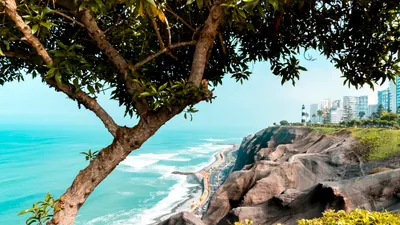
 Rio's dramatic landscape of mountains, forest, and sea is unlike any other city on Earth.
Planning a longer trip? Check out our extended Rio de Janeiro itinerary covering 7-9 days of in-depth exploration. Use our PTO optimizer to find the best days to take off around your trip dates.
Why Rio de Janeiro Is a Must-Visit Destination in 2026
Nature Meets Metropolis
Rio is the only major city in the world where you can hike through Atlantic rainforest, surf world-class waves, and dine at a Michelin-starred restaurant all in the same afternoon. The Tijuca National Park—the world's largest urban rainforest—is minutes from the city center, with trails leading to waterfalls and panoramic viewpoints. Copacabana and Ipanema are not just famous beaches; they are the city's living rooms, where cariocas exercise, socialize, play football, and drink beer from sunrise to well past sunset. The integration of nature and urban life is seamless and intoxicating.
What Makes Rio Unique vs Other South American Cities
Where Buenos Aires seduces with melancholy and Bogota with reinvention, Rio seduces with pure exuberance. The city's identity is built on the beach, on samba, on Carnival—on the idea that joy is not something you earn but something you practice daily. This shows up in everything from the way strangers share conversations on the bus to the spontaneous samba circles (rodas de samba) that erupt in Lapa on Friday nights. The visual drama helps: every neighborhood is framed by a different combination of mountain, ocean, and forest, creating a city that is almost absurdly photogenic from every angle.
Planning Your Trip Essentials
Use the Holiday Optimizer to find the best days to book off around public holidays for your Rio de Janeiro trip.
Best Time to Visit
May through October (Rio's winter/dry season) offers pleasant temperatures (20-27 degrees Celsius), clear skies, and fewer crowds. December through March is hot and humid (30-40 degrees) with afternoon thunderstorms, but the energy peaks with New Year's Eve on Copacabana (2 million people on the beach) and Carnival in February/March. Avoid the weeks immediately before and during Carnival unless that is your specific goal—prices triple and the city focuses entirely on the festivities. September through November offers the best balance of good weather, lower prices, and full cultural programming.
Transportation Basics
The Metro covers the Zona Sul (South Zone: Copacabana, Ipanema, Botafogo) and Centro efficiently for R$6.90 per ride. Use a rechargeable Rio Card for metro and buses. Uber is essential for areas the Metro does not reach—rides across the city cost R$15-50 ($3-10 USD). Buses cover the entire city but can be confusing for newcomers. Walking is wonderful along the beachfront but impractical between neighborhoods (distances are deceptive). Never hail random taxis—use apps exclusively.
Accommodation Choices
- Copacabana: Classic Rio location, beachfront access, dense restaurant scene. Hotels $60-200 USD/night.
- Ipanema / Leblon: More upscale, excellent dining, beautiful beach. $80-250/night.
- Botafogo: The hipster neighborhood—craft beer, creative restaurants, Sugarloaf views. $50-150/night.
- Santa Teresa: Hillside bohemian neighborhood with colonial architecture and artist studios. Charming but requires taxis. $40-120/night.
Travel Costs and Budgeting
To maximize your days off without extra PTO, use the free Holiday Optimizer to find bridge days around public holidays for your Rio de Janeiro trip.
Daily Budget Breakdown
Rio is mid-range by South American standards. Budget travelers can manage R$200-350 ($40-70 USD) per day on street food, Metro, and free beach time. Mid-range travelers should plan R$400-700 ($80-140 USD) for sit-down restaurants, attractions, and Ubers. Premium experiences—Sugarloaf sunset, fine dining, helicopter tours—push past R$1,000 ($200 USD).
Cost-Saving Tips
Beaches are free and are the heart of Rio's culture—you can spend entire days at Copacabana or Ipanema with minimal spending. Many viewpoints and hikes are free: Parque Lage, Morro da Urca trail, and the Selarón Steps cost nothing. Street food is abundant and cheap—acai bowls, pasteis (fried pastries), and tapioca crepes from beach vendors cost R$10-25. Visit Cristo Redentor early on a clear weekday for shorter lines.
Food and Dining Typical Costs
- Acai bowl (beach/street): R$15-30 ($3-6 USD)
- Pastel from a street vendor: R$8-15 ($1.50-3 USD)
- Prato feito (plate of the day) at a local restaurant: R$25-45 ($5-9 USD)
- Sit-down restaurant dinner: R$80-180 ($16-36 USD) per person
- Caipirinha: R$18-35 ($3.50-7 USD)
- Churrascaria rodizio (all-you-can-eat): R$120-250 ($24-50 USD)
- Craft beer: R$15-30 ($3-6 USD)
Day 1: Iconic Rio
Begin with the landmarks that define Rio's identity—the views that made the city famous worldwide.
Morning: Christ the Redeemer
Start early at Cristo Redentor on Corcovado mountain. Buy tickets online in advance at paineirascorcovado.com.br (R$90-130 depending on season) and take the first van up at 8am to beat both crowds and clouds. The cog railway is scenic but slower—vans from Paineiras depart more frequently. The 38-meter Art Deco statue standing at 710 meters above the city is genuinely awe-inspiring—the panoramic view encompasses Sugarloaf, Copacabana, Ipanema, Lagoa, Tijuca Forest, and the vast sprawl of the city. Clear morning light produces the best photos. Allow 1-1.5 hours at the summit.
Book Cristo Redentor tickets for 8am on a weekday morning for the clearest skies and smallest crowds. Clouds often roll in by late morning, completely obscuring the view. Check the webcam at the summit before heading up.
Midday: Santa Teresa
Descend to Santa Teresa, the hilltop bohemian neighborhood of cobblestoned streets, colonial mansions, and artist studios. Walk down the famous Escadaria Selarón—a 250-step staircase covered in over 2,000 colorful tiles from around the world, created by Chilean artist Jorge Selarón as a tribute to the Brazilian people. It is always crowded but irresistible. Lunch at Aprazivel (Rua Aprazivel 62, reservations recommended, R$80-150 per person)—a treehouse-like restaurant with panoramic views serving contemporary Brazilian cuisine.
Afternoon: Sugarloaf Mountain
Take the cable car to Pao de Acucar (Sugarloaf Mountain, R$130 round trip). The two-stage ride—first to Morro da Urca (220m), then to the Sugarloaf summit (396m)—offers increasingly dramatic views of the city, Guanabara Bay, and the Atlantic Ocean. Time your visit for late afternoon to watch the sunset paint the city in gold and pink. The silhouette of Cristo Redentor against the sunset sky from the Sugarloaf summit is one of the great views in the world. There is a bar at the top—a caipirinha at sunset here is mandatory.
Evening: Lapa
Head to Lapa, Rio's nightlife epicenter, where the iconic Arcos da Lapa (colonial aqueduct arches) frame a neighborhood of samba bars, live music venues, and street parties. On Friday and Saturday nights, the streets fill with thousands of people dancing, drinking, and moving between venues. Start at Rio Scenarium (Rua do Lavradio 20, R$50-80 cover, reservations for dinner)—a three-story antique warehouse turned samba club where live bands play to a dancing crowd amid vintage furniture. The energy is intoxicating.
 The cable car to Sugarloaf offers one of the world's most spectacular rides.
Day 2: Beach Culture and Zona Sul
Today is about Rio's soul: the beach and the neighborhoods that surround it.
Morning: Copacabana Beach
Wake up early and walk the Copacabana promenade—the famous black-and-white wave-pattern sidewalk designed by Roberto Burle Marx stretches 4 km along the crescent-shaped beach. Join the cariocas exercising, surfing, and playing altinho (keepie-uppie with a football) in the sand. Rent a beach chair from a barraca (beach vendor, R$15-30 for chair and umbrella) and settle in. Vendors circulate constantly selling biscoito Globo (crunchy tapioca crackers), mate gelado (iced mate tea), acai, and grilled cheese on sticks—this is how cariocas eat at the beach.
Midday: Ipanema and Leblon
Walk south along the beach (or take a quick bus) to Ipanema, the slightly more upscale neighbor. The beach is organized by postos (lifeguard stations)—Posto 9 is the classic gathering spot for a young, alternative crowd, while Posto 8 attracts the LGBTQ+ community. Arpoador, the rocky point between Copacabana and Ipanema, is where surfers ride waves and crowds gather nightly to applaud the sunset—yes, cariocas literally clap when the sun goes down. Continue to Leblon, the most affluent beach neighborhood, for lunch at Zaza Bistro Tropical (creative Brazilian, R$70-120 per person) or a simple but excellent prato feito at a local boteco.
Afternoon: Lagoa and Jardim Botanico
Walk inland to the Lagoa Rodrigo de Freitas, a large saltwater lagoon surrounded by a cycling and jogging path with mountain views. Rent a bike (R$10-20/hour) and circle the lagoon, or stop at one of the kiosks for coconut water and snacks. Continue to the Jardim Botanico (R$15 entry)—a serene botanical garden with over 6,500 species, including an avenue of towering imperial palms and sections of Atlantic rainforest. It is the perfect counterpoint to the beach energy.
Evening: Botafogo Food Scene
Head to Botafogo, the neighborhood experiencing Rio's most exciting food and bar renaissance. Commune is a food hall with diverse options. The streets around Rua Nelson Mandela are packed with craft beer bars, creative restaurants, and a young, energetic crowd. Meza Bar serves inventive cocktails, and CT Boucherie does excellent grilled meats in a modern setting. Botafogo has Sugarloaf views from nearly every corner.
Day 3: History, Art, and Samba
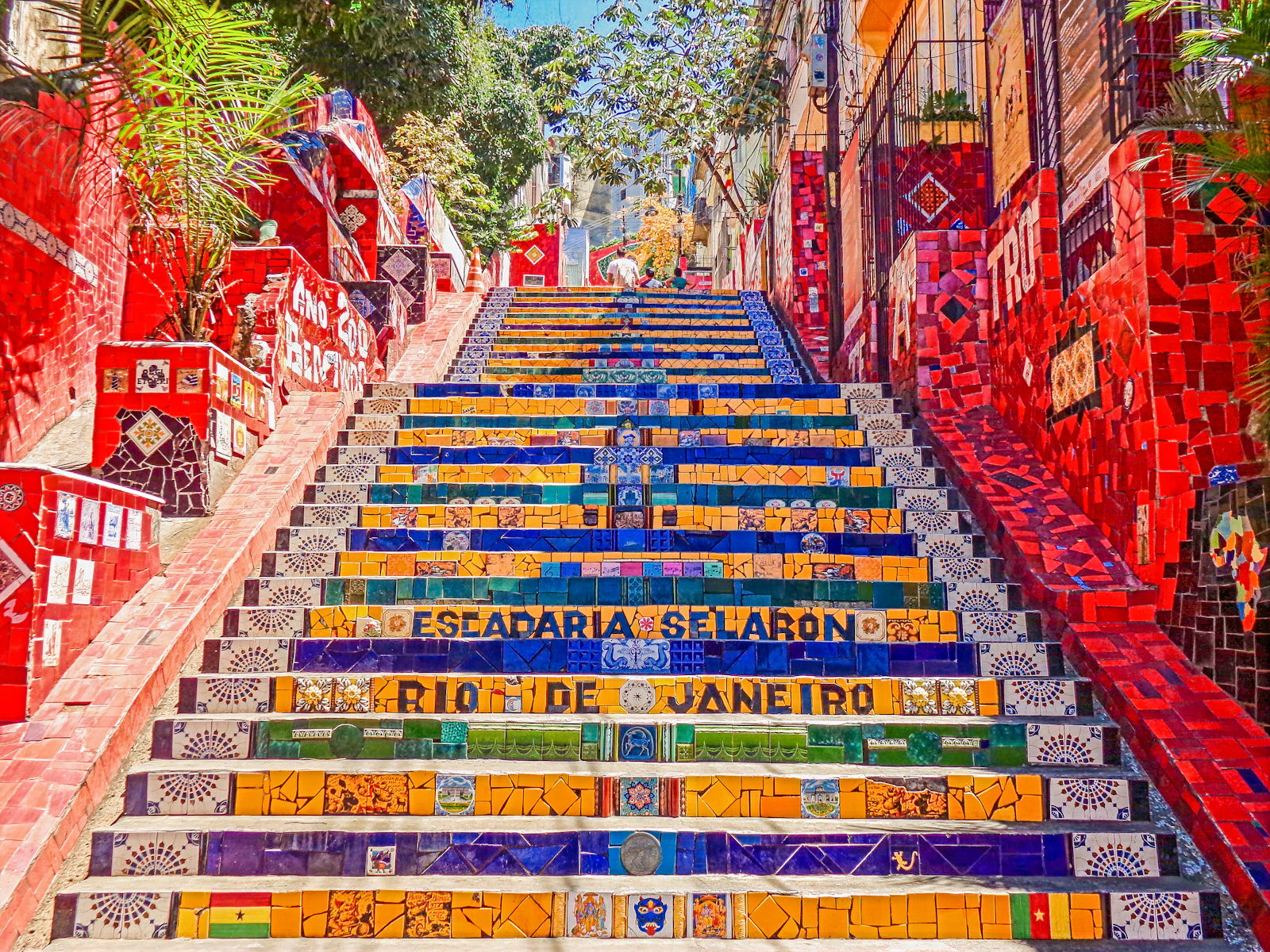 The Selarón Steps are a tile mosaic masterpiece connecting Lapa to Santa Teresa.
Morning: Centro Historico
Explore Rio's Centro (downtown), where colonial, neoclassical, and modern architecture collide. Start at Praca XV (the old royal square), visit the ornate Real Gabinete Portugues de Leitura (free, one of the most beautiful libraries in the world—a cathedral of books with a stained-glass skylight), and walk to the Theatro Municipal (guided tours R$20, or attend a performance). The Museu Nacional de Belas Artes (R$10) houses Brazilian and European art in a grand Beaux-Arts building.
Midday: Confeitaria Colombo
Lunch at Confeitaria Colombo (Rua Gonçalves Dias 32, Centro)—a Belle Epoque cafe from 1894 with enormous mirrors, stained glass, and marble counters. It is a living museum of Rio's elegant past. The food is decent (R$40-80 for lunch), but you come for the atmosphere. Order a pastel de nata (Portuguese custard tart) and cafe com leite at the marble counter.
Afternoon: Parque Lage and Tijuca
Visit Parque Lage (free entry), a beautiful public park with an Italianate mansion at its base—now an art school with a cafe in the courtyard where you can sip espresso while looking up at Cristo Redentor framed by rainforest. For the adventurous, hike into Tijuca National Park from here—the trail to Vista Chinesa (Chinese Viewpoint) takes about 2 hours round trip and offers stunning panoramic views of the city, lagoon, and ocean. The park is the world's largest urban rainforest and home to toucans, monkeys, and hundreds of bird species.
Evening: Roda de Samba
Seek out a roda de samba—an informal samba circle where musicians play and the crowd dances and sings along. These happen across the city, especially on weekends. Pedra do Sal in the Saude neighborhood (Monday and Friday nights) is the most famous—a historic stone staircase in Rio's African heritage district where samba was born. The atmosphere is electric: musicians play pagode (a samba subgenre), caipirinha vendors work the crowd, and hundreds of people dance under the stars. Free, authentic, unforgettable.
Samba was born in the neighborhoods around Pedra do Sal, where Afro-Brazilian communities gathered in the early 1900s. The roda de samba tradition at this site connects directly to the origins of Brazil's most iconic musical form.
Day 4: Nature and Departure
Morning: Hiking or Beach
Choose your energy level. For adventure, hike Morro Dois Irmaos (Two Brothers Hill), the iconic twin peaks behind Leblon—the trail starts in Vidigal favela (take an Uber to the trailhead, R$5 entry, 45-60 minutes up) and rewards with the single best view of Rio: Ipanema, Leblon, Lagoa, and the mountains stretching into the distance. For relaxation, return to your favorite beach for one last morning of sand, sun, and biscoito Globo.
Before the Airport
Galeao International Airport (GIG) is 20-40 minutes from the Zona Sul depending on traffic. Uber costs R$50-100. Allow 2.5 hours for international departures. Domestic flights also operate from Santos Dumont Airport (SDU) in Centro—much closer to the Zona Sul (15-20 minutes by Uber). Buy cachaca, Brazilian coffee, or Havaianas flip-flops at the airport for last-minute gifts.
Eat, Drink, and Savor
Essential Brazilian Dishes
- Feijoada: Brazil's national dish—a rich black bean stew with pork cuts (ears, tail, ribs, sausage), served with rice, farofa (toasted cassava flour), collard greens, and orange slices. Saturday is traditional feijoada day across Rio. Bar do Mineiro in Santa Teresa and Casa da Feijoada in Ipanema serve excellent versions.
- Picanha: The quintessential Brazilian steak cut—a sirloin cap with a fat cap that is grilled on skewers. At a churrascaria rodizio (all-you-can-eat), passadores circulate with 15-20 different cuts, but picanha is the star.
- Acai: In Rio, acai is not a health food trend—it is a staple served frozen in bowls topped with granola and banana, or blended into smoothies. Beach vendors and juice bars serve it everywhere for R$10-25. It is dense, energizing, and addictive.
Street Food Essentials
- Pastel: Deep-fried pastry pockets filled with cheese, meat, shrimp, or palmito (hearts of palm). Best at feiras (street markets) and beach bars.
- Coxinha: Teardrop-shaped croquettes filled with shredded chicken—the beloved bar snack of Brazil.
- Tapioca: Cassava-flour crepes filled with sweet or savory fillings—coconut and condensed milk, cheese and ham, or nutella and banana. Beach vendors and street stalls.
Drinks
- Caipirinha: Cachaca (sugarcane spirit), lime, sugar, and ice—Brazil's national cocktail. Simple, devastating, and served everywhere. Variations use vodka (caipiroska) or sake (sakerinha). Expect R$15-30 at bars.
- Chopp: Draft beer (usually Brahma, Bohemia, or craft options), served ice-cold in small glasses to stay frosty. The preferred drink at botecos (neighborhood bars).
- Agua de coco: Fresh coconut water, served directly from green coconuts by beach vendors. R$5-10 per coconut. Pure hydration.
Cultural Experiences Not to Miss
Samba Schools and Carnival Heritage
Even outside Carnival season, you can visit samba school rehearsals (ensaios) on weekend nights—Mangueira, Salgueiro, and Beija-Flor open their quadras (rehearsal spaces) to visitors for R$20-40 entry. The energy of 2,000 people singing and dancing in unison is a preview of Carnival's power. The Sambódromo (designed by Oscar Niemeyer) can be visited during the day.
Favela Culture
Rio's favelas are complex communities, not tourist attractions—but respectful engagement is possible and rewarding. Community-led tours in Rocinha and Vidigal (organized through local guides, R$80-150) provide context about these neighborhoods' history, challenges, and vibrant cultural life. Vidigal, in particular, has bars and restaurants with some of the best views in Rio. Never enter a favela without a local guide.
Street Art in the Porto District
The Porto Maravilha (port district) was renovated for the 2016 Olympics and now features the stunning Museu do Amanha (Museum of Tomorrow, R$30, designed by Santiago Calatrava), the AquaRio aquarium, and the massive Kobra Mural depicting indigenous faces of the five continents—the largest street mural in the world at the time of its creation.
Practical Tips for Travelers
Language
Portuguese—not Spanish—is spoken in Brazil. The languages are related but not mutually intelligible. English is limited outside upscale hotels and some tourist-facing businesses. Learn key phrases: "obrigado/obrigada" (thank you, male/female), "quanto custa?" (how much?), "uma caipirinha, por favor." Cariocas are friendly and will work hard to communicate through gestures and Google Translate.
Etiquette
Greetings involve two kisses on the cheek (one in some regions, two in Rio). Cariocas are famously warm and informal—strangers chat easily, and personal space is smaller than in North America or Northern Europe. Tipping 10% at restaurants is standard (often included as "servico" on the bill). Beach culture is relaxed—Brazilians wear minimal swimwear without self-consciousness, and body positivity is genuine.
Safety
Rio requires more safety awareness than most tourist cities. Do not carry valuables on the beach—bring only cash for vendors, a basic phone, and sunscreen. Avoid walking on the beach or through Copacabana/Ipanema after midnight. Use Uber rather than walking between neighborhoods at night. Centro is busy during the day but empties dangerously after business hours. Lapa on weekend nights is lively and generally safe in the main areas, but stay alert. Expensive watches, cameras, and jewelry should be left at the hotel.
Never walk on the beach at night, even on Copacabana or Ipanema. Muggings occur after dark on the sand. Keep valuables at the hotel during beach days—bring only enough cash for food and drinks.
If you have extra days, consider combining your Rio de Janeiro trip with Buenos Aires and Lima — all easy to reach and covered in our PTO-optimized travel guides.
Quick Takeaways
- Book Cristo Redentor for 8am on a clear weekday—clouds and crowds build throughout the day.
- Sugarloaf at sunset with a caipirinha at the summit bar is a top-five life experience.
- Beaches are free and are the center of carioca culture—bring minimal valuables.
- Lapa on Friday/Saturday night and Pedra do Sal on Monday/Friday deliver authentic samba and nightlife.
- Budget R$400-700 ($80-140 USD) per day for comfortable mid-range travel.
- Safety awareness is important—use Uber at night, minimize visible valuables, and avoid deserted areas.
- Portuguese is not Spanish—learn basic phrases to show respect and improve interactions.
- The Morro Dois Irmaos hike offers the best single view of Rio and takes under 2 hours.
- Use the Holiday Optimizer PTO calendar to plan which days to take off for your Rio de Janeiro trip.
Conclusion
Four days in Rio de Janeiro delivers an experience that no other city can match—a combination of natural beauty, cultural vibrancy, and pure human joy that imprints on your memory permanently. You stand atop Corcovado watching the city spread below you like a living map, you feel the bass of samba drums in your chest at a Lapa bar, you taste your first proper acai bowl on Ipanema beach, and you understand why cariocas would not trade their city for anywhere else on Earth.
Rio is not perfect—it is complicated, sometimes dangerous, and always intense. But it is also beautiful beyond reason, warm in every sense of the word, and powered by a belief that life should be celebrated loudly and often. You leave sun-kissed, samba-haunted, and already calculating how to come back for Carnival.
Ready to maximize your time off?
Find the best Rio de Janeiro travel windows
Frequently Asked Questions
-
Is Rio de Janeiro safe for tourists? Yes, with precautions. Stay in the Zona Sul (Copacabana, Ipanema, Leblon, Botafogo), minimize visible valuables, use Uber at night, and avoid beaches after dark. Millions of tourists visit safely each year. The safety situation has improved significantly in recent years, but street awareness is essential.
-
When is the best time to visit? May through October for the best weather and fewer crowds. September-November balances good weather with lower prices. December-March is hot and humid but energetic. Carnival (February/March) is extraordinary but requires months of advance booking and significantly higher prices.
-
How much should I budget per day? R$200-350 ($40-70 USD) for budget travel, R$400-700 ($80-140 USD) for mid-range comfort, R$1,000+ ($200+ USD) for premium experiences. Accommodation ranges from R$150-500 ($30-100 USD) per night in the Zona Sul. Beach culture is essentially free.
-
Do I need Portuguese? Basic Portuguese helps enormously and is appreciated. English is limited outside upscale hotels. Download Google Translate's Portuguese offline pack before arriving. Cariocas are patient and creative communicators—you will manage with gestures and apps, but key phrases make everything smoother.
-
Should I visit a favela? Only with a community-led tour organized through local guides—never independently. Tours in Rocinha and Vidigal are the most established and provide valuable context about these communities. Respect residents' privacy and follow your guide's instructions.
Share Your Thoughts
Did this guide help you plan your Rio de Janeiro getaway? Tell us what you are most excited about—sunrise at Cristo Redentor, sunset on Sugarloaf, samba at Pedra do Sal, or simply the timeless pleasure of a caipirinha on Ipanema beach.