Rio de Janeiro in 7-9 Days: Extended Vacation Itinerary to Maximize PTO in 2026
Plan an extended Rio de Janeiro adventure with a 7-9 day itinerary covering beaches, mountains, samba culture, day trips to Petrópolis and Niterói, and deep neighborhood exploration for 2026.

Introduction
A week in Rio de Janeiro lets you stop sightseeing and start living like a carioca. The first four days deliver the iconic experiences—Cristo Redentor, Sugarloaf, the beaches, the samba bars. Days five through nine let you go deeper: hiking through Atlantic rainforest to hidden waterfalls, exploring the imperial mountain retreat of Petropolis, discovering neighborhoods where tourists never venture, and understanding the complex, beautiful, contradictory soul of a city that is simultaneously one of the most joyful and most challenging places on Earth. Use this guide to plan your extended trip.
Extended stays in Rio reveal rhythms invisible to short-term visitors. You learn that Monday at Pedra do Sal is sacred, that the best acai comes from the least photogenic stall, that Botafogo's food scene has surpassed Ipanema's, and that the view from Vidigal at sunset makes every other view feel like a rehearsal. Rio demands engagement on its own terms—and a week gives you enough time to accept those terms gladly.
 Mountains, forest, and ocean converge in Rio's dramatic landscape.
Short on time? See our Rio de Janeiro 4-day itinerary for a focused long-weekend plan. Use our PTO optimizer to find the best days to take off around your trip dates.
Why an Extended Rio Trip Is Worth It
Adventure Beyond the Landmarks
Rio's natural setting is not just a backdrop—it is a playground. Extended stays let you hike Pedra da Gavea (one of the world's largest coastal monoliths, 4-5 hours round trip), trail-run through Tijuca Forest, surf at Prainha (a hidden beach accessible only by car), and kayak through Guanabara Bay. The Trilha Transcarioca is a 180-km trail crossing the city through Atlantic rainforest—even day-hiking sections reveals a Rio that most tourists never see.
Cultural Depth
A week lets you experience Rio's cultural layers. Attend a samba school rehearsal on Saturday night, catch a performance at the Theatro Municipal, visit the Museu de Arte do Rio (MAR) and the Museu de Arte Moderna (MAM), explore the Afro-Brazilian heritage sites in the port district, and understand how Carnival is not just a party but a year-round cultural production involving thousands of artists, musicians, and craftspeople across dozens of communities.
Neighborhood Discovery
Beyond the Zona Sul tourist corridor, Rio has neighborhoods with distinct personalities. Urca is a quiet, village-like enclave at the base of Sugarloaf. Gavea and Jardim Botanico are leafy, wealthy neighborhoods with excellent restaurants and cultural venues. Tijuca and Grajau in the north offer authentic neighborhood life far from tourist infrastructure. And the expanding Porto Maravilha district continues to add museums, restaurants, and public spaces.
Days 1-4: Core Rio
Follow the 4-day itinerary covering Cristo Redentor, Sugarloaf Mountain, Copacabana, Ipanema, Lapa, Santa Teresa, Centro Historico, Parque Lage, and the essential beach, samba, and food experiences. Those four days establish the foundation.
Day 5: Niteroi and Guanabara Bay
 The Sugarloaf cable car ride is one of Rio's most thrilling experiences.
Morning: Ferry to Niteroi
Take the Barcas ferry from Praca XV in Centro to Niteroi (R$7.70, 20 minutes)—the crossing itself offers stunning views of the Rio skyline, Sugarloaf, and Guanabara Bay. Niteroi, across the bay, is often overlooked by tourists but offers some of the best views back toward Rio. Start at the Museu de Arte Contemporanea (MAC) (R$12), designed by Oscar Niemeyer—the flying-saucer-shaped building perched on a cliff is an architectural icon, and the views of Rio across the water are extraordinary.
Afternoon: Niteroi Beaches and Fortifications
Walk to the Fortaleza de Santa Cruz (R$6), a 16th-century fortress guarding the entrance to Guanabara Bay with cannon-studded walls and guided tours. Continue to Itacoatiara Beach—one of the best surfing beaches near Rio, backed by dramatic rock formations. The Parque da Cidade offers panoramic views and hiking trails. Lunch at one of the waterfront restaurants with Rio's skyline as your backdrop.
The ferry ride from Praca XV to Niteroi at sunset offers one of the best views of Rio—Sugarloaf and Cristo Redentor silhouetted against the evening sky. Time your return for golden hour.
Evening: Return and Botafogo Dinner
Take the ferry back and head to Botafogo for dinner. The neighborhood's food scene has exploded—Meza Bar (cocktails and small plates), Miam Miam (creative Brazilian-French), and Irajá (chef-driven carioca cuisine) are all excellent. The streets around Rua Nelson Mandela are lively most evenings with a young, local crowd.
Day 6: Tijuca Forest Deep Dive
Morning: Tijuca Waterfalls and Trails
Dedicate a morning to serious exploration of Parque Nacional da Tijuca, the world's largest urban rainforest. Enter from the Alto da Boa Vista entrance and hike to Cascatinha Taunay, a 30-meter waterfall in the heart of the forest. Continue to the Pico da Tijuca (1,022m, 2-3 hours round trip from the Bom Retiro entrance)—the highest point in the park with 360-degree views of the city, ocean, and surrounding mountains. The forest is dense, humid, and alive with wildlife—toucans, marmosets, and coatis are common. Bring water, insect repellent, and proper shoes.
Afternoon: Gavea and Jardim Botanico
Descend through the forest to the Jardim Botanico neighborhood. If you have not yet visited the botanical garden (R$15), do so now—the imperial palm avenue and orchid greenhouse are spectacular. Otherwise, explore the neighborhood's cafe culture and boutique shops. Plage Cafe serves excellent coffee and brunch. Walk to Parque da Cidade in Gavea for quiet green space and views.
Evening: Roda de Samba
Seek out tonight's best roda de samba. Pedra do Sal (Monday and Friday) remains the most iconic. Renascença in Andarai (Saturday nights) is a traditional samba venue beloved by locals. Beco do Rato in Lapa (Friday) combines samba with a bar atmosphere. The music, the dancing, the communal energy of strangers singing together—this is Rio at its most authentic.
Day 7: Petropolis Day Trip
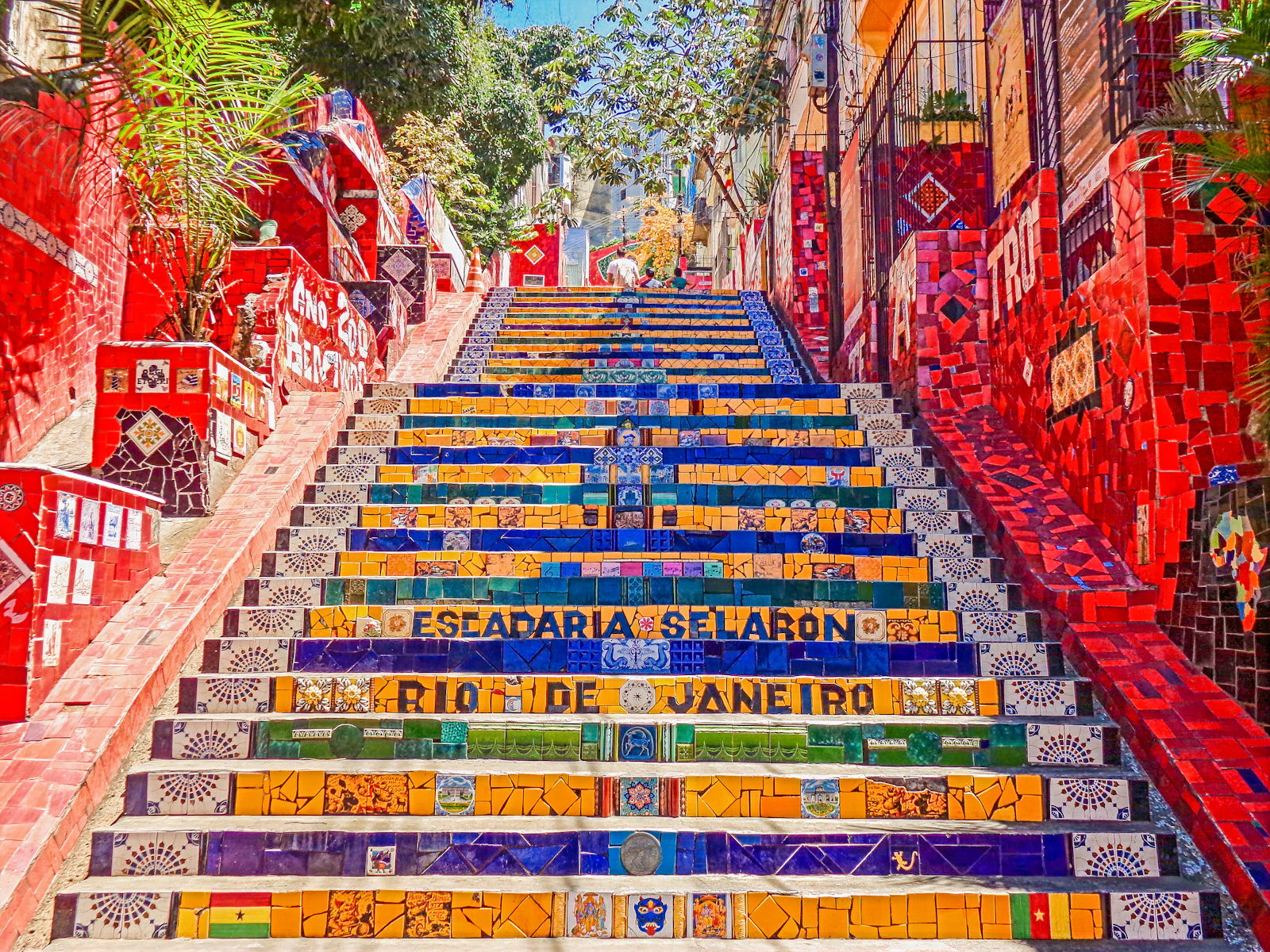 The Selarón Steps connect Lapa to Santa Teresa in a blaze of color.
Full Day: Imperial Mountain Retreat
Take a bus from Rodoviaria Novo Rio to Petropolis (1.5 hours, R$30-50), the mountain retreat of Brazil's former imperial family. At 800 meters altitude, the air is noticeably cooler and fresher—a welcome respite from Rio's humidity. Visit the Museu Imperial (R$30), the restored palace of Emperor Pedro II with period furnishings, crown jewels, and the imperial scepter and crown. The Catedral de Sao Pedro de Alcantara houses the imperial tombs. Walk the historic center's tree-lined streets, passing 19th-century mansions and German-influenced architecture (the region was settled by German immigrants).
Petropolis was founded as the summer capital of the Brazilian Empire—Emperor Pedro II built his palace here to escape Rio's heat. The cooler mountain climate attracted European immigrants, giving the town a distinctly different character from coastal Rio.
Lunch at one of the German-influenced restaurants—Bauernstube serves hearty fare including sausages, sauerkraut, and local trout. The Cervejaria Bohemia brewery offers tours and tastings of one of Brazil's oldest beer brands (R$60-80 for tour and tasting). Return to Rio by late afternoon.
Days 8-9: Flexible Extensions
With 8-9 days, customize your final days based on what resonated most.
Option A: Ilha Grande Beach Escape
Take a bus to Angra dos Reis (2.5 hours) and a boat to Ilha Grande ($30-50 BRL round trip)—a car-free tropical island with over 100 beaches, hiking trails through Atlantic rainforest, and crystal-clear water for snorkeling. Lopes Mendes beach is regularly ranked among Brazil's most beautiful. An overnight stay lets you enjoy the island's pace—rustic pousadas on the main village start at R$150-250/night. Day trips are possible but rushed.
Option B: Buzios Beach Town
Buzios (Armacao dos Buzios) is the chic beach peninsula 2.5 hours east of Rio, made famous by Brigitte Bardot in the 1960s. Over 20 beaches line the rocky coastline, each with different character—Geribá for surfing, Azeda for calm swimming, Tartaruga for snorkeling. The Rua das Pedras pedestrian street in the village center is lined with restaurants and boutiques. ADO buses run from Rio's Rodoviaria (R$60-100 round trip).
Option C: Beach and Hiking Combo
Combine Prainha and Grumari—two wild beaches on Rio's western coast, accessible only by car (Uber from Barra, R$40-60). Prainha is a surfer's beach backed by lush hillsides with no high-rises in sight—it feels like rural Brazil. Grumari is wilder still, with a stretch of clothing-optional sand. After the beach, hike Pedra Bonita (1 hour up, stunning views of Sao Conrado and the hang-gliding launch site) or arrange a tandem hang glide ($350-500 BRL) from the top for an unforgettable descent to the beach below.
Option D: Cultural Deep Dive
Spend two days on Rio's cultural offerings you missed: the Museu de Arte Moderna (MAM) in Flamengo Park, designed by Affonso Eduardo Reidy with landscaping by Burle Marx; the Centro Cultural Banco do Brasil (CCBB) in Centro, which hosts blockbuster exhibitions in a gorgeous neoclassical building (free); the Instituto Moreira Salles in Gavea for photography exhibitions; and the Museu do Amanha in the Porto district for its Calatrava architecture and interactive science exhibits.
Travel Costs and Budgeting
| Category | Daily Range |
|---|---|
| Accommodation | R$150-500 ($30-100 USD) |
| Food | R$100-300 ($20-60 USD) |
| Activities | R$50-200 ($10-40 USD) |
| Transport | R$30-100 ($6-20 USD) |
| Daily total | R$330-1,100 |
| 7-day total | R$2,310-7,700 |
Extended stays in Rio benefit from apartment rentals—a week-long Airbnb in Botafogo or Copacabana runs R$200-400/night with a kitchen, significantly reducing food costs. The beach is free, hiking is free, and many cultural experiences cost under R$30.
To maximize your days off without extra PTO, use the free Holiday Optimizer to find bridge days around public holidays for your Rio de Janeiro trip.
Cost-Saving Tips
- Beach culture costs nothing: Bring a towel, water, and sunscreen—everything else is optional
- Prato feito: The "plate of the day" at local restaurants is the best food value—R$25-45 for a generous meal
- Free museums: CCBB is always free, MAM is free on Tuesdays, many galleries charge nothing
- Metro + walking: The Zona Sul is Metro-connected and walkable—save Uber for nighttime and distant neighborhoods
- Cook breakfast: Apartment kitchens and fresh tropical fruit from markets make breakfast easy and cheap
- Acai from neighborhood shops: Beach vendors charge double—find a local acai place for R$10-15 versus R$25-30 on the sand
Cultural Experiences Not to Miss
Samba School Rehearsals
From August through Carnival, samba schools hold weekly rehearsals (ensaios) in their quadras (community spaces). Mangueira (in Mangueira favela, accessible by Metro), Salgueiro (in Tijuca), and Vila Isabel welcome visitors for R$20-40 entry. The energy is extraordinary—full bateria (drum section) of 300+ percussionists, thousands of community members singing the school's samba-enredo, and an atmosphere that previews Carnival's intensity. Even outside rehearsal season, some schools offer cultural tours.
Afro-Brazilian Heritage
Rio's African heritage is foundational. Visit the Cais do Valongo (UNESCO World Heritage Site), where an estimated 900,000 enslaved Africans arrived in Brazil. The Instituto de Pesquisa e Memoria Pretos Novos (IPMN, free) tells this history powerfully. Pedra do Sal, beyond the samba, is a historic site where African traditions were preserved and samba was born. The Museu da Historia e da Cultura Afro-Brasileira (MUHCAB) in Centro contextualizes the profound African influence on Brazilian music, religion, food, and identity.
Contemporary Art Scene
Beyond the major museums, Rio has a growing gallery scene. A Gentil Carioca in Centro is one of Latin America's most respected contemporary galleries. Galeria Nara Roesler in Ipanema and Lurixs in Copacabana show Brazilian and international contemporary work. The Porto district continues to develop with new cultural spaces and street art installations.
Practical Tips for Travelers
Language
Portuguese is essential. Even basic efforts are warmly received—cariocas are among the friendliest people in the world and will help you communicate through any means available. Key phrases for extended stays: "pode me indicar um bom restaurante?" (can you recommend a good restaurant?), "quanto tempo demora?" (how long does it take?), and "nao entendo" (I don't understand). Download Google Translate's Portuguese offline pack before arrival.
Etiquette
Cariocas greet with two kisses on the cheek. Personal space is smaller—conversations happen at close range and physical contact (hand on shoulder, arm touching) is normal between acquaintances. Beach etiquette: do not reserve spots with towels and leave for hours, do not play music loudly near others, and yes, sungas (speedos) on men are normal and expected—board shorts are considered tourist wear. Tipping 10% is standard at sit-down restaurants.
Safety
Safety awareness improves with local knowledge gained over a week. Learn which streets to avoid after dark (your hotel can advise), stick to well-lit and populated areas at night, and use the Metro and Uber after sunset. The most common crime affecting tourists is phone snatching—keep phones in pockets, not in hands, when walking in busy areas. Avoid displaying cameras and jewelry. The beach is safe during daylight but never at night. Despite the precautions, Rio is a functioning city of 7 million people going about their lives—context and common sense go further than fear.
If you have extra days, consider combining your Rio de Janeiro trip with Buenos Aires and Lima — all easy to reach and covered in our PTO-optimized travel guides.
Quick Takeaways
- A week in Rio lets you experience the city beyond the tourist highlights—samba rehearsals, neighborhood bars, forest hikes
- Petropolis offers a refreshing mountain day trip with imperial history and cool air
- Niteroi across the bay has the best views back toward Rio and Niemeyer's iconic MAC museum
- Botafogo is Rio's most exciting food and nightlife neighborhood—skip tourist-trap Copacabana restaurants
- Tijuca National Park is a world-class urban forest with waterfalls, peaks, and wildlife minutes from the beach
- Samba school rehearsals (August-February) are the most intense cultural experience available in Rio
- The ferry to Niteroi at sunset costs R$7.70 and delivers a view worth 100 times that
- Extended stays justify apartment rentals—kitchens and local markets dramatically reduce food costs
- Use the Holiday Optimizer PTO calendar to plan which days to take off for your Rio de Janeiro trip.
Conclusion
A week in Rio de Janeiro transforms your relationship with a city that initially overwhelms with its beauty and complexity. You learn that the mountains are not just scenic—they are trails, viewpoints, and forest adventures. You discover that samba is not performed—it is participated in, at corner bars and community halls across the city. You understand that the beach is not a destination but a daily practice, woven into the rhythm of life as naturally as morning coffee.
Rio's contradictions do not resolve with longer acquaintance—they deepen. The city remains simultaneously beautiful and dangerous, joyful and unequal, welcoming and demanding. But a week gives you enough time to hold those contradictions without needing to resolve them, and to appreciate a city that does the same. You leave with sun-darkened skin, samba rhythms in your head, and the knowledge that you experienced something irreplaceable.
Ready to maximize your time off?
Find the best Rio de Janeiro travel windows
Frequently Asked Questions
-
Is 7-9 days too long for Rio? Not at all. The combination of beaches, mountains, cultural experiences, and day trips fills a week easily. After the initial landmark visits, the deeper experiences—forest hikes, samba rehearsals, neighborhood exploration, Petropolis and Niteroi—are what make Rio truly memorable.
-
Should I visit during Carnival? Carnival is an extraordinary experience but not for everyone. It is crowded, expensive, exhausting, and chaotic—but also one of the most spectacular cultural events on Earth. If you go, book months in advance, budget 3-4x normal prices, and embrace the chaos. If Carnival is not your goal, visit during the quieter months (May-October) for a more balanced experience.
-
Is the Petropolis day trip worthwhile? Yes, especially if Rio's heat is getting to you. The mountain air, imperial history, and distinctly European architecture offer a refreshing contrast. The bus ride is easy and affordable, and the Museu Imperial alone justifies the trip.
-
Which beach is best? Ipanema for the classic carioca scene and Arpoador sunset. Copacabana for the iconic promenade and people-watching. Prainha for a wild, uncrowded experience. Lopes Mendes (Ilha Grande) for the best sand and water. Each serves a different mood.
-
How safe is the Metro? The Metro is safe, clean, and efficient during operating hours (5am-midnight, reduced hours on Sundays). It covers the Zona Sul and Centro well. Avoid showing expensive phones and be aware of pickpockets during rush hour. Late at night, Uber is more practical for the areas the Metro does not reach.
Share Your Thoughts
Did this guide help you plan your extended Rio adventure? Tell us what excites you most—the Tijuca Forest hikes, the Petropolis day trip, the samba school rehearsals, or the simple pleasure of a week spent between mountain and ocean in one of the world's most beautiful cities.